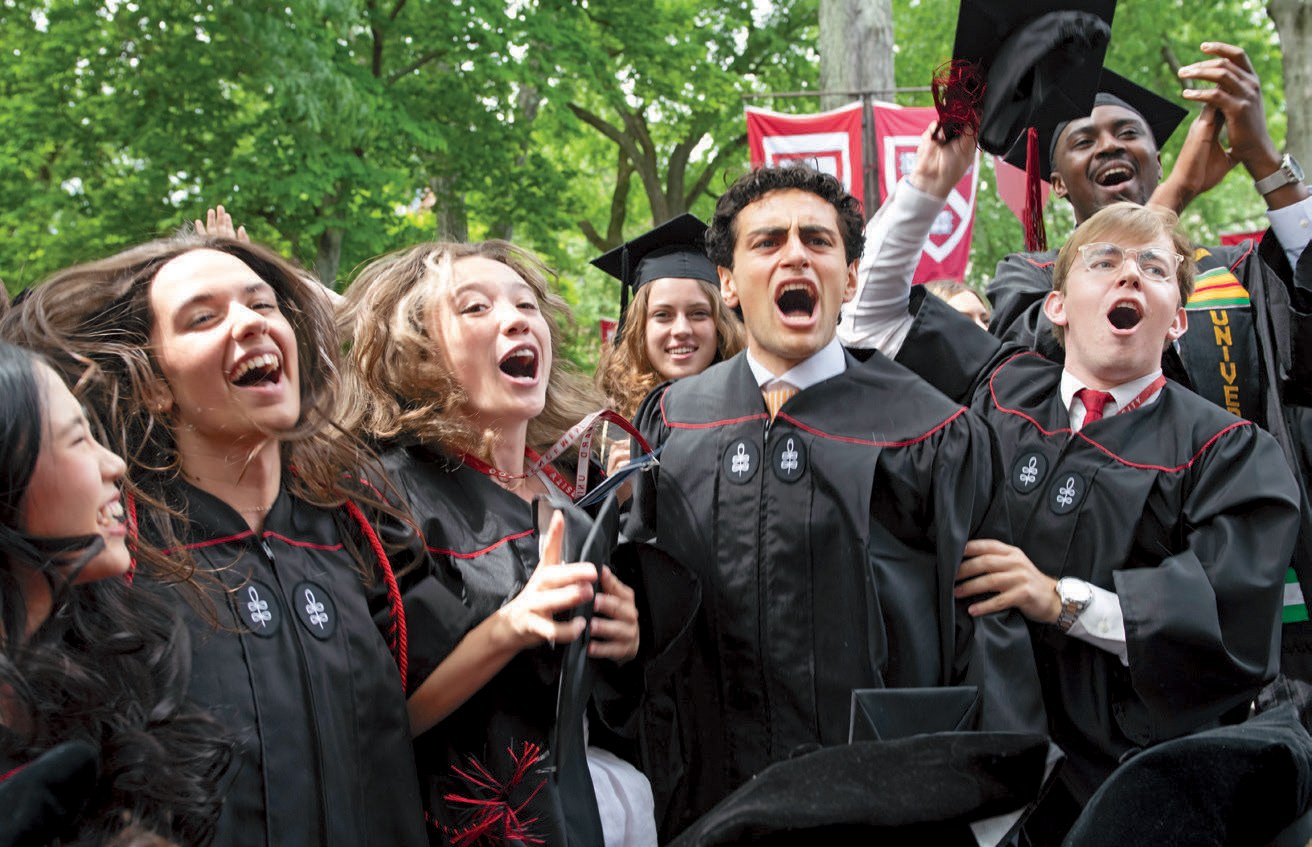
Harvard’s 375th commencement coincided with the nation’s 250th birthday—a semiquincentennial, as President Alan M. Garber noted—and a natural occasion to celebrate beginnings, for students and the nation alike. The event also marked 250 years since Harvard awarded an honorary degree to General George Washington for driving the British from Boston in the spring of 1776. Honoring that history, members of the Middlesex County Volunteers Fifes & Drums led the procession into Tercentenary Theatre this year, playing “Yankee Doodle.”
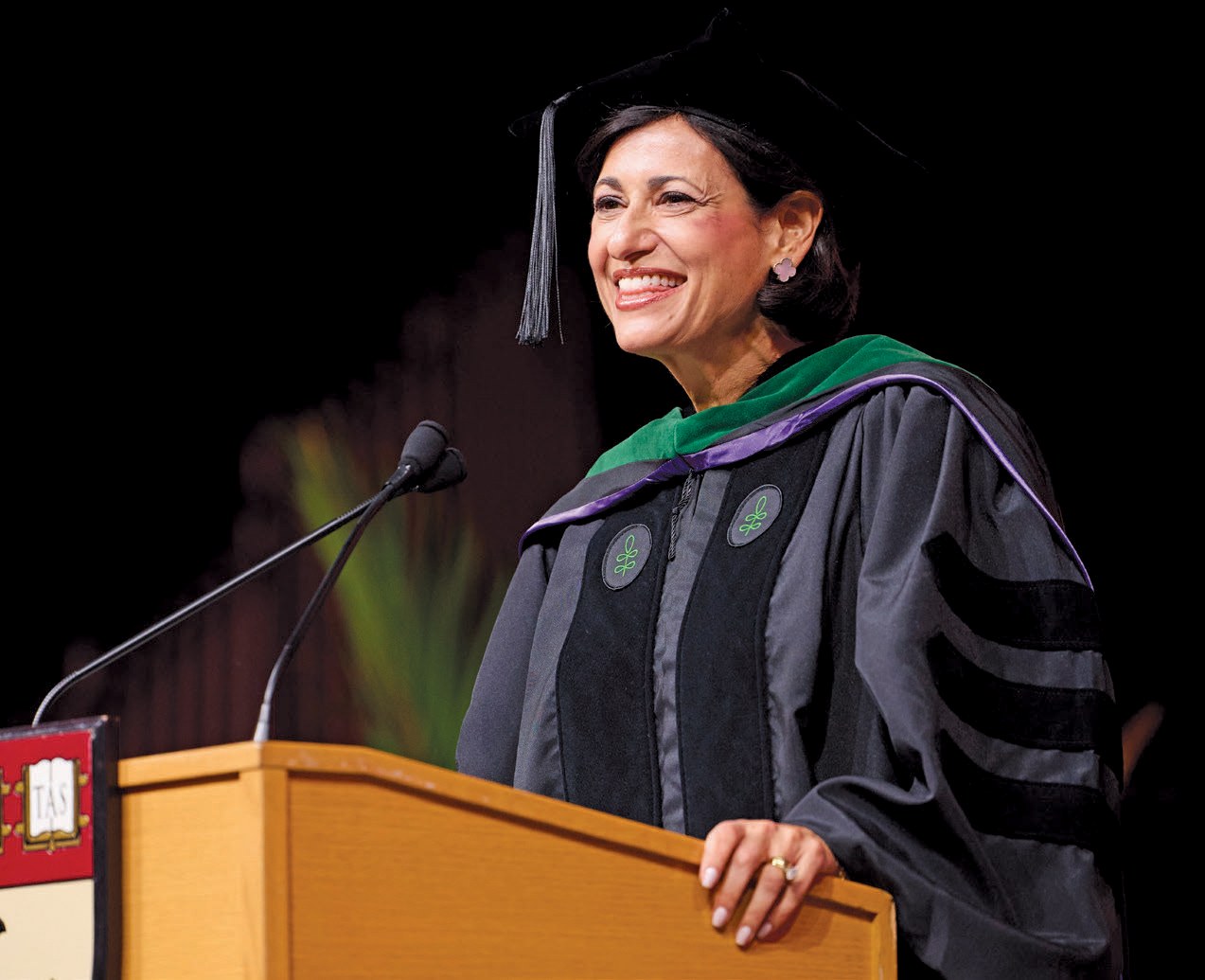
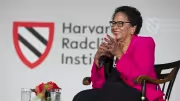
There were other references to Washington in the days leading up to Commencement. Speaking at the Harvard Chan School of Public Health, Rochelle Walensky, M.P.H. ’01, noted that in 1777, Washington ordered all Continental Army troops inoculated against smallpox. It was the country’s “first vaccine requirement,” Walensky said, and “a move that likely changed the course of history.”
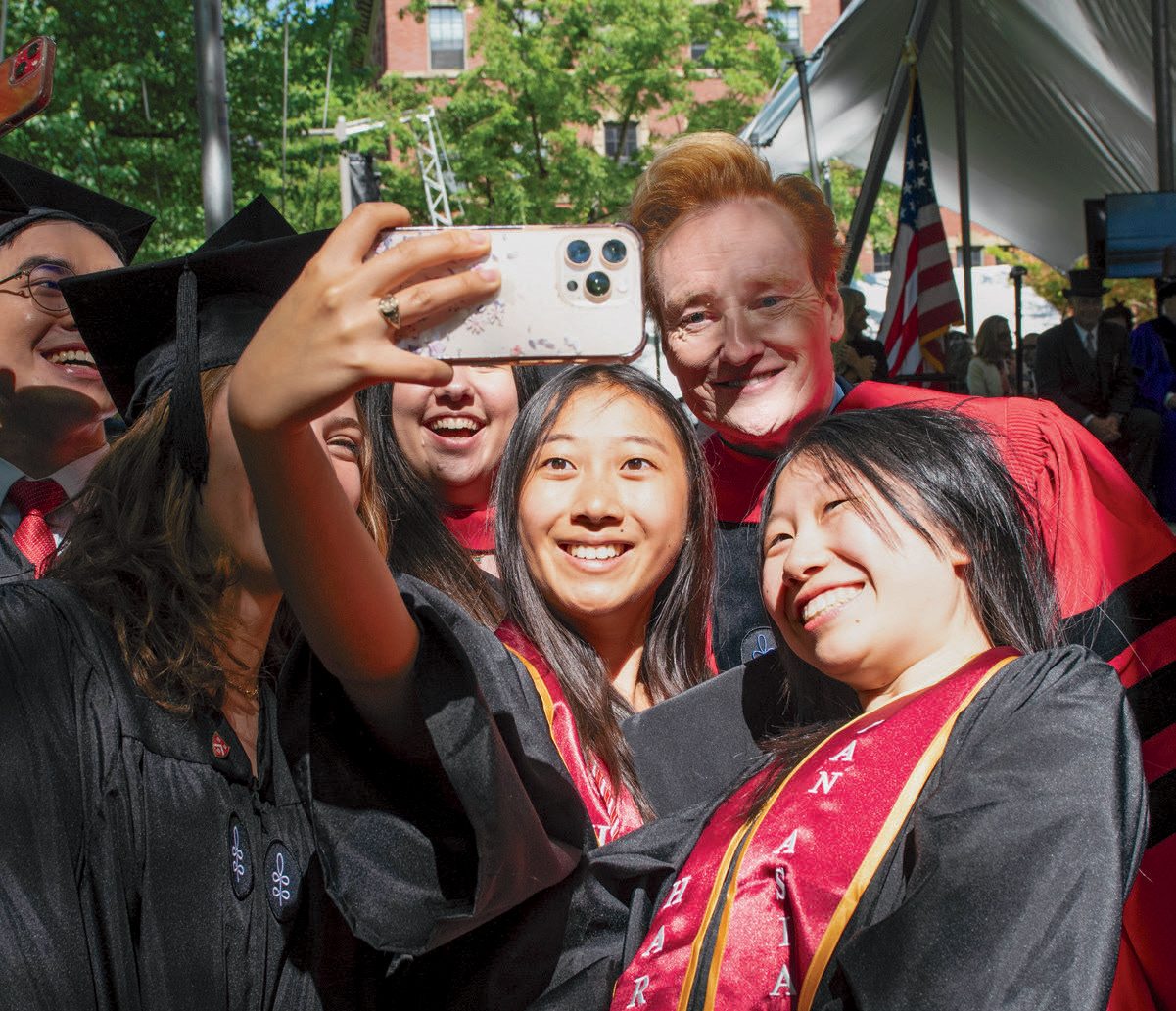
But most of the talk during the week focused on the challenges of the present and future. And the festivities ended with a dose of laughter, as Conan O’Brien ’85, newly bestowed with a doctor of arts degree, gave an address that poked gentle fun at the University’s fame and glory—and advised graduates to make a mark on the world that transcends the Harvard name on their degree.
“So, maybe my wish for you is…that Harvard becomes the least important thing people know about you,” O’Brien said. “Because your real education starts now.”
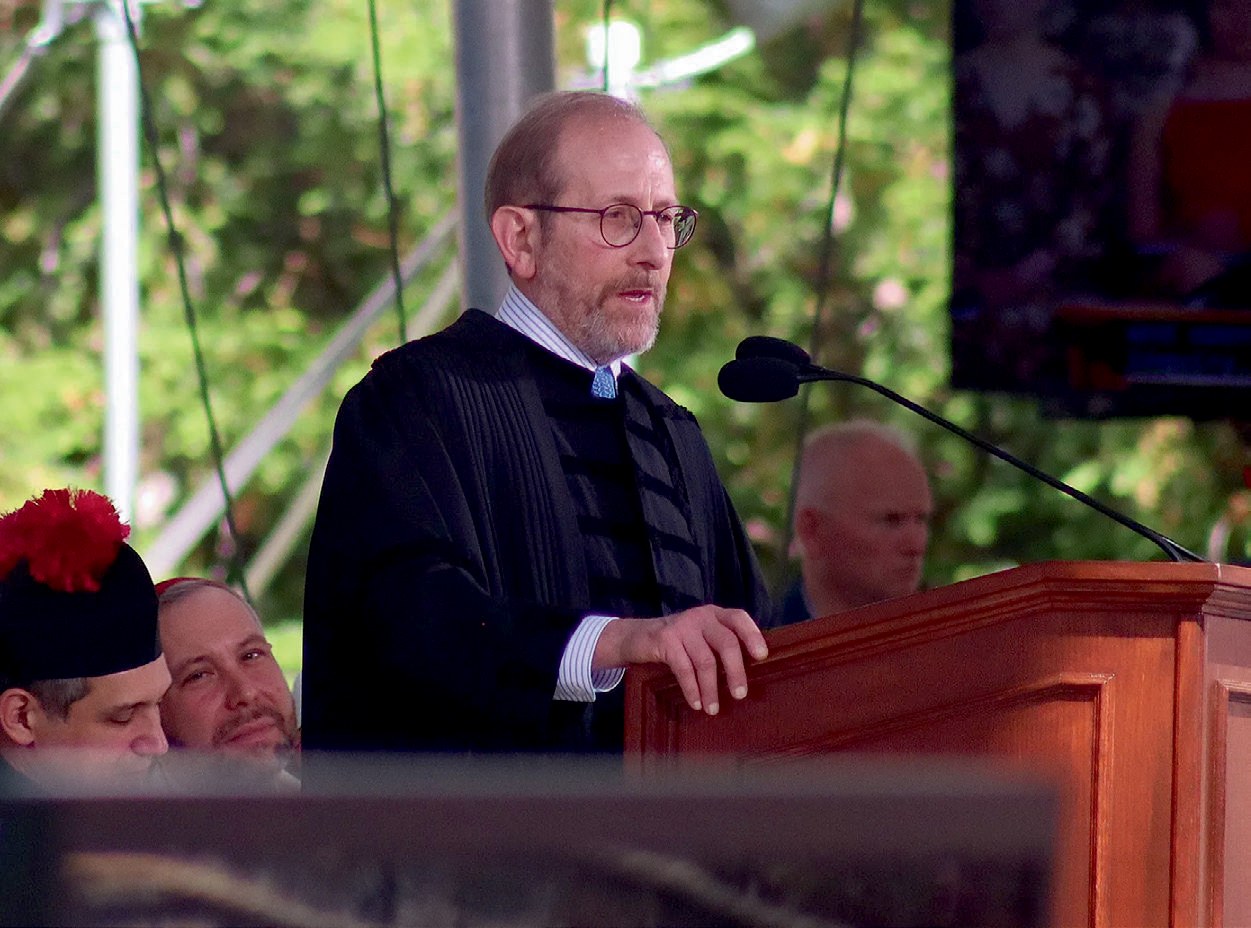
Many of the speeches during Commencement week advised students on how to approach a world in which artificial intelligence plays an increasing role. Garber used his Baccalaureate address to remind students that “there will always be value in ‘toiling laboriously’ to reach new levels of understanding. When you do so…you elevate the meaning of your singular existence.”
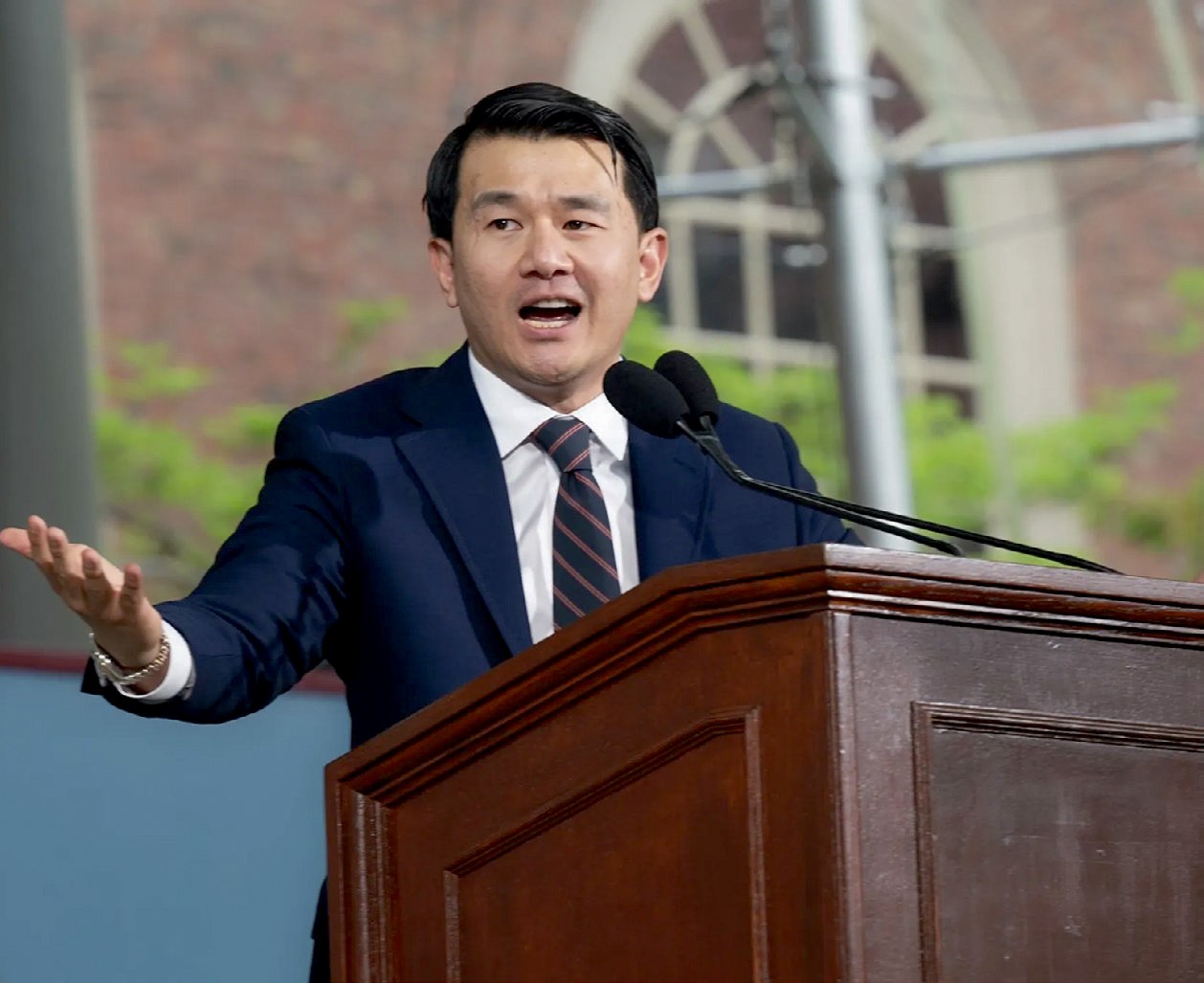
Comedian Ronny Chieng elaborated on that theme as the College’s Class Day speaker, urging graduating seniors not to outsource their creativity to AI. The journey of making and learning something is “the point of all of this,” he said. “When you have clarity of purpose and you’re doing something you love, every day can be a joy.”
The Commencement week humor also included nods to one of the biggest stories on Harvard’s campus this year: the debate over grade inflation. O’Brien, in his speech, praised Garber’s stewardship: “Fantastic job, sir. Really nice, really nice. Normally, I would give you an A-plus, but in keeping with upcoming Harvard policy, I’m adjusting your grade to a C-minus. Trust me, it’s for the good of the school.”
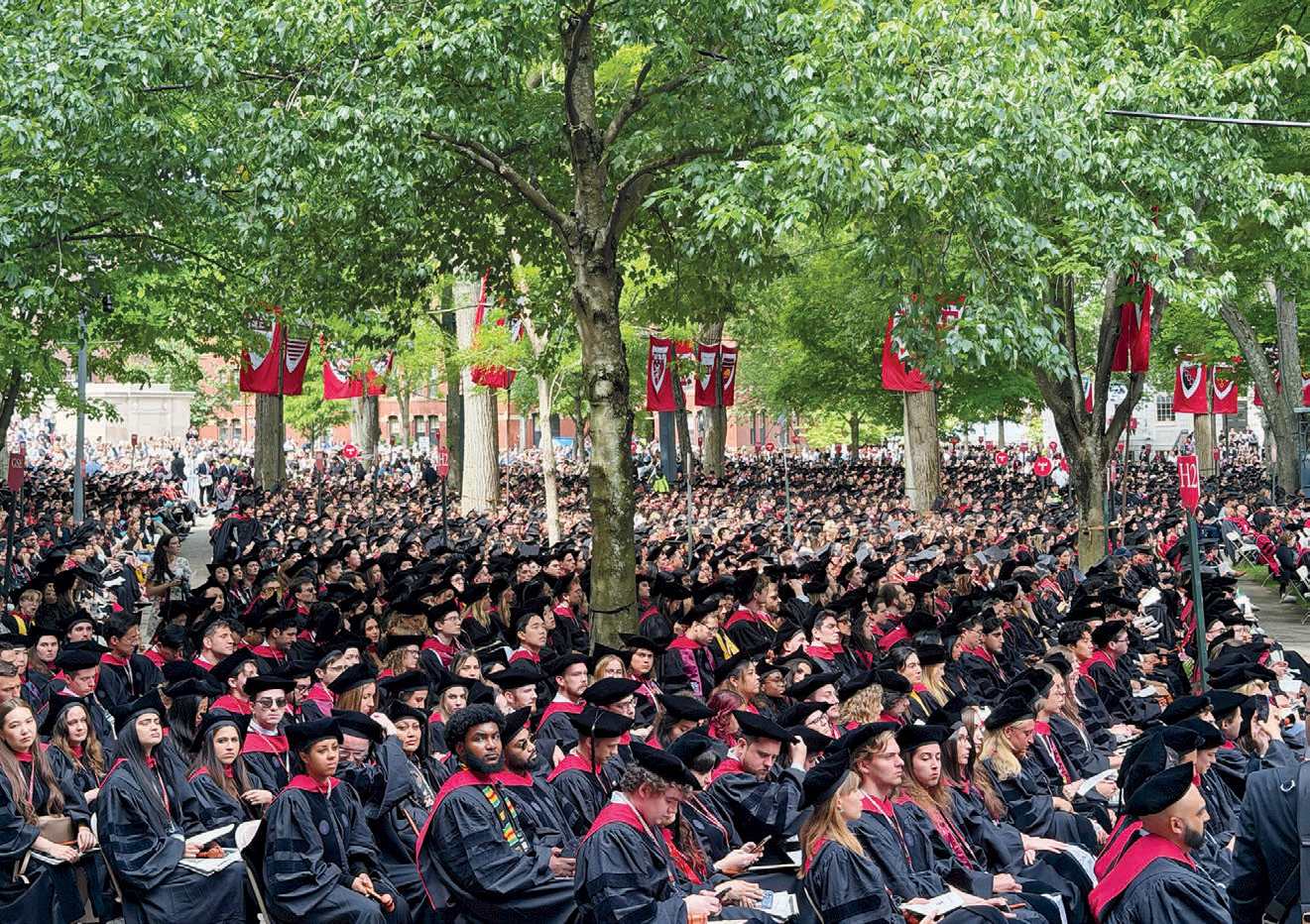
Graduates and their guests also learned about the University’s financial strains and the looming potential for more administrative layoffs. Members of the Harvard Union of Clerical and Technical Workers held a rally outside the Smith Campus Center, protesting the prospect of future cuts. And striking Harvard Graduate Student Union-United Auto Workers—whose demands for higher wages intersect with those financial strains—were impossible to miss. Harvard Law School’s scheduled keynote speaker, Boston mayor Michelle Wu ’07, J.D. ’12, cancelled plans to speak, citing an unwillingness to cross their picket line.
The week also brought reflection on the nationwide retreat from formal diversity, equity, and inclusion programming. For the second year in a row, student groups organized affinity-based graduation celebrations without institutional support or access to Harvard-owned facilities.
At the affinity celebration for LGBTQ+ graduates, Ricardo Martinez, the executive director of GLAD Law, acknowledged Harvard’s public resistance to federal pressure on higher education but criticized the University’s move to collapse diversity offices last year. “Pride and anger can coexist,” he said. “Institutions are complicated, even the ones that are trying their hardest to live their values against a federal government that has targeted universities for what they teach, who they admit, and what they stand for.”
The traditional student Commencement speakers also brought up real-world challenges, light and serious. Latin salutatorian Kiesse Nanor ’26 poked fun at the disconnect between the Harvard experience and the perceptions of people outside the institution. Senior English orator Noah Eckstein ’26 recounted his multifaceted family background, which made it impossible to fall into rigid, polarized thinking. Graduate orator Andrew O’Donohue ’18, Ph.D.’26, spoke of the threat to democracy as it plays out on university campuses—and how students and institutions can, and do, fight back.
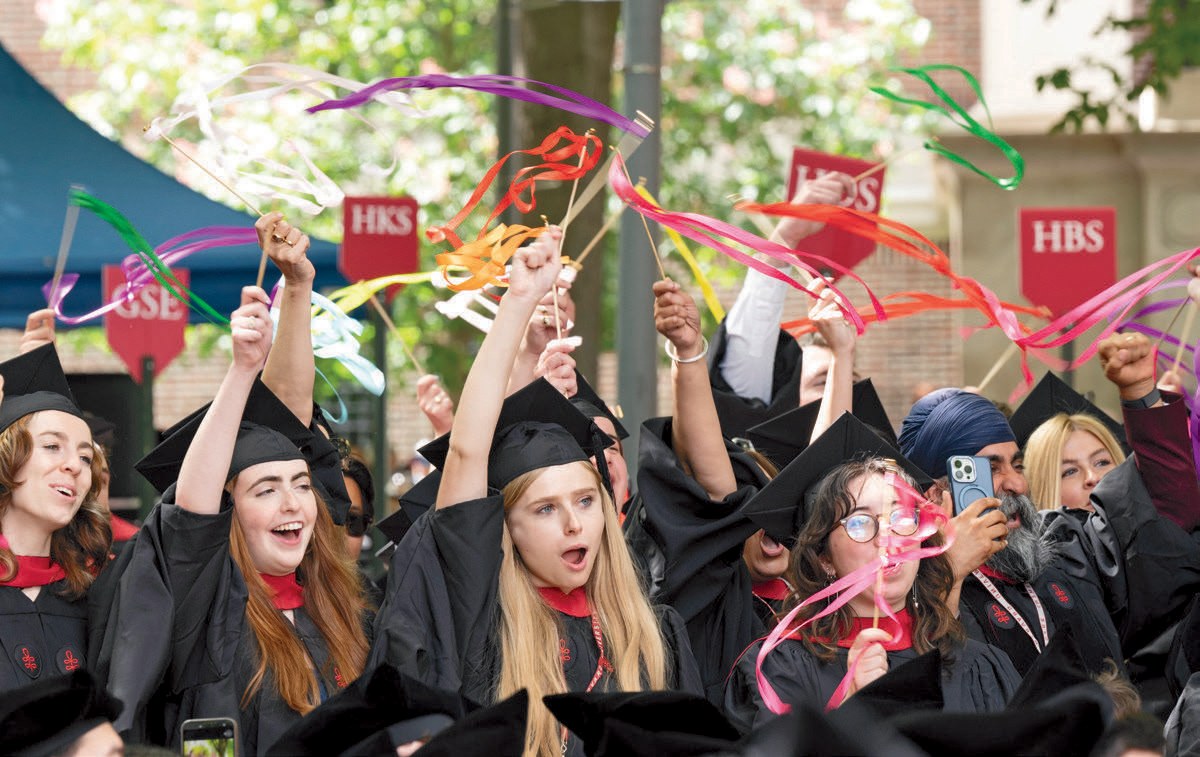
There were the usual traditions and memorable moments, too, from the call to order by Peter J. Koutoujian, M.P.A. ’03, the sheriff of Middlesex County, to a dulcet rendition of “America the Beautiful” by vocalist Sanjna Rajagopalan ’26, to the president’s formal awarding of degrees “by virtue of the authority delegated to me.” Among the musical selections was the anthem based on Psalm 78 (St. Martin’s), a tradition dating back to the inception of Harvard Commencements.
Toward the close of the ceremony, the University celebrated the accomplishments of five honorary degree recipients (see opposite page).
Then O’Brien launched into his speech, which made fun of everything: the format of graduation speeches, academic robes, the architecture of his own undergraduate house, Mather, and, characteristically, himself: “As I look upon this gathering of tomorrow’s greatest minds, I’m confident saying there is no less flattering outfit than the cap and gown. We all look like the potions professor at Hogwarts up here on stage. It feels like an AA meeting for druids.”
Wrapped inside his comedy, though, was stealth, sharp commentary on the political climate and federal actions, including lawsuits against Harvard, that have challenged the University community. “Many people think I’ve come today to defend Harvard. Well, sorry, those people are wrong,” O’Brien said.
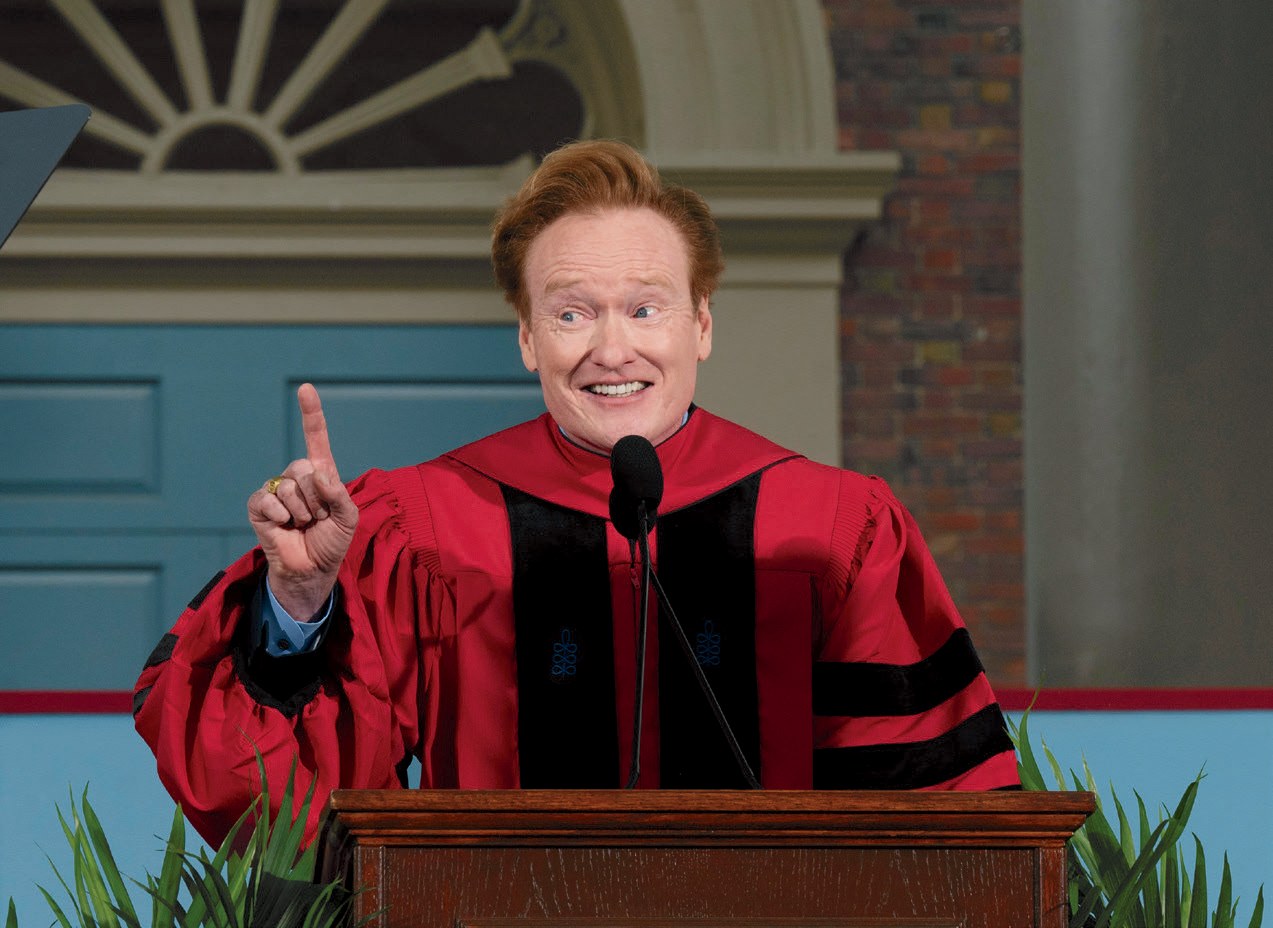
He continued:
“Not only am I not against these lawsuits, I’m here to announce that I am joining them. I, too, am suing Harvard. I’m suing Harvard for my less than spectacular undergraduate sex life…I’m suing Harvard, because—and this is absolutely true—in the spring of my sophomore year, while trying to grab a quick lunch at Adams House, I was served a meal called Captain Ben’s Fish Spaghetti…
I’m confident that my claims will have more merit than those filed by the president of the United States. Yes, as you are aware, the current administration feels Harvard admits too many foreign students, and who knows, they may have a point. After all, what has any foreigner ever added to our American culture—with the possible exception of music, literature, art, cuisine, fashion, architecture, dance, scientific breakthroughs, and the core of our moral codes and ethical beliefs?”