It is a quirk of planning a magazine that a theme can sometimes emerge by accident, so I was amused to find that two of the science stories in this issue reference the same eye-popping fact about limb regeneration. We’re still far off from understanding how humans could regrow entire limbs like axolotl salamanders do (though some fascinating research led by biology professor Jessica Whited is suggesting the way). But it’s also true, I was surprised to learn, that a human fingertip can, in some specific circumstances, regrow itself.
At the risk of belaboring a metaphor, this is not unlike the work that lies ahead for Harvard, which is staring down a series of crises and trying to turn some painful cuts into opportunities for regrowth. This semester, administrators, faculty, and students have been grappling with the University’s challenged financial position, driven partly by changes in the government’s approach to research funding, partly by a substantial federal tax on some college endowments, and partly by habits of deferred maintenance and administrative bloat that long predate the current political climate. This hasn’t made life on campus especially easy. But a major insight from Whited’s biology research is that the process of regenerating a limb isn’t an isolated task: an axolotl’s entire body takes part. At Harvard, too, the solutions will require shared sacrifice, collective action, and a willingness to listen and adjust. In short, they’ll require Harvard’s entire body politic to shoulder the burdens together.
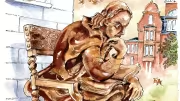
At an institution that has long been divided into factions and functions and tubs resting on their own bottoms, this can feel like an insurmountable goal. But this issue of Harvard Magazine is filled with some (admittedly gothic) stories of how monumental challenges can lead to productive collective experiences. The deep questions of moral philosophy that underpin our cover story about an 1884 maritime cannibalism case—which became a popular Harvard teaching tool—have led to fascinating, useful, and respectful debates. Those classroom discussions are models for the productive discourse that Princeton University President Christopher Eisgruber describes in his book Terms of Respect: How Colleges Get Free Speech Right, thoughtfully reviewed by Rakesh Khurana, the former dean of the College.
There are more stories of resilience in these pages: an Afghanistan veteran who became a decorated Paralympic skier; a business leader who rose from poverty to become a linchpin of Japan-U.S. relations. The stunning, monster-centric art by Ava Jinying Salzman ’23 was born of her efforts to process mental health challenges during the pandemic—and her realization that strangers took solace in her ability to visualize those demons. There are also stories of aspiration, such as an exploration of how one of the ultimate scientific endeavors, getting humans to Mars, will require collective work from many fields and domains.
That spirit of discovery, applied to matters cosmically large and microscopically small, should be reason to expect that Harvard can come through its own earthbound crises intact. In the depth of winter, there’s nothing quite so hopeful as thinking about ways to grow back better.
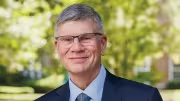
—Joanna Weiss, Editor