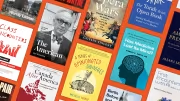
This year, instead of drawing 30,000 people for a wild weekend of in-person literary immersion, the annual Boston Book Festival will spread mostly online sessions over several weeks in October. Some 35 events are planned, including author readings and presentations, along with an outdoor scavenger hunt. “Most of these will be live-streamed in real time, with some potential for audience interaction,” says festival executive director Norah Piehl. Prerecorded content, along with broadcast demonstrations by picture-book authors and illustrators—one reading, the other drawing—are also planned. Bass professor of government Michael Sandel, whose new book, The Tyranny of Merit, is due out this fall, headlines the festival, along with Michael Murphy, M.Arch. ’11, founding principal and executive director of MASS Design Group and the architect behind the National Memorial for Peace and Justice, unveiled in Montgomery, Alabama, in 2018.
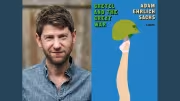
On the fiction side of the festival line-up, a major session on the horror genre features author and comic-book writer Joe Hill. Others will discuss their new books, including playwright/novelist Andrea Hairston (Master of Poisons) and Gregory Maguire (A Wild Winter Swan). The festival will also continue its popular special events. The One City, One Story activity focuses on a story by a Boston author—this year “The Book of Life and Death,” by Grace Talusan—that is distributed in print and online at libraries around the city between Labor Day and early October, followed by a virtual town-hall session with Talusan. The scavenger hunt has children and adults follow a series of playful clues while hunting for copies of hidden books (below). And the festival’s “story walk”—pages from a children’s book posted this year in various places around Roxbury—enables anyone, Piehl says, to “explore the story while also exploring the neighborhood.”
Typically, the festival has offered hundreds of events during its weekend. But even though the pandemic prompted organizers to scale back, this year’s festivities will likely reach a far wider audience. “We did a handful of online events in the spring and were getting attendees from Asia and Europe and all over the U.S.A., so that was a really fun way to connect with community members who would not travel to Boston,” Piehl says. “I’ve been talking a lot with people who run events online and they’re saying they get six times as many people as you could actually accommodate” in person. Join in, in Boston—and beyond—on the weeks of October 5, 12, and 19, with culminating events during the October 24-25 weekend.