Harvard Forward Candidates on Overseer Ballot

For the second consecutive year, petitioners have qualified to be candidates in the Board of Overseers election.

Harvard Forward logo

Harvard Forward logo | Image courtesy of Harvard Forward

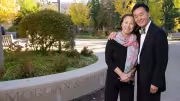
Harvard Forward has announced that its three petition candidates have collected enough signatures to qualify for the balloting for the Board of Overseers this spring—and that the nomiating signatures have been validated by the University. The deadline for submitting petitions is this Wednesday, February 3, so the University will wait until then to prepare and then release the final roster of candidates (once a few formalities are completed): the eight Harvard Alumni Association nomination committee candidates, and now the Harvard Forward slate.

All 11 would-be Overseers have responded to a Harvard Magazine questionnaire seeking their views about the University’s challenges and opportunities, the board’s role, their pertinent experiences and expertise, and their reasons for running now.

Last year, Harvard Forward secured signatures to nominate its initial slate of candidates, who campaigned on a platform of divestment from fossil fuels, changes in investment policy, and changes in University governance—and three were elected. This year’s candidates are advancing a similar, albeit broader, platform.

With today’s announcement, the election for Overseers, previously a staid affair, is likely for the second consecutive year to stir up more alumni engagement, prompted by interest in differing views about the nature and role of Harvard governance and in the issues the Harvard Forward candidates are pressing. Balloting will take place from April 1 to May 18.
Read more articles by John S. Rosenberg
Related topics

You might also like

Due to rain, the University held dual Convocation ceremonies for the Class of 2030 in Sanders Theatre.

President Alan M. Garber uses traditional Memorial Church address to consider the unique qualities of human intelligence and learning.

The University will compensate families of those whose remains were sold and establish a scholarship to honor anatomical donors.

Most popular

Harvard art historian Jennifer Roberts teaches the value of immersive attention

Teaching students the value of deceleration and immersive attention

Harvard researchers achieve medical breakthroughs in cancer therapy and infection control.

The 1884 Cannibalism-at-Sea Case That Still Has Harvard Talking

The Queen v. Dudley and Stephens changed the course of legal history. Here’s why it’s been fodder for countless classroom debates.

Explore More From Current Issue

Smiling woman stands beside a large skull in a display cabinet.

From competing in youth gymnastics to studying tetrapods, the Harvard curator has always chased her curiosity.

A glowing bulb shape surrounded by colorful, swirling energy lines against a blue background.

Harvard researchers achieve medical breakthroughs in cancer therapy and infection control.

University Hall with steps and the John Harvard statue, surrounded by trees and a grassy lawn.

Long-discussed reorganization includes layoffs and the end of the Dudley Community.