The conversion moment for Ellen Zachos ’82 came during a workday lunch break about 15 years ago. “I had nothing in the refrigerator that day,” she says. “Just American cheese on white bread.” She and her colleagues were eating outdoors, and one of them reached over and pulled a leaf off a nearby garlic mustard plant and handed it to Zachos. An invasive weed originally from Europe, garlic mustard grows wild along roadsides and forest edges across much of North America. “Put this in your sandwich. It’ll make it better,” the woman told Zachos. “And it really did!” Zachos says. “It was free, and it was all around me, and I had no idea.”
Almost since that day, Zachos—who posts under the social media handle “Backyard Forager”—has been harvesting and cooking with wild plants and mushrooms, and teaching others to do the same. Now based in Santa Fe, New Mexico, she leads classes, both online and in person, on topics like hunting for spring salad greens in lawns and parks, making soup and syrups from rosehips, and identifying wild herbs and spices. Among her field guides and cookbooks are titles like The Forager’s Pantry and The Wildcrafted Cocktail, which gives dozens of recipes for using flowers, berries, roots, and leaves to make bitters, infusions, and other mixed-drink ingredients.
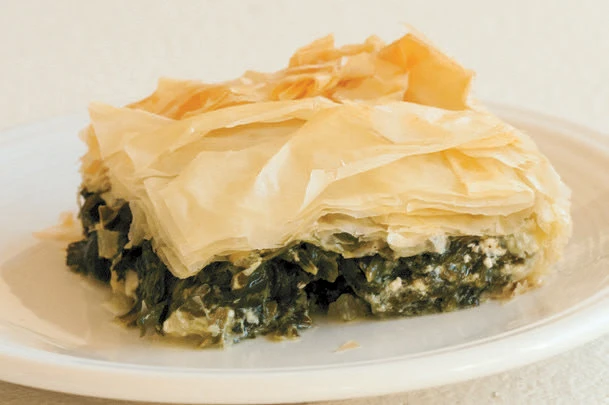
With beginner foragers, though, she keeps things simple. First, a rule: “Never put anything in your mouth if you’re not 100 percent sure what it is,” she says. “I mean, that’s a good life lesson in general, not just for wild foods.” When it comes to cooking, Zachos likes to start newcomers off the same way she first began, by using already familiar recipes and substituting wild ingredients here and there. Take spanakopita, the traditional Greek spinach pie. “Everybody who’s ever been to a Greek diner knows spanakopita, right?” Zachos says. Her recipe swaps in a variety of wild greens, just as cooks often do in Greece.
Later, “as your wild plant repertoire expands,” she explains, “you can start making things up on your own.” The purple fruits of the holly-like Oregon grape plant make a wonderfully tart curd dessert. Sweet clover, a tall flowering legume, yields a vanilla-like extract. “The first time I infused rose petals in cream to make rose petal panna cotta, I thought I was a genius,” Zachos says. “You become inspired by the flavors.” Lately, she has been making ginger snaps with wild ginger and spicebush berries, whose warm, complex flavor she describes as both sweet and peppery, with a little bit of heat and a hint of something floral. “Freaking delicious,” she says. “I never use nutmeg or cinnamon anymore.”
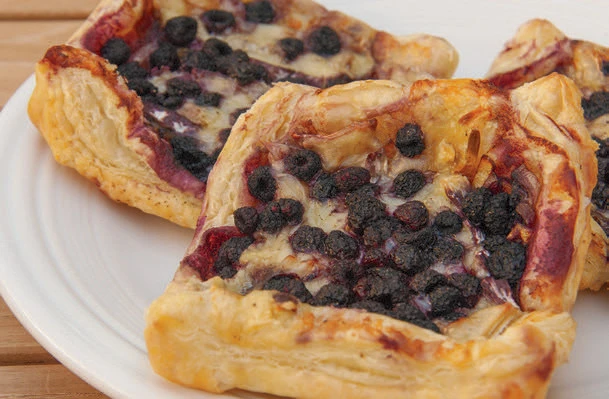
Zachos believes in experimentation. “The first couple of times you work with a wild plant, it’s a good idea to taste it as plainly as possible,” Zachos says. Sometimes that means raw, but not always. Dandelion greens, for instance, especially from mature plants, can be bitter unless they’re blanched or cooked. In general, for plants and mushrooms that she hasn’t tried before, she says, “my go-to thing is to sauté it with a little bit of olive oil, maybe some salt and pepper, and see what it tastes like.” Then maybe add a little wild garlic or a little parmesan. “You just see what works, what flavors go together,” she says.
One of her favorite wild foods is milkweed, a flowering plant perhaps best known as a critical food source for monarch butterflies. “I love it,” she says. “It’s beautiful, it’s plentiful, and it has four edible parts”: young shoots, flower buds, mature flowers, and immature seed pods. “To me, that’s a very generous plant.” And the taste? Zachos struggles to describe it. “It’s crunchy, it’s green, it’s mild,” she says, “but it’s totally different from lettuce.”
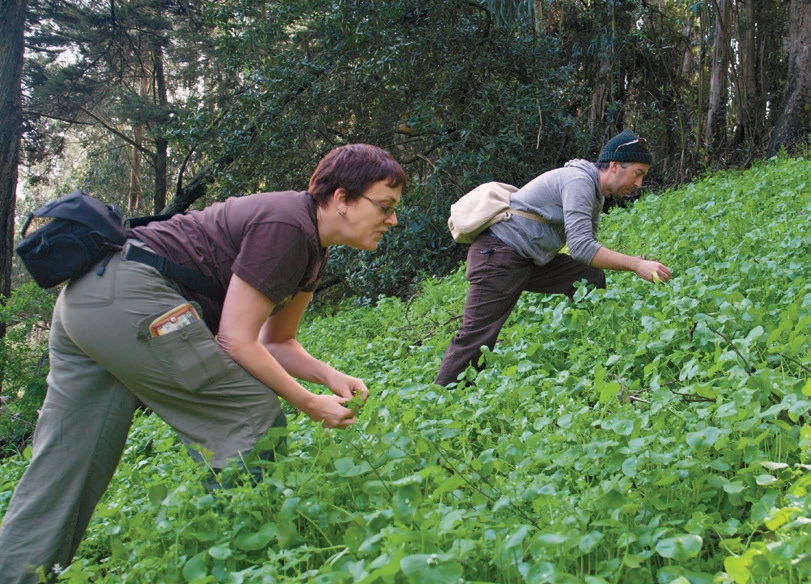
Zachos speaks like a seasoned chef and gardener, but for a long time, she was neither. Deep into her 20s, she was “a laughably bad cook,” she says, in part because her mother was such a good one. At Harvard, she studied theater and afterward spent more than 10 years performing in shows on and off Broadway. Her relationship with plants began almost by accident. At 28, she was cast in the first national tour of Les Misérables, and someone gave her a peace lily as an opening-night gift. She figured it would die in her apartment, but instead it thrived. So she bought more plants, and then more—her mother and grandmother had been “amazing gardeners,” and the peace lily seemed to awaken something “lying dormant in my soul,” she says. Eventually, she went back to school at the New York Botanical Garden, and then opened her own business designing, installing, and maintaining rooftop gardens. That’s what she was doing when her colleague handed her that garlic mustard leaf to spice up her lunch.
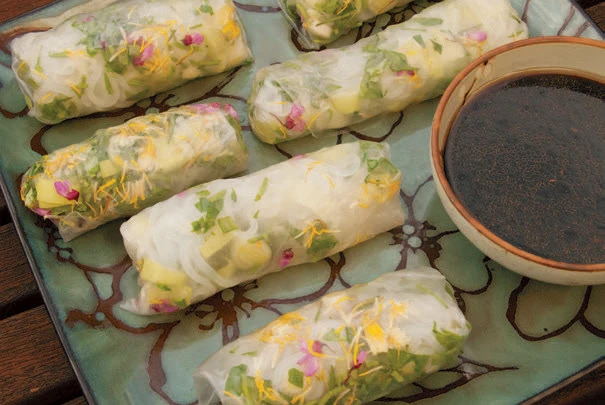
Zachos often talks about wild foods as having an “un-buyable flavor.” They’re free, but they’re also precious. When she’s experimenting with a new concoction, her process involves tasting lots of things in very small quantities. “When you’re cooking a regular recipe, it’s really easy to go get more ingredients at the store if you need to,” she says. There’s always another five-pound bag of flour. “But if you’re cooking with acorn flour, that’s a lot of labor. You have to pick up these nuts, you have to shell them, leech them, grind them up. So, you’re not going to make a giant loaf of bread. You’ll make a couple of muffins first and check the density, the porosity, the flavor.”
Last year, Zachos published a new book, Mythic Plants: Potions and Poisons from the Gardens of the Gods. Twenty years in the making, it’s a guide to real-life plants that appear in Greek mythology, written with humor and lyricism and a lot of research. The book includes familiar examples like wine grapes, olives, and figs, but also more obscure ones: mandrake, asphodel, quince. The ancient Greeks farmed some of these plants, but others remain entirely wild, harvested today only by foragers like Zachos. She is fascinated by that gap between wild and cultivated. “So much has been lost,” she says, by the modern dismissal of foods that can’t be found in stores. We’re surrounded—in the city, the suburbs, and beyond—by edible plants and “un-buyable” flavors. Zachos wants us to know them.