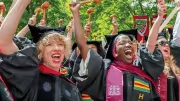
“A powerful mind in service of a weak character is not an asset to the world—it is a danger to it,” said former President Lawrence S. Bacow at Tuesday morning’s Phi Beta Kappa Literary Exercises, during a pointed oration that contained as much warning as congratulations.
Calling out the shamelessness and dishonesty of the current “deeply troubling” moment, when “bullying is rebranded as candor” and “cruelty is repackaged as strength,” Bacow urged graduates—whose prestigious Phi Beta Kappa keys, he said, will open doors for the rest of their lives—to be not just smart or accomplished, but good and decent.
“Character is what this moment most demands,” he said. “Without it, all the intelligence in the world will not be enough.”
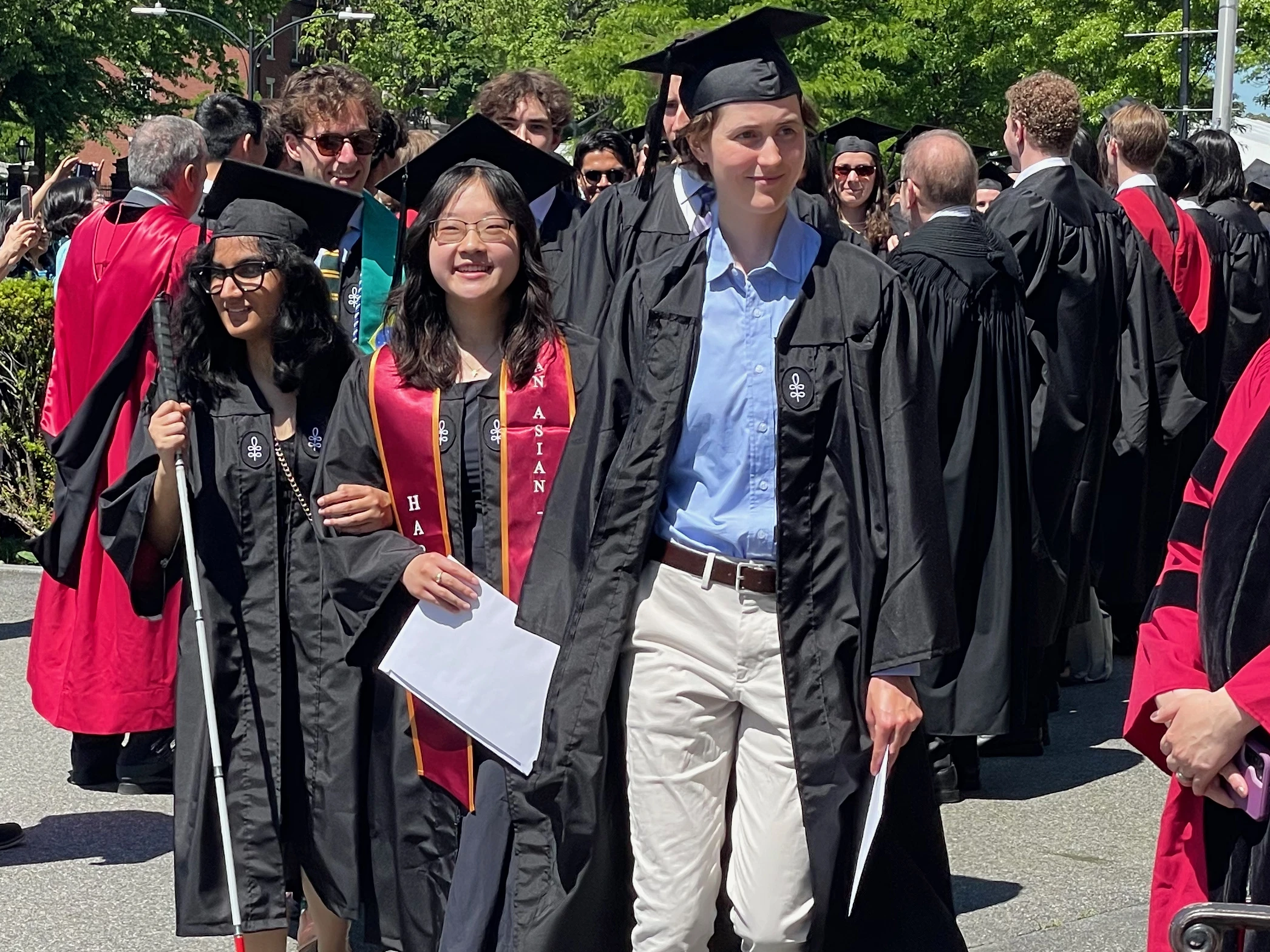
Bacow, who retired as Harvard president after the 2022-23 academic year, never mentioned any politicians by name, but the upheavals wrought by the current political climate were the subtext of his remarks.
“Institutions we thought were sturdy have bent under pressures we did not anticipate,” he said. “I have wondered whether the values we care about most—truth, decency, empathy, kindness, the dignity of every person, the rule of law, the Constitution—are as secure as we once believed. They are not.”
Later, contemplating questions of power, Bacow lamented, “We live in a moment that celebrates…the power to dominate, to intimidate, to bend others to your will.” Drawing on the teachings of second-century Talmudic sage Ben Zoma, Bacow said, “The individual who cannot control their own impulses, who cannot restrain their own appetites, who cannot resist temptation, who cannot pause between feeling something and acting on it—that person is not powerful. They are at the mercy of themselves.”
Politics suffused much of the event. The day’s other main speaker—poet, Yale Review editor, and onetime Radcliffe fellow Meghan O’Rourke—listed elements of the “foreboding weather” that awaits graduating seniors. She spoke of “a federal government hostile to science, to education, to democratic norms. A deepening climate crisis. A technological transformation already altering our experience, for better and worse, of time, labor, and language itself.”
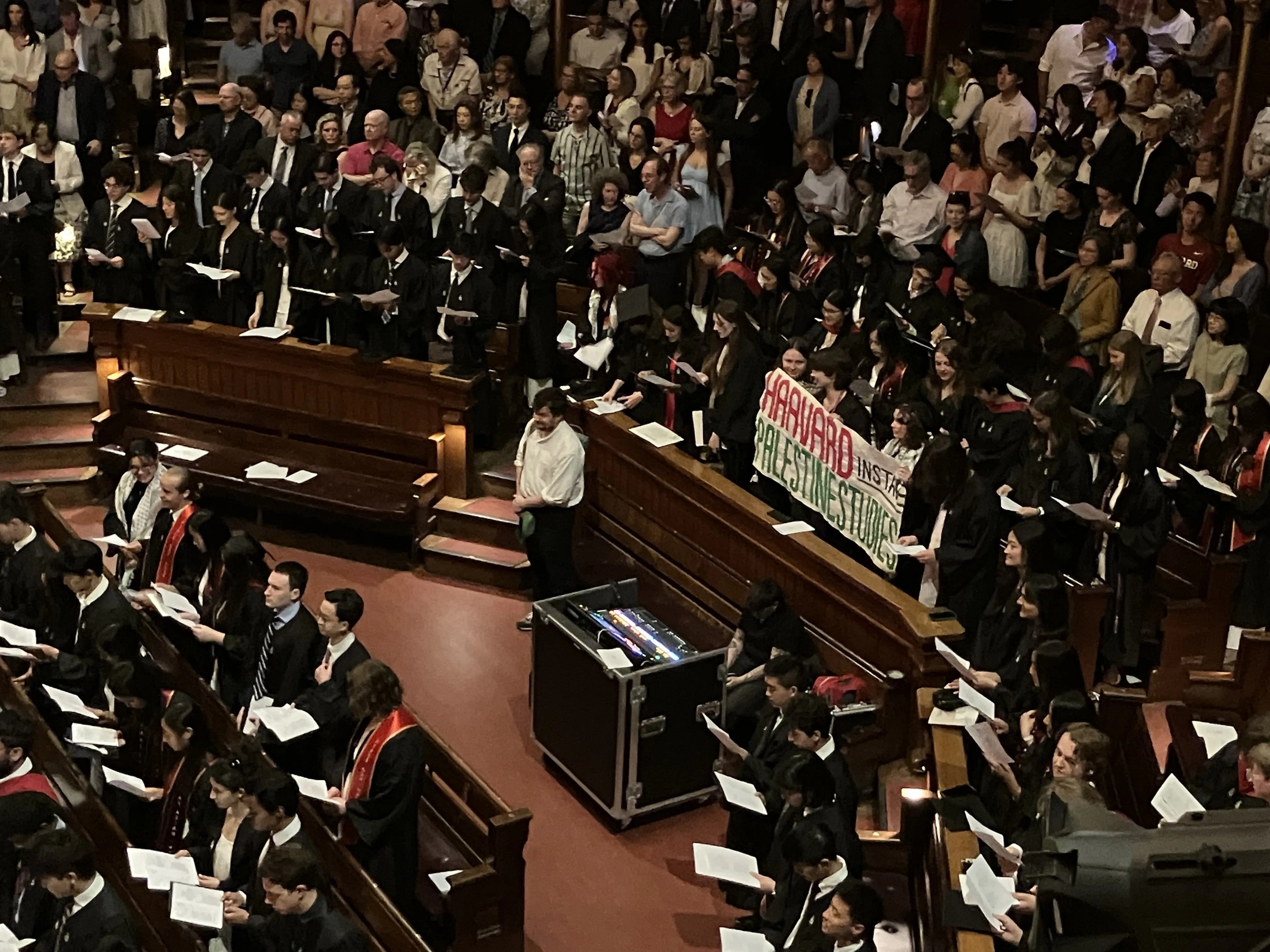
A handful of students made a political statement, too. Three graduates seated prominently in the center mezzanine section of Sanders Theatre spent most of the ceremony holding up a banner that read, “Harvard instate Palestine studies.” Clearly visible from the stage, it was unacknowledged by any of the speakers.
Those student protestors joined in the broad applause when Bacow, toward the end of his address, praised President Alan M. Garber as a leader who has made decisions “because they were right,” despite difficulty, “withering criticism, [and] pressures that would have bent others.”
During his oration, Bacow also warned against the curdling effects of blind ambition and extolled the intellectual independence that Ralph Waldo Emerson, A.B. 1821, famously described in his 1837 address to Harvard’s Phi Beta Kappa Society. Bacow also advised graduates to seek out perspectives and opinions different from their own, touching on topics of intellectual diversity and healthy disagreement that have been an urgent fixation for the University in the wake of the campus turmoil kindled by the Hamas terrorist attacks against Israel, the subsequent war in Gaza, and the student protests that followed in 2023 and 2024.
“Seek out people who will push back,” Bacow said. “Intellectual comfort is the enemy of intellectual growth.” He called the “deliberate pursuit of disagreement” a “civic obligation.”
In her remarks, O’Rourke pulled on a similar thread. She urged students to pay “radical attention” to the individual people and happenings around them, despite the disorienting momentousness of large-scale world events. Poetry, she said, does that: “It asks us to realize that not all ways of knowing and speaking are transactional.”
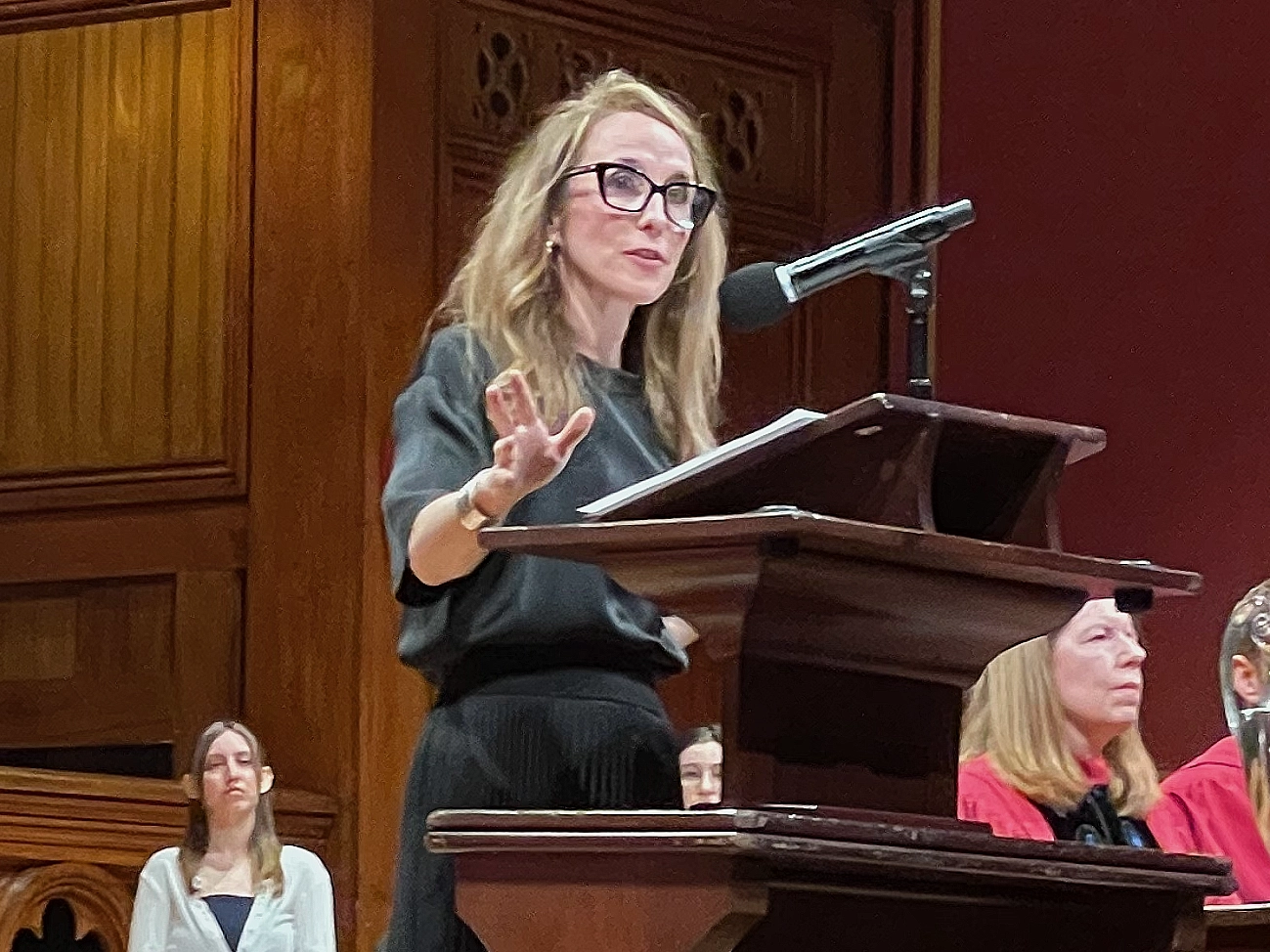
O’Rourke also encouraged students to take on the “difficult, necessary, and often slow work of finding out not just what you think but also what you don’t always want to know.” The rapid advance of AI, she worried, might get in the way of that work, and so she urged graduates: “Do not cede your language before you have had a chance to use it; do not rush to answers before you have them. Machine fluency is going to be part of our lives now. But as the historian of science Thomas Kuhn taught us, paradigm shifts happen precisely when someone new to a field—someone less fluent in its norms—enters and sees the world freshly, resisting the group think around them.”
She closed her address with a new poem she had written, titled, “Did You Use Your Time,” about the 2019 massacre in Christchurch, New Zealand, when a white supremacist gunman killed 51 people at a mosque during Friday prayers. The poem imagines a mother hearing the news of the incident while waking up before dawn on the other side of the world with her toddler son. The final lines read: “…the light moves through the window / on his body. The day is here. / And what can I answer.” The poem asks, O’Rourke says, “the question I think is the most important for any of us to ask: Did we use our time well?”