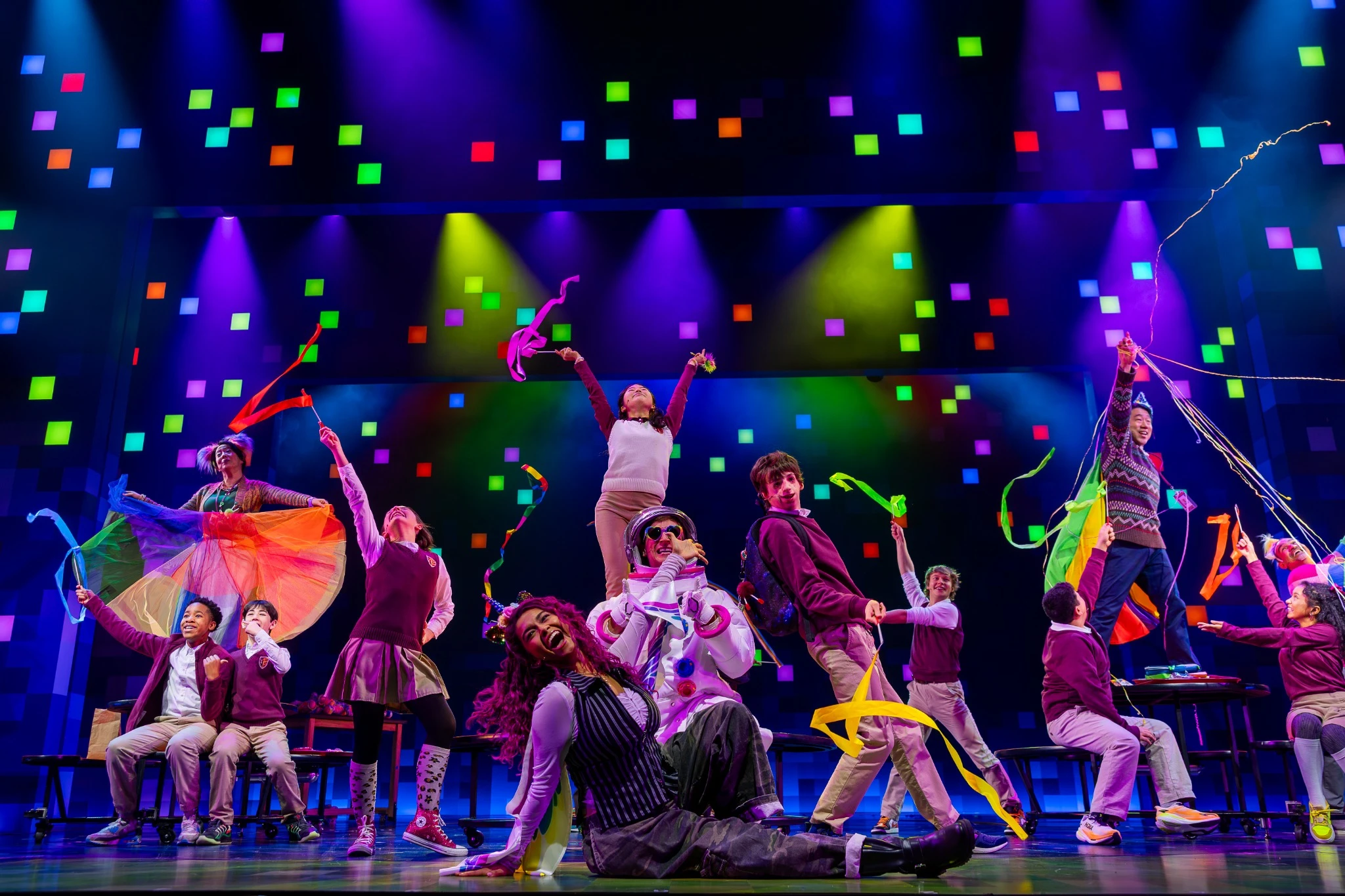
The American Repertory Theater’s performance of Wonder, adapted for the stage by Sarah Ruhl with music and lyrics by Grammy Award-winning duo A Great Big World (Ian Axel and Chad King), extends R.J. Palacio’s widely read 2012 novel by the same name into a glimmering musical that foregrounds imagination, belonging, and loyalty.
Since the book’s publication and the 2017 film adaptation, the story of August “Auggie” Pullman, a child born with a craniofacial difference navigating his first year of middle school, has become a familiar title in conversations about kindness and inclusion. Wonder is grounded in the everyday negotiations and dramas—social, familial, and institutional—that determine whether inclusion is practiced or merely professed as a moral standard.
The A.R.T. production, which runs from December 12 through February 8, was shaped in part by consultation with advocates and individuals with craniofacial differences. Those conversations with Dina Zuckerberg, Matthew S. Joffe, and Pat Chibbaro helped to guide casting, development, and Ruhl’s approach to the material. Ruhl’s adaptation remains faithful to the book, but rearticulates it through song and dance; one of the production’s most sustained interpretive choices is its reliance on the imagery of outer space.
Auggie (portrayed in some performances by Garrett McNally and in some by Max Voehl), is fascinated with science and astronomy, and that interest is expanded into a governing metaphor that shapes the musical’s language, score, and set design. Space functions as a refuge, an interior world through which Auggie processes fear, curiosity, and pain. His imagined astronaut companion, “Space Auggie,” portrayed by Nathan Salstone, is another “self” who often speaks and sings for Auggie throughout the production. His presence allows Auggie to inhabit his dreams when the external world becomes overwhelming.
Auggie’s father Nate (Javier Muñoz) describes his son as a “moon boy:” someone who descends briefly to Earth before retreating into orbit. Near the end of the musical, Nate urges Auggie to “stay here,” grounded among those who love him, rather than disappearing into protective dissociation. The song raises an unresolved question that runs throughout the production: when does imagination serve as shelter, and when does it become a barrier to risk, growth, and experiencing reality?
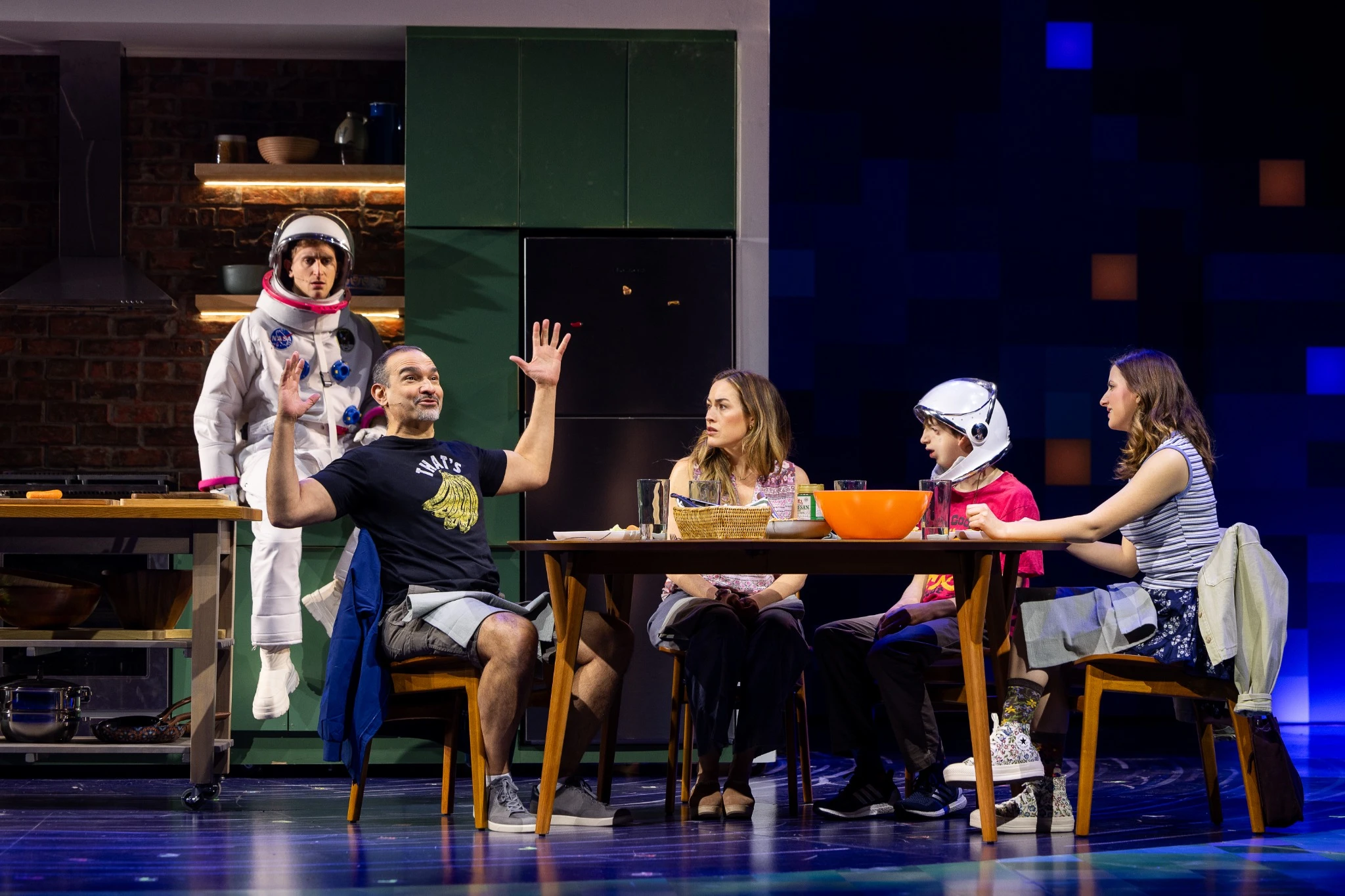
The solar-system imagery finds its most incisive expression in a song performed by Auggie’s big sister, Olivia (“Via”) Pullman, portrayed by Kaylin Hedges. Via’s song “Around the Sun” frames Auggie as the sun around which her family has long revolved, while everyone else—including friends, classmates, and the external world—function as passing comets or meteorites. The lyrics capture both Via’s devotion to her brother and her sense of weakness within the family’s gravitational field. With her parents needing to devote near-constant care to Auggie, Via has been left somewhat alone; she has become, in some respects, the quiet sacrifice of Auggie’s medical conditions.
The musical situates bullying within ordinary social dynamics such as peer pressure and the desire to belong, especially in adolescence and a middle-school environment. Auggie’s friendships with Jack Will (Donovan Louis Bazemore) and Summer Dawson (Kylie MiRae Kuioka), and later with other classmates at Beecher Prep, develop gradually as trust is earned through shared experiences rather than grand gestures. Throughout these challenges, Auggie’s love for space functions both as a coping strategy, allowing him to withdraw, and as a way to engage with the world through learning and curiosity.
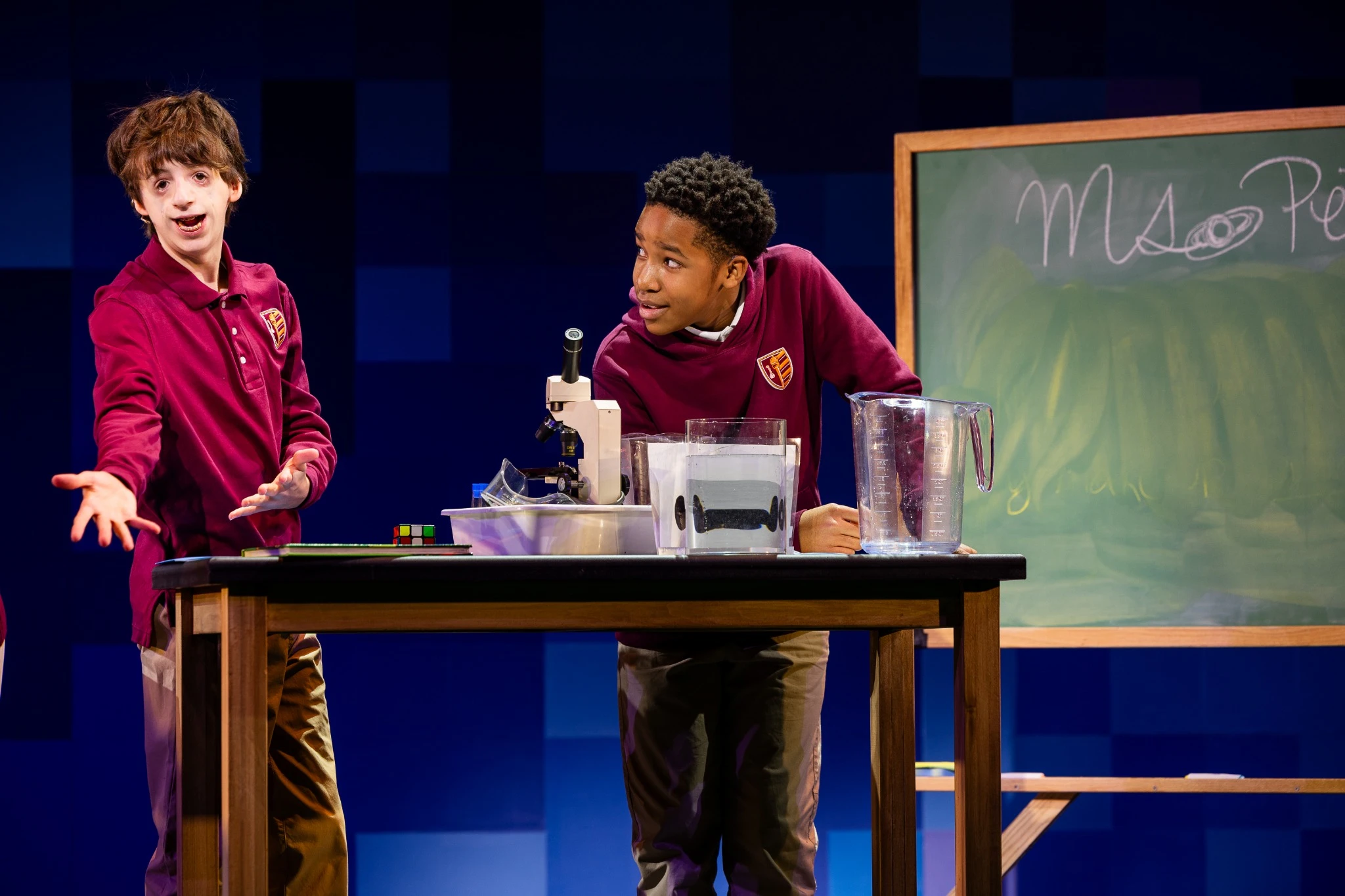
The character Julian (Reese Levine) serves as the primary student antagonist. His bullying is largely verbal and social rather than physical: mocking Auggie’s appearance, spreading rumors, and manipulating peer dynamics to exclude Auggie. The story also examines adult complicity through Julian’s mother (played by Pearl Sun, who also portrays one of the Beecher Prep teachers), who repeatedly defends her son’s behavior. One particularly resonant moment occurs near the climax, when Julian’s mother suggests that other children simply are not “ready” to interact with Auggie. This justification echoes contemporary debates about accommodation and the limits of a public institution’s responsibilities toward inclusion.
Wonder reminds us that belonging and kindness aren’t abstract ideals. They are tangible acts, emerging from real choices. In the song “You Are Beautiful,” performed by Auggie’s mother Isabel (Alison Luff), the lyric “Oh Auggie, what a wonder you are” quietly echoes the title. Supported by a gentle melodic line, Luff’s words articulate the musical’s purpose: to invite amazement and wonder at the simple reality of other human beings—both despite, and because of, everything that makes them unique.