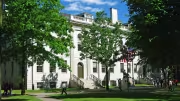
On a sunny Thursday last September, more than 400 people crowded into the pews in Harvard’s Memorial Church, wearing identical crimson lanyards with the words “Continuing Education” printed on the strap. The mood was giddy, with a touch of newcomer jitters. Many had traveled across the country—or even the world—to attend this convocation ceremony for students newly admitted to a degree program at one of the largest and least talked-about parts of the University: the Harvard Extension School.
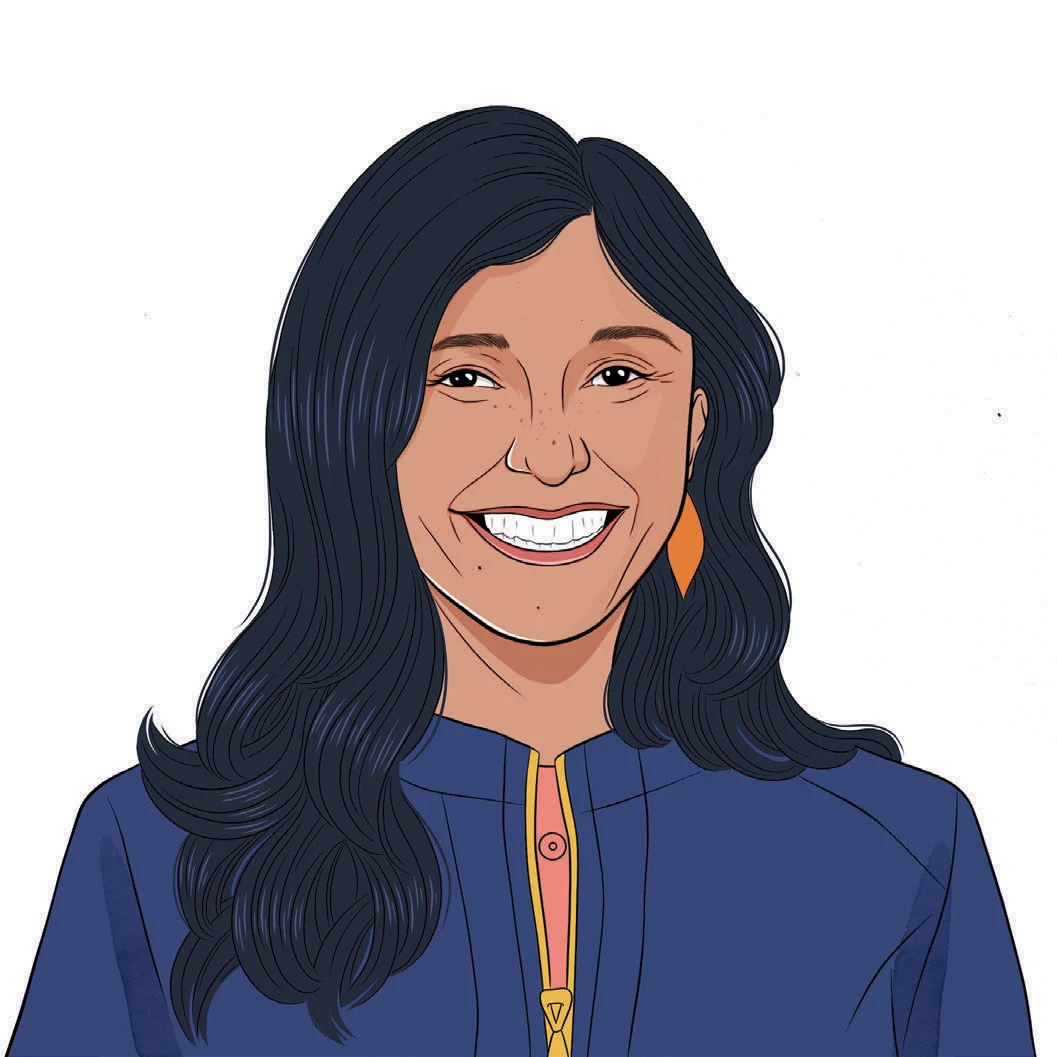
Nancy Coleman, the dean of the Division of Continuing Education (DCE), which houses the Extension School, looked out at the sea of students. Many were in their 30s, 40s, or older, and would spend the next few years taking remote classes at night and on weekends, while juggling full-time jobs and family responsibilities. Coleman told them that they were now Harvard students. “Wherever you are coming from, whatever your story, know this,” she said, “you are welcome here.” She paused, then emphasized again, “You belong here.”
DCE deans have been delivering a version of this message at every convocation since 2018, when Harvard Extension School (HES) began holding the annual ceremony. They keep repeating it in part because people need to hear it. Type “Harvard Extension School” into Google, and a list of related search suggestions pops up, including “Can anyone go to Harvard Extension School?” and “Is Harvard Extension School actually Harvard?” Questions about the legitimacy of an Extension School diploma erupted in 2023 over an online bio belonging to anti-DEI provocateur Christopher Rufo, A.L.M. ’22, which seemed to blur the distinction between his HES degree and a traditional Harvard master’s in government. And in his book “The Gates Unbarred”: A History of University Extension at Harvard, 1910-2009—its title taken from a poem by the late Boylston professor Seamus Heaney—the school’s former longtime dean Michael Shinagel writes that HES is often “overlooked or totally ignored” in University histories, even those that are otherwise exhaustive.
All this angst stems from a paradox at the heart of the relationship between the school and the rest of the University.
Established in 1910, HES is one of the country’s leading continuing education schools, a field that, until a couple of decades ago, was very small. “It lived very much on the margins of higher education,” says Suzanne Spreadbury, the HES dean of academic programs. “Harvard was an outlier.” Today, most American colleges and universities have some kind of continuing education school, although Harvard’s remains one of the most academically diverse and demanding, enrolling more than 13,000 students, about 4,000 of whom are candidates for bachelor’s or master’s degrees. (Anyone can sign up to take individual courses, but there is an admissions process for entering a degree program.) Financially, HES not only pays for itself through tuition revenue, but generates a surplus. Since 1975, it has been part of the DCE, which is in turn housed within the Faculty of Arts and Sciences.
For years, HES student groups have lobbied without success to change their degree names, which they view as outdated and stigmatizing. The diplomas for every other school at Harvard list an academic concentration, but HES graduates, no matter their field of study—creative writing, biotechnology, cybersecurity—receive a bachelor’s or master’s of liberal arts in “extension studies.”
All this angst stems from a paradox at the heart of the relationship between the school and the rest of the University. Much of Harvard’s prestige has historically been tied to its exclusivity. Last year, nearly 48,000 people applied to Harvard College; only 4.2 percent got in.
But HES—with its open enrollment policy, relatively low tuition, and a catalog of 900-plus courses, nearly all of them online—is one of the most egalitarian parts of Harvard. It’s “the ultimate democratic experiment,” Shinagel says, with a different kind of mindset. At the College, the major mark of achievement is gaining admission, but for degree-seekers at HES, it’s getting to graduation. The school’s whole purpose is to make academic learning accessible to as many people as possible, and to give them flexibility to design their own academic paths, whether they’re taking one-off courses for personal enrichment, earning a professional certificate, or applying for formal admission to a degree program. At a time when U.S. President Donald Trump’s administration is pressuring elite institutions like Harvard to invest in workforce development and skills-based vocational programs, the University can point to HES as a place where that kind of investment is already deep and longstanding.
Indeed, the bigger question HES raises isn’t whether it’s “really” a part of Harvard or whether its students “belong” here—indisputably, that answer is yes—but instead something deeper: what is education for?
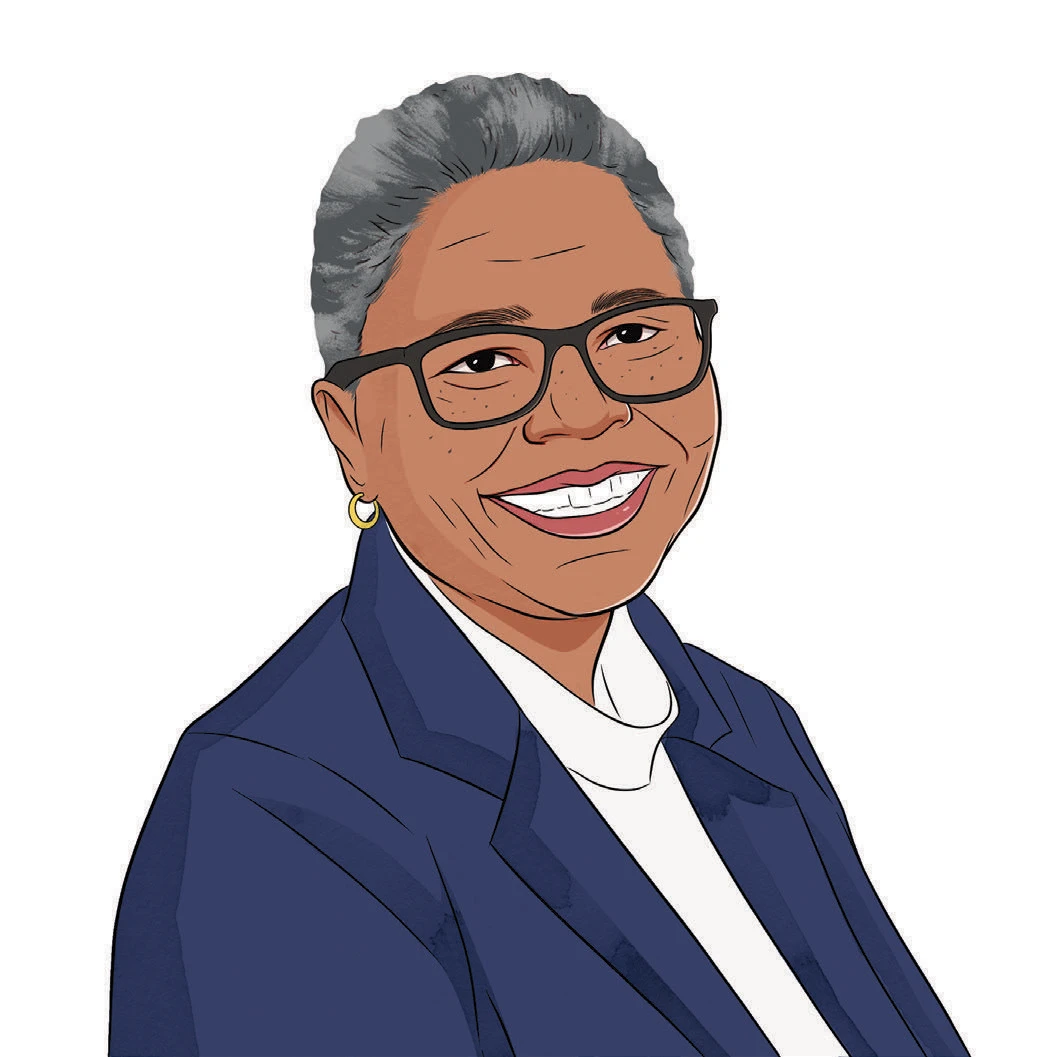
Latanya Sweeney remembers shedding tears when she saw the HES banner at a college fair in downtown Boston in 1990. Now the Paul professor of the practice of government and technology, Sweeney is a giant in computer science, a scholar whose work helped launch the fields of data privacy and algorithmic fairness. She’s also deeply embedded in the College, having spent 10 years as a Currier House faculty dean. But in 1990, she was a 30-year-old without a college degree, in a state of what she calls “academic despair.” A decade earlier, she had left MIT to start her own computer company. Business was thriving, but she felt stuck: without academic credentials, she couldn’t publish her ideas in peer-reviewed journals and move forward as a researcher. And she feared it was too late to get those credentials—at least, not without giving up her job and salary.
At HES she was able to regain her educational footing. After earning a bachelor’s in computer science in 1995, she re-enrolled at MIT, this time as a Ph.D. student. Sweeney often describes HES as a “lighthouse” for people like her who had been derailed from the traditional path and “thought our academic lives were over.” She recalls one HES classmate who discovered late in life that she wanted to be a doctor, and another who finally got her college degree at the same time as her son. Another had returned to school quietly to earn the undergraduate diploma that his coworkers assumed he already had.
“What the Extension School allowed,” Sweeney says, “was this kind of diligent work—one foot in front of the other, even if the most you could do between life and work and raising children was one course a semester, year after year.”
From the beginning, HES was intended to make college-level classes available to people who, for whatever reason, couldn’t go to college—including, explicitly, women and members of the working class. The concept grew out of the Lowell Institute, an organization founded by John Lowell Jr., a Boston textile manufacturing scion who attended Harvard for two years before dropping out in poor health. He died young in 1836 and left a will stipulating that half his wealth be used to provide public lecture courses in Boston. The most popular ones were to be free, while more “abstruse” six-month courses, Lowell decreed, should cost no more than “two bushels of wheat.”
The Lowell Institute took off immediately—people lined the streets for tickets, and some lecture series had as many as 10,000 applicants. Among the instructors in those early decades were Harvard luminaries including William James, M.D. 1869, LL.D. 1903 (psychology), Asa Gray, LL.D. 1875 (botany), and Oliver Wendell Holmes Jr., A.B. 1861, LL.B. ’66, LL.D. ’95 (government).
From the beginning, HES was intended to make college-level classes available to people who, for whatever reason, couldn’t go to college. HES classes in the 1960s were taught to sailors on a Navy submarine.
In 1900, A. Lawrence Lowell, A.B. 1877, LL.B. ’80, a cousin of John Jr., was named the head of the Lowell Institute. When he became president of Harvard nine years later, his first major undertaking—even before his famously ambitious reforms to undergraduate education—was to establish an extension school on campus. The institute was its model. For several years already, Lowell had been revamping that organization, transforming its lecture courses into a more systematic program of adult education and persuading Harvard faculty colleagues to teach their regular classes again in the evenings at the institute. One of the institute’s philosophy students wrote in 1910 of his classmates: “Young and old, black and white, artisans and teachers, men and women—who had questioned the meaning of life, and the universe, were eager to compare their thoughts with the questioners of all time. It was an audience to challenge any professor’s attention and respect.”
That same year, Harvard leaders authorized the formation of a Department of University Extension. It awarded its first degrees in 1913, to John Coulson and Ellen Marie Greany.
Many elements from those early years carry through to today, including an emphasis on accessibility. Classes now cost more than two bushels of wheat, but the overall tuition price for a complete bachelor’s degree ranges from $34,560 to $69,120, according to the school’s website (the cost varies depending on factors like financial aid and the number of transferable credits from other colleges). For a master’s degree, the total tuition is about $41,000. The admissions process at HES is similarly geared toward inclusion, while also imposing a level of rigor. Rather than submit a traditional application, students who want to enter a degree program must first score a B or higher in three required HES courses—the lineup varies by concentration but always includes courses in research methods and writing. “Earn your way in” is the school’s tagline for this process, which has been in place for decades.
Students come to HES for all kinds of reasons. Priya Tahiliani, A.L.M. ’13, was a Boston schoolteacher about to start a family who needed a master’s degree to keep her teaching license. She went on to earn a doctorate and is now the superintendent of the Brockton, Mass., public school district. Connie Askin, A.L.B. ’93, the CEO of the Worcester, Mass., chapter of Big Brothers Big Sisters, grew up on a Minnesota farm, the youngest of six children, hungry for a college education. She moved to Boston and got a job as a secretary, then enrolled in classes at HES.
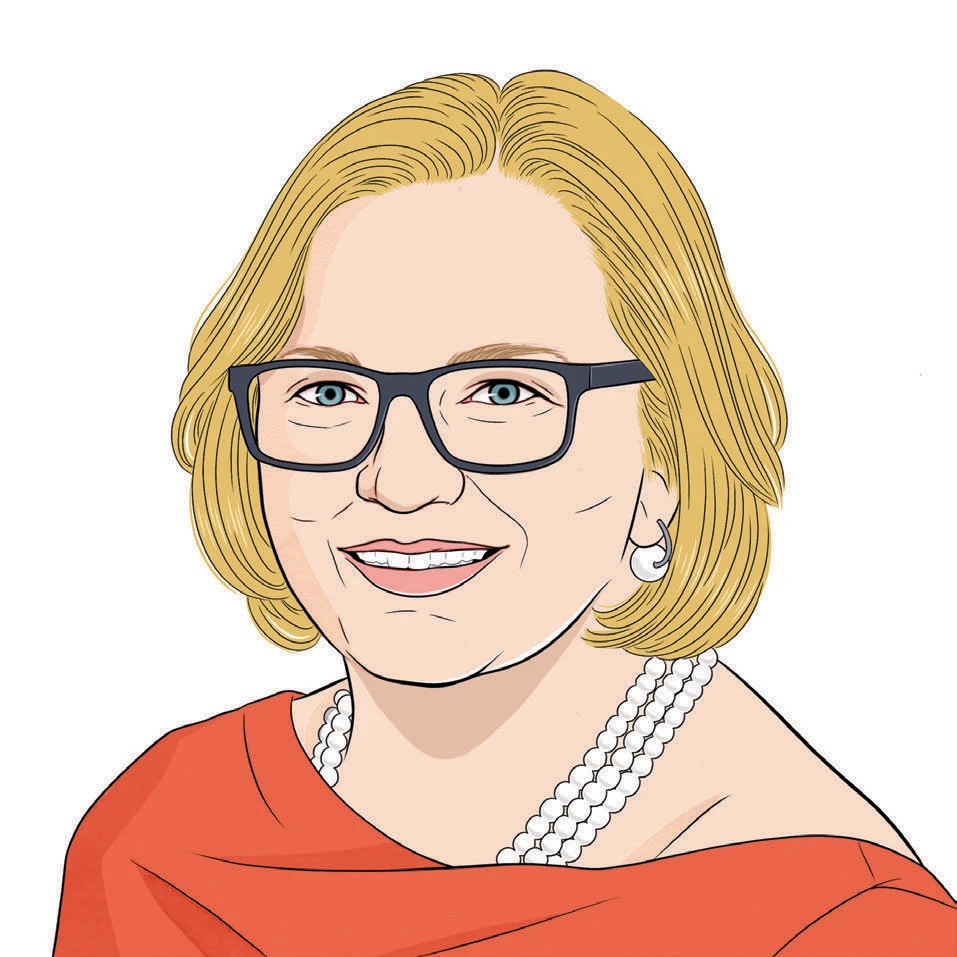
Anna Soltys Morse, A.L.B. ’18, was a child of academics for whom school never quite fit. After a failed start at college, she spent several years working as a wilderness guide and occasional dogsledder. Now she works all over the world as an acrobat.
“This was the only way I could get a degree,” says Morse, who concentrated in humanities and graduated cum laude. Some semesters she took four courses, other semesters only one or two. “And then there were times when, you know, I didn’t have electricity,” she says, because she was out in the woods leading a trip, “and so it was not possible to take classes. The flexibility was very important.”
Ariel Gamiño, A.L.M. ’03, the HES alumni association president, took his own winding path through higher education. He arrived in the United States from Mexico at 17, and after learning English, studied computer science in community college before graduating from the University of Texas at Austin. He stumbled upon HES years later while living in Boston, when he found out that his employer would reimburse his course tuition.
At first, he just explored new interests—photography, psychology—but then he realized he could get a degree. Gamiño spent the next five years studying for a master’s in software engineering, eventually using his education to land a job in artificial intelligence. “People who attend the Extension School want to keep learning,” he says.
The average age of HES students is mid-30s, and most are mid-career, so transcripts and test scores don’t mean as much. Instead, with the earn-your-way-in model, “we get to see what type of academic work they can do now,” Coleman, the DCE dean, says. “Can they handle the rigor of the program? And by the time they finish the three courses, they know what they’re getting into. And we know who they are.”
The courses themselves also retain much of the school’s founding DNA. There are now dozens of subject areas for students to choose from—including modern-day fields such as finance, digital media, and industrial psychology—but liberal arts remain at the heart of the curriculum. To earn a bachelor’s degree, for instance, students must take courses in the sciences, social sciences, and humanities, as well as in a foreign language and moral reasoning. Many HES classes are taught by Harvard faculty members (the exact number fluctuates, but this year, it’s roughly one-third of the courses). Other classes are led by faculty members from other universities or industry experts outside academia. Anthony Amore, the Isabella Stewart Gardner Museum’s head of security and the lead investigator in the infamous unsolved 1990 heist, teaches a class on art crime, a part of the HES museum studies program; Hugh Fink, a former Saturday Night Live writer, teaches television comedy sketch writing.
In describing why they teach there, HES instructors often echo the Lowell Institute ethos. Kevin Madigan, the Winn research professor of ecclesiastical history at Harvard Divinity School, talks about HES’s ability to distribute Harvard’s “unparalleled blessings” to students around the world. Before online courses were the norm, he taught a Saturday morning seminar on campus for many years. “I was always impressed that students would drive up from New York on Friday night,” he says. “That’s dedication.”
Some travel from farther away. George Wendt (not the actor from Cheers), A.L.M. ’11, who now teaches at HES, got a master’s in management while simultaneously attending law school at Tulane. During summer and winter breaks, he would fly from New Orleans to take classes on Harvard’s campus. “You might have to sacrifice your sleep and your hairline, but it can be done,” he says. “And it’s absolutely worth it.”
Wendt’s frequent co-instructor at HES (and his onetime professor) is John Paul Rollert ’01, a faculty member at the University of Chicago’s Booth School of Business who has taught courses on leadership and politics at HES for 20 years. Compared to his University of Chicago business students and the classmates he knew as a Harvard undergraduate, the students he encounters in HES classrooms are typically older, with more diverse educational backgrounds. “They’ve lived real lives, and often lives not of immense privilege,” Rollert says. Especially in class discussions about modern American politics, “they introduce vivid, lived experiences that often make the conversations richer,” he says. “It’s a different discussion when you’re talking with people who have always had to work for a living, or who are paying out of pocket themselves for the classes they’re taking.”

During the past two decades, HES has seen an explosion of growth. Between 2010 and 2025, the number of master’s graduates more than doubled from 522 to around 1,200 per year. Bachelor’s degrees held steadier overall, fluctuating between about 130 and 190 graduates per year. Class enrollments increased by more than 20 percent. And the school’s academic offerings surged: between 2012 and 2020, the number of courses nearly doubled, and the number of certificates and microcertificates—credentials that can be earned in just two to five classes, and which can often be “stacked” toward credit for an HES bachelor’s or master’s degree—rose from a handful in the 2000s to now more than 40.
Partly, this reflects national trends in the higher education marketplace. Continuing education programs have proliferated in recent years and are in increasingly high demand, at a time when regular college enrollments have dropped 15 percent nationwide.
“People ask me, is this a growing field? And I tell them, ‘Oh my God, it’s the only area that’s growing,’” says Robert Hansen, the CEO of UPCEA, a national association of online and professional education programs (of which Harvard is a founding member). “One reason it’s growing is because the average college learner is now well into their 20s and often working, while the number of full-time residential college students is shrinking every year.”
Coleman has seen this too. “At DCE, we’re not calling them non-traditional learners anymore,” she says, “because the non-traditional learners have become the traditional learners.” In that environment, she says, it’s crucial for institutions to be able to offer a curriculum that is flexible, accessible—and, often, online.
New courses can go from conception to the course catalog within months.
As one of the more market-focused parts of Harvard, HES has always been a locus of experimentation. It was an early innovator in distance learning, dating back to 1940s radio courses and classes taught to sailors on Navy submarines in the 1960s. “Since we teach in a non-traditional model,” Coleman says, with a leaner approval process than the rest of the Faculty of Arts and Sciences, “we can develop programs quicker” in response to student interest, employer demands, or current events. New courses can go from conception to the course catalog within months. This year, the school debuted classes on tariff economics, journalism under authoritarian regimes, and Hollywood’s relationship to AI. It also launched several new certificate programs, including in AI and climate change management.
A similar dynamism runs through HES’s approach to education. In 2008, the school revised its master’s degree requirements to allow students in professional concentrations the option of submitting an applied research or creative project instead of a traditional thesis. A decade ago, HES opened that option to all master’s students, including those in liberal arts. Huntington Lambert, the DCE dean at the time, believes the change may have helped boost HES’s overall graduation rate, which rose from 73 to 90 percent between 2010 and 2020. “We tried a lot of things and we learned a lot,” he says. “In particular we learned to try to do what the [student] tells you that they need in order to learn better.”
Those successes fed into a sense of optimism at September’s convocation ceremony, where Gamiño, the alumni association president, stood at the back in Memorial Church, beaming. He greeted the newly admitted degree-seekers on their way into the ceremony and then again on their way out, as everyone headed to a reception under a tent by the Science Center. “It’s always great being there,” Gamiño said later. “Being together, feeling the energy—we have so many stories.”
And the anxiety about belonging? He smiled. “That’s a phase all Extension School alumni go through,” he said. “But honestly, I can’t think of an alumni event where I didn’t feel like I belonged. They welcome you. Like, ‘You’re a learner, you graduated from our school. Welcome.’”