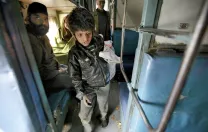
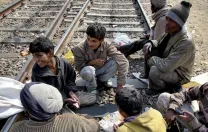

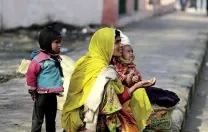
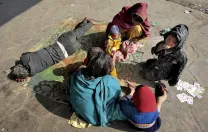
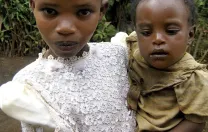
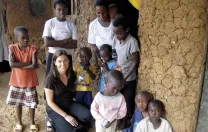
Bantu tribal people were brought to Somalia from other African countries as slaves in the nineteenth century. After emancipation, with few options for formal employment, this minority group adopted a subsistence lifestyle, settling in remote river valleys without schools or access to healthcare. The group, which constituted at least 5 percent (and by some estimates, much more) of Somalia’s population, didn’t have even one representative in the national government. When the civil war began in 1991, Somali Bantu communities were defenseless as armed groups from both sides of the conflict started coming to their communities, raping, pillaging, and killing under the pretense that the villagers had helped the other side.
Tens of thousands of Somali Bantus ended up in refugee camps in Kenya. Returning to Somalia, where they suffered from discrimination and where outbreaks of violence persisted (and still do), was not a good option. By the time the United States agreed to accept 13,000 Somali Bantu refugees for resettlement, most of them had been living in the camps for more than a decade.
In 2006, Theresa Betancourt and colleagues at the Boston Medical Center (BMC) received a request for help from the public schools in Lynn, Massachusetts, home to a Somali Bantu refugee community. The refugee children were having behavioral problems, and the school system was having trouble communicating with their parents. They sought out the BMC team, who were known for their expertise in working with African populations and war refugees.
Betancourt and her colleagues engaged teachers and administrators in Lynn to help them understand not only the cultural differences involved (refugee parents weren’t accustomed, for example, to speaking directly to teachers about their children’s education) but also the challenges specific to the Somali Bantu experience (such as parents’ lack of literacy, and mental-health issues stemming from exposure to violence, being uprooted, and then living in camps for years). The goal was collaborative, rather than antagonistic, relationships with the parents.
Later, Betancourt saw an opportunity to try locally an intervention similar to those she’d developed for use in Sierra Leone and Rwanda. Aweis Hussein, a Somali Bantu teacher’s aide and interpreter whom Betancourt knew from her work in the Lynn public schools, had helped found Shanbaro, an organization for the Boston-area Somali Bantu refugee community. Working with Hussein and other community leaders, Betancourt conducted interviews to assess both children’s needs and any factors that seemed to mitigate the effects of the adversity they experienced as refugees; she hopes to design and test a family-strengthening intervention adapted to the Somali Bantu culture and needs. In the meantime, graduate student Stephanie Loo has already won funding to lead a Somali Bantu girls’ empowerment group and Betancourt’s interviews have resulted in a community needs assessment that can be used to apply for further grant aid. Rita Falzarano, development coordinator for the nonprofit Chelsea Collaborative, an umbrella organization that includes Shanbaro, notes another benefit: Hussein and four other Somali Bantu community members worked side by side with Harvard researchers, receiving training in social-science research methods to help carry out the study.
With most so-called research partnerships, says Falzarano, researchers gather the data they need “and that is the last you hear from them.” The partnership with Betancourt “is a true partnership,” she says: “It benefits the community as well as the researcher.”