The Enterprise Research Campus, Part Two

Tishman Speyer signals readiness to pursue approval for second phase of commercial development.  

ERC construction site in March 2024

ERC phase A construction in March 2024. The regulatory approval process for phase B will begin soon.  | PHOTOGRAPH BY JIM HARRISON

Tishman Speyer, the development partner that is building an Enterprise Research Campus (ERC) in Allston on property leased from Harvard, took the first step toward construction of the second phase (phase B) of that project on April 16. With the submission of a letter of intent to the Boston Planning and Development Agency, the firm signaled that it would soon initiate the regulatory approval process for an additional 720,000 square feet of laboratory/research and development and office space, and approximately 320,000 square feet of residential housing (including affordable units) with a mixture of ground floor retail and community uses. The second phase is proposed on 4.8 acres of University-owned land at 100 Western Avenue, across from Harvard Business School. Tishman Speyer first previewed its plans for this second phase of development in 2021.
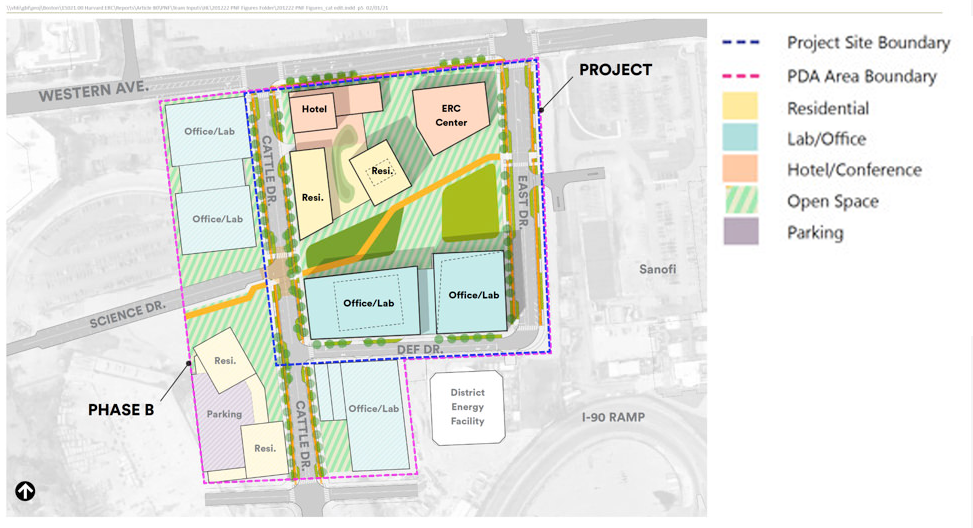
 

ERC phase B
The ERC as envisioned when the first 14 acres are fully built. | PREPARED BY HENNING LARSEN, STUDIO GANG, UTILE AND SCRAPE

A groundbreaking to celebrate the first phase (phase A, now well underway), which includes 900,000 square feet of commercial development, including lab space for life sciences companies, 343 rental apartments (a quarter of them affordable), a 246-room hotel, street-level shops and restaurants, and more than 2 acres of public outdoor space took place on November 1, 2023.


Read more articles by Jonathan Shaw

You might also like

The award-winning international journalist has served as interim curator since 2025.

College staff whose jobs will be changed or eliminated were notified this week.

The organization said its amicus brief had not been reviewed internally.

Most popular

In her memoir All That's Unseen, Emilee Hackney explores religion, friendship, and home.

A new federal rule sparks uncertainty for graduate students.

China’s Excess Wind Energy

Rather than shutting down turbines, China can harness surplus wind energy to make “green” hydrogen fuel and industrial chemicals.

Explore More From Current Issue

Two figures stand before a large, colorful pixelated face against a yellow background.

Harvard scientists identify hundreds of genes under selective pressure.

Two colorful octopuses swim among vibrant coral and sea life in a lively underwater scene.

New Harvard research finds octopuses go beyond sight and touch to find mates.

Black and white photo of Joseph Murray in a white lab coat sitting in an office.

Nobel Prize recipient Joseph E. Murray dedicated much of his career to organ transplant surgery.