Read All About It

Beyond its reunion symposiums, the class of 1950 has elicited reviews of the state of knowledge ...

Beyond its reunion symposiums, the class of 1950 has elicited reviews of the state of knowledge--and the state of the world--from a baker's dozen of its members. The resulting essays--ranging from the global economy (George C. Lodge) and public education (Robert Coles) to information systems (Robert L. Ashenhurst), integration and Harvard admissions (John Dwight Ingram, Frank S. Jones), and investments (John Train)--have been collected in a 272-page volume entitled Yesterday, Today, and Tomorrow. Edited by George S. Mumford and privately published--in hard covers with a suitably crimson dust jacket--the book will be available for sale at reunion registration for $20, or in advance for $24 postpaid (make the check out to Harvard Class of 1950) from G. Mumford, P.O. Box 267, Dover, Massachusetts 02030.
a-mumford

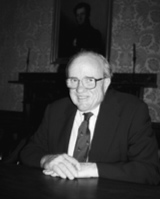
George S. Mumford, editor

Most popular

HAA Announces Overseers and Directors Slate for 2026

Alumni will vote this spring for members of two key governing boards

Why Men Are Falling Behind in Education, Employment, and Health

Can new approaches to education address a growing gender gap?

Harvard Scholars Discuss Venezuela After Maduro

A Harvard Kennedy School panel unpacks the nation’s oil sector, economy, and democratic hopes.

Explore More From Current Issue

A jubilant graduate shouts into a megaphone, surrounded by a cheering crowd.

For Campus Speech, Civility is a Cultural Practice

A former Harvard College dean reviews Princeton President Christopher Eisgruber’s book Terms of Respect.

Four young people sitting around a table playing a card game, with a chalkboard in the background.

On Weekends, These Harvard Math Professors Teach the Smaller Set

At Cambridge Math Circle, faculty and alumni share puzzles, riddles, and joy.

Four men in a small boat struggle with rough water, one lying down and others watching.

The 1884 Cannibalism-at-Sea Case That Still Has Harvard Talking

The Queen v. Dudley and Stephens changed the course of legal history. Here’s why it’s been fodder for countless classroom debates.