A January 22 public hearing to discuss the construction of affordable homes at a Harvard-donated site between Seattle and Windom streets in Allston opened with stark numbers. “There are about 9,144 total housing units in Allston” began Roxanna Zahedi of Urbanica, the design, development, and construction firm Harvard selected to build affordable housing on the site. “Of those,” she continued, just “10 percent are homeownership, so already a pretty limited stock.” And of those privately owned residences, only three percent—or 30 total housing units of the 9,144—are income-restricted. Of those, she added, “Zero” are currently available.
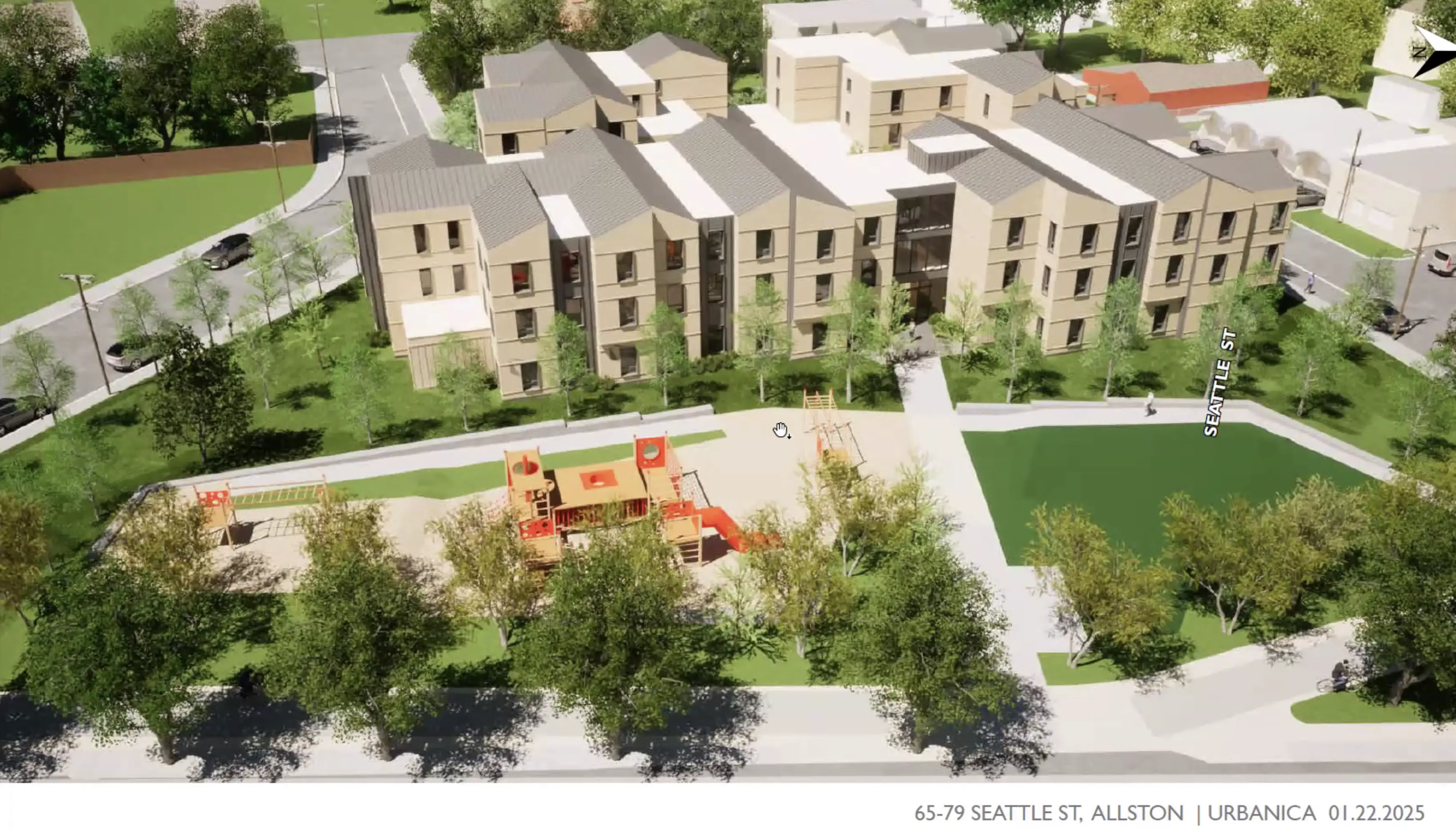
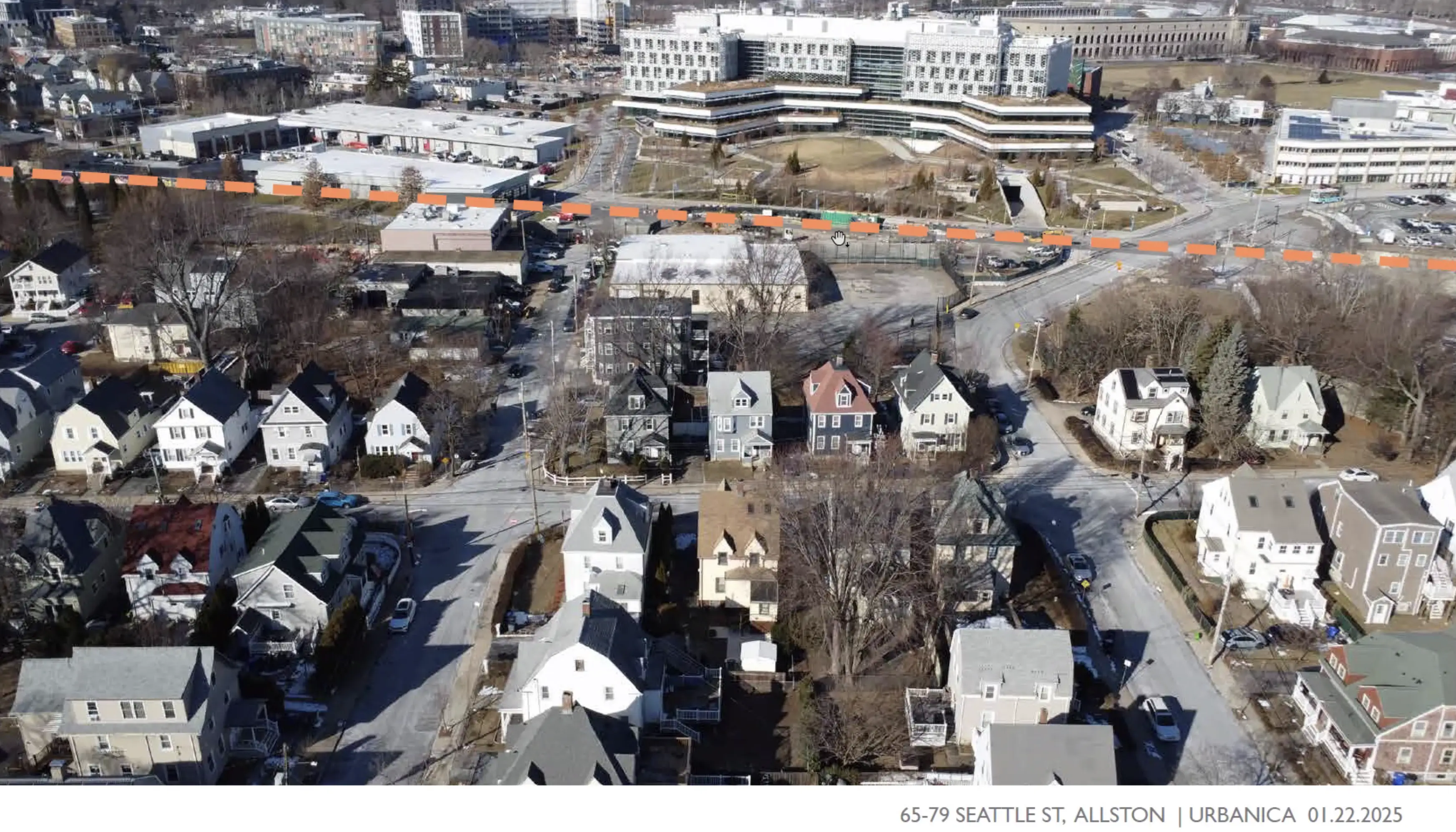
In that context, Urbanica’s proposal to bring 43 new income-restricted homeownership units to the residential neighborhood that begins about 500 feet south of Harvard’s science and engineering complex (SEC) represents a significant contribution to the local affordable housing stock—something Allston residents have been requesting for years. The site, formerly occupied by a plumbing supply warehouse, abuts the planned pedestrian and bike-friendly greenway, an open space corridor that will eventually extend from Ray Mellone Park adjacent to the Honan-Allston branch library and north through the enterprise research campus (ERC, now under construction) all the way to the Charles River at the Western Avenue Bridge.
About half the units will be restricted to buyers earning up to 80 percent of the area median income (AMI), Urbanica said; the other half will be restricted to those earning up to 100 percent of the AMI, which ranges, depending on household size, from $114,250 for a one-person household to $163,200 for a four-person household. The firm’s proposal includes six one-bedroom units averaging 600 square feet, 32 two-bedroom units averaging 750 square feet, and five three-bedroom units averaging 1,000 square feet. The energy-efficient three-building complex, said architect Stephen Chung, will include indoor and outdoor bike parking, as well as 18 covered off-street parking spaces. The plan includes more than 15,000 square feet of open space, much of it in an interior courtyard, with the remainder dedicated to perimeter plantings and a connection to the aforementioned greenway. If permitting goes smoothly, Urbanica said, the project could break ground before next winter.
Residents in attendance at the meeting seemed generally pleased with the design, although several questioned whether 18 parking spots were sufficient—notwithstanding the fact, as one questioner put it, that car ownership among Allston residents is about 40 percent. (One actually requested fewer parking spaces in order to accommodate more three-bedroom units.) Another asked whether solar panels could be placed on the parking area roof. Although that is not part of the plan, the Urbanica team said, the buildings are designed to be solar-ready.
Including this project and others already permitted or under construction, Allston is about to experience a small housing boom. The first phase of the ERC, rising on land leased from Harvard, will include 343 rental apartments, a quarter of them affordable. A 274-unit apartment building at 180 Western Avenue, also on Harvard land, will include 41 income-restricted units. And Harvard is building 264 apartments for University affiliates at a site along North Harvard St. beyond the Stadium and outdoor track. In total, 924 new units are expected to come online this year and next, accommodating more than 1,600 new residents—a remarkable 10 percent growth in the housing stock during the next 24 months.