When Harvard denied tenure to political theorist Peter Berkowitz, an associate professor of government, in 1998, he filed an internal grievance, alleging that the University did not follow its own written procedures during his tenure review (see "Berkowitz Appeals Tenure Denial," March-April 1999, page 68). The case has since brought national attention to the tenure process at a time when the University has made promotion of junior faculty from within and without Harvard an important priority.
The original Berkowitz complaint, citing "bias, conflict of interest, or lack of relevant expertise," was reviewed by the Faculty of Arts and Sciences (FAS) docket committee. Chaired by the FAS dean, the committee is charged with performing a "preliminary screening" of grievances and empowered to dismiss those that are "clearly without merit," according to the Handbook for the Faculty of Arts and Sciences. In 1999, after a five-month investigation that included consultation with legal counsel and interviews with several people, including Berkowitz, the committee found his grievance "clearly without merit."
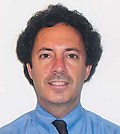 |
| Peter Berkowitz |
| Photograph courtesy of Peter Berkowitz |
Berkowitz then sued the University for breach of contract, adding to his original complaints the charge that the docket committee undertook more than a "preliminary screening" of his complaint. Harvard's motion to dismiss the case was twice denied by Superior Court judge Raymond J. Brassard. Noting that the University's own guidelines clearly distinguish between "preliminary screening...and the more involved duty of inquiry of the Ad hoc grievance panel" [including allowing the grievant to appear before it], Brassard wrote that "Harvard should reasonably expect Berkowitz to believe that the grievance panel...would investigate, in detail, the merits of his grievance." That committee would have consisted of an individual chosen by the grievant, an individual chosen by the respondent or relevant department chair (who Berkowitz says supported his tenure bid), and an individual chosen by the docket committee.
When Harvard's second motion to dismiss was denied, the case might have gone to trialformerly confidential documents were already being released to Berkowitz as part of discoverywhen through a series of legal steps Harvard was allowed to appeal in October 2002 before a three-member panel consisting of associate justices George Jacobs '55, J.D. '58, William I. Cowin '59, LL.B. '62, and Scott J. Kafker.
In a June ruling, the appeals court echoed the docket committee and found Berkowitz's original claims to be without merit. And it concluded that "there is nothing to suggest that a preliminary screening, particularly in regard to a tenure process, where the stakes [of a lifetime appointment] on both sides are very high, cannot be a careful and conscientious one...." The court noted that this was the first such grievance brought under the Handbook guidelines, so the committee was not able to rely on established precedents, and therefore proceeded deliberately and undertook some follow-up inquiry. Finally, they concluded that because the underlying grievances were without support in the contract, "we discern no prejudice to the plaintiff arising out of the docket committee's double-checking of its work through further inquiry." The case was dismissed.
The decision has been interpreted by some as a clear signal that courts remain, as the Massachusetts Supreme Judicial Court has written, "chary about interfering with academic and disciplinary decisions made by private colleges and universities."
The decision is also a vindication for professor of government Dennis Thompson (who declined to comment for this article). Berkowitz, who had published an unflattering review in the New Republic of a book Thompson had written, speculated in his original complaint that Thompson tainted his tenure process by participating as a member of the government department while also serving as associate provost for the University. The court disagreed, citing the docket committee's finding that such participation in tenure decisions was an obligation, because professors' allegiance to their departments is paramount even when serving in part-time administrative posts. Furthermore, it said, "academic adversaries, as Thompson is alleged to be, are not meant to be excluded from the process."
Berkowitz, now an associate professor of law at George Mason University Law School and a research fellow at Stanford University's Hoover Institution, has filed a petition for further review with the Supreme Judicial Court of Massachusetts, now headed by Chief Justice Margaret Marshall, Ed.M. '69, Ed '77, L '78, the University's former vice president and general counsel. Whatever its outcome, the case has already shed light on both the stakes and the necessarily confidential evaluation process when seeking life appointments for "scholars of the first order of eminence."