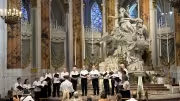
On Sunday nights, a sign taped up outside the First Church in Cambridge invites passersby to Night Song: “Let music transport you…to a place of serenity, calm, and renewal.” Inside, lighting is dim. Candles burn. People are scattered among the pews, in silence. At 7 p.m., a black-clad choral ensemble files into the sanctuary and performs “a unique fusion of contemplative modal instrumental improvisation by jazz musicians blended with ancient and modern chant and punctuated by glorious polyphonic choral music from the Renaissance,” according to organizers of the weekly refuge.
Ethereal sounds resonate. People close their eyes, and meditate. Others revere the chant, motet, or hymn, Christian in content, as integral to religious journeys. For those supine on thickly cushioned pews (it’s encouraged!), the singing, especially of Canticum Vespertinum’s soprano soloists, may swim in and out of their dozy dream states.
The music lasts an hour. There are no sermons, no socializing. Time is granted purely to private reflection, safe from nagging concerns or the complexity of worldly matters. “I find the experience just very soothing,” one visitor says. “It sets the tone for my whole week.”
www.nightsong.org
First Church in Cambridge, 11 Garden Street
A handful of choral groups performs in rotation throughout the year
November-April, 7 p.m., vocalists with jazz musicians
(May-October, 8:30 p.m., vocalists only)