
The Peabody Sisters: Three Women Who Ignited American Romanticism, by Megan Marshall ’77 (Houghton Mifflin, $28), is a delightful group biography of Elizabeth, Mary, and Sophia Peabody, in many ways America’s Brontë sisters. Elizabeth (1804-1894) was a key Transcendentalist, a writer, publisher, and translator, the founder of kindergartens in America, and the model for Miss Birdseye in Henry James’s The Bostonians. By age 17 she was running a young ladies’ boarding school in Lancaster, Massachusetts, a town full of rebel youths under the eye of Rev. Nathaniel Thayer, A.B. 1789, S.T.D. 1817, who was entrusted with renegade Harvard students during their rustications.
 |
| Illustration by Mark Steele |
Aside from theology, another favorite subject of Elizabeth’s morning discussions with Dr. Thayer was the company of Harvard students under his care. These young men, close in age to both Mary and Elizabeth, increasingly filled the sisters’ after-school hours. There was Russell Sturgis of Harvard’s notoriously rowdy class of 1823, the same one in which Mary’s once beloved Charley Pickering had enrolledand from which over half the students would be expelled before graduation. The 1820s were a time of recurrent strife between administration and students at Harvard, as its fourteenth president, John Kirkland, attempted to reform the college, then little better than a plush prep school for boys in their midteens, into a serious university. The class of 1823 was the first to encounterand to resistKirkland’s ban on the traditional dinners held the night before final examinations. The dinners took place in taverns at some distance from the college and included games of billiards, bowling, and countless rounds of toasts lasting far into the night. Not only had Russell Sturgis helped to organize one such dinner, but he also distributed the class drinking song, improvised on the occasion, to all his classmates the following morning as they gathered to take their exams.
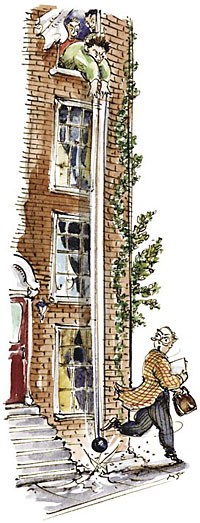
Found guilty of entering into a “combination against the authority of the College,” Sturgis was instantly suspended. Yet his actions were considered the height of class loyalty by his fellows and led to all manner of protests once he’d been disciplined: walkouts, bonfires, even one incident in which a student dropped a cannonball from his fourth-floor window “with an insulting note attached to the Proctor, breaking the stone steps and endangering the life of Professor Downing,” according to the college’s disciplinary records. The few students who had informed on Sturgis became part of a “black list” group that was heckled throughout their years on campus, although they became favorites with the faculty. Returning to college after his suspension, Sturgis disrupted an important lecture being delivered by the Reverend [William Ellery] Channing when he walked in late and his classmates rose to applaud him. This transgression brought him a full nine months’ suspension, most of which he took in Lancaster. Yet Sturgis was one of the top scholars in his class. So self-assured that flouting the Harvard authorities meant little to him, Sturgis was instantly appealing to the Peabody sisters; Sturgis himself took a particular fancy to Mary.





