Libraries in the digital era: links to Harvard collections and a humorous video

Highlights from the digital collections of the Harvard libraries, and video humor

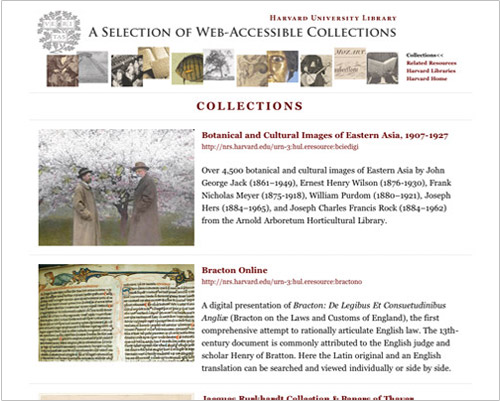
<a href="http://ocp.hul.harvard.edu/reading/">View the exhibit</a>: The Harvard University Library Open Collections Program offers this multifaceted online exploration of the history of reading as reflected in holdings from the University’s libraries.

View the exhibit: The Harvard University Library Open Collections Program offers this multifaceted online exploration of the history of reading as reflected in holdings from the University’s libraries.

Harvard is rethinking libraries, librarians, and collection priorities, as described in this magazine’s May-June feature article Gutenberg 2.0. And it is actively digitizing its holdings to make them available to audiences within and beyond the Harvard campus.

Changes are being driven in part by the new ways in which people interact with information. The most fundamental of those interactions is examined in a curated, online exploration of the intellectual, cultural, and political history of reading, as reflected in multiple holdings from the Harvard libraries (see above).  University Library director Robert Darnton says that reading "has become one of the hottest subjects in the humanities, perhaps because it seems especially intriguing now that so much of it has shifted from the printed page to the computer screen."


Within the Harvard library collections available for viewing online, visitors will find musical scores, works of poetry, daguerreotypes, photographs, maps, pamphlets, and illuminated manuscripts. For access, browse the Harvard College Library's digital collections or visit a web-accessible selection of digital material from across the University Library system.
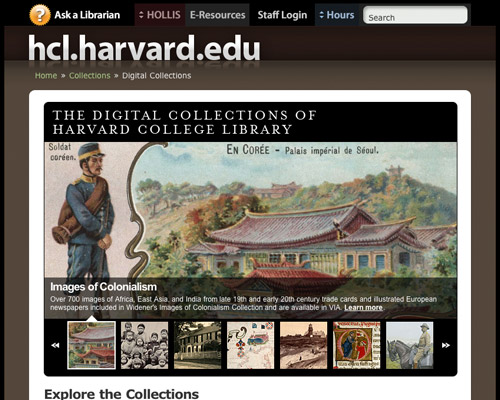


For a humorous take on a previous transition—the shift from scrolls to books—watch this clip from Norwegian television NRK (with English subtitles):


You might also like

The Gretel and the Great War author on how the Lampoon derailed his science career—and set him on a literary path.

In 1954, Gregory Corso moved into Eliot House. How he stayed there is a literary legend.

The popular Harvard English professor published Under Water this spring.

Most popular

Long-discussed reorganization includes layoffs and the end of the Dudley Community.

In 2004, a frenzy spread across Harvard Yard in days. Four billion users later, we are only just catching up.

The play Spare Parts is a contemporary fable about the quest to live forever.

Explore More From Current Issue

A vase of yellow flowers on a table next to an orange and a glass.

Harvard Art Museums restores a rare glimpse of an American master.

A glowing bulb shape surrounded by colorful, swirling energy lines against a blue background.

Harvard researchers achieve medical breakthroughs in cancer therapy and infection control.

Modern building with large glass windows, surrounded by greenery and pedestrians.

A roundup of University news from the summer of 2026