Cow’s heart, lamb’s tongue, tuna belly, and any edible parts of the pig—all are served with great care for the daring diner at Coppa, a newer South End restaurant that offers an imaginative array of Italian tapas and dreamy cocktails. Though these meats pop out on the menu—Coppa offers at least nine salumi (cured meats) plates, and sausages and salamis feature in many dishes—there is more diversity of foods and flavors than at first appears. Salads, vegetables, wood-fired pizzas, and rich homemade pastas are just as well done, especially the spicy sautéed broccoli rabe with plump raisins ($6) and the arugula tossed with shards of fennel and fiddlehead tomme ($9), a tangy cheese made in New Hampshire.
Popular with its neighbors and with foodies who come from all over, Coppa also offers a certain urban charm. It sits on a quieter corner behind Peters Park and offers sidewalk tables. The intimacy of the space works well; there is little car traffic. We recommend eating outside, which is always better in our opinion, and because the wait for an indoor table can be more than an hour. (The 40-seat restaurant doesn’t take reservations.)
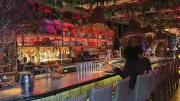
If you do go inside, Coppa’s wedge-shaped room with simple black-and-cream-colored décor is also appealing. At the narrowest end is the kitchen, so small that prep chefs have carved out a niche at the bar where they prepare the cured meats. The silvery mechanized Berkel slicer is sleek and rhythmic and oddly mesmerizing: we watched hunks of prosciutto transformed into elegant slices, our entertainment heightened by sipping one of Coppa’s specialty cocktails. We sampled a foam-topped “Cynar flip” ($9) made with egg whites and the eponymous, slightly bitter herbal-and-artichoke liqueur, which certainly whets the appetite. But the best light beverage on a warm night might be the enchanting Bella Fiore, made with Prosecco and a rhubarb- and hibiscus-flavored syrup, with a candied hibiscus flower tucked in the bottom of the flute, its pink tendrils floating upward through bubbles like an underwater sea creature.
Our friendly waitress also seemed to know her wines and poured generous glasses straight from an open bottle she carried out from the bar. We started with the two raw oysters on the half shell ($5), rightly seasoned with a dab of puréed scallions, mustard seeds, and a splash of Prosecco and served atop a mound of wet sea salt, just for looks. A little too salty, but tender, was pork rillettes ($5), akin to an old-fashioned hash. The dish came with a single buttered toast triangle, which seemed skimpy. The pork was boldly tasty, especially compared with the more subtle pâté campagne ($9), mouth-watering, as it should be, with softly crunchy pistachios.
More zingy was the paccheri di agnello, a lamb ragù with bright green fava beans and mint ($13). Mint with tomato sauce turns out to be a splendid idea—very refreshing. Interesting for its oceanic depth was a dish of fusilli with delicately cooked clams and mussels, presented in a light cream sauce with fresh peas ($13).
Coppa offers only occasional sorbets for dessert, so instead, on impulse, we fished out the hibiscus flower from the bottom of our drink, split it in half, and were each delighted by its sweet, fleshy texture. A simple finish to a simply delicious meal.