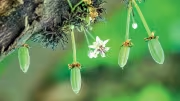
Ginkgo expert Peter Del Tredici in action at the Arnold Arboretum | Video

Ginkgo expert Peter Del Tredici shares tidbits about his favorite "living fossil."

Senior research scientist Peter Del Tredici of Harvard’s Arnold Arboretum—see “The Living Dinosaur” by Jill Jonnes, from the November-December issue—has been studying the ancient tree species Ginkgo biloba since the 1980s.  In this video, he explains some unusual features of the ginkgo and shows some living specimens of the tree, both full-size and bonsai, at the Arboretum.

 

Related topics

You might also like

When Government Funding Dropped, Harvard Found Partners

The University is expanding industry ties and investing its own funds to support research, but neither will replace lost federal dollars.

Discoveries: Chronic Pain, Cocoa Shortages, and Making Old Lungs Young

Harvard researchers investigate climate’s impact on cocoa crops, innovations in nasal vaccines, and links between pain and skull marrow.

Harvard Couple Aim to Cure Prion Diseases

The stakes are high for this husband and wife: one of them will die if they don’t find a cure.

Most popular

To Promote Healthy Habits in Patients, Start With the Doctors

Why Harvard Medical School is training physicians to think more like coaches

How Philosophy at Harvard Saved Itself

As humanities shrink across higher education, one department is flourishing. Is its success a fluke, or a roadmap?

Susan Cain foments the "Quiet Revolution."

Susan Cain foments the “Quiet Revolution.”

Explore More From Current Issue

A man with a long beard and formal attire stands next to a chalkboard with an equation.

Two tales of University greats—and an encounter with a Tiger

Panoramic view of Harvard University with autumn foliage and a river under a cloudy sky.

The University is expanding industry ties and investing its own funds to support research, but neither will replace lost federal dollars.

A woman jogs on a path beside a boy riding a bicycle, surrounded by trees.

Why Harvard Medical School is training physicians to think more like coaches