1924
With more than a thousand freshmen enrolled in the College and the Engineering School combined, President Lowell warns in his annual report that Harvard will have to shrink the size of future classes or reduce services to its students until the number of qualified teachers increases.
1939
“The Undergraduate Week,” by William R. Frye ’40, reports that Harvard’s four youngest freshmen “will have to go to bed early if a newly revived Cambridge ordinance is enforced, for it provides that persons who have not passed their sixteenth birthday must be off the streets before 9:30 p.m.”
Asserting that “This program for [dining-hall conversation] tables doesn’t mean only intellectual and exotic interests should be represented,” senior James J. Gaffney and 29 other Quincy House residents organize an American sports table; their first guest speaker is a scout for the Boston Celtics.
At Radcliffe, the 40-year-old “fire ropes” stored in the dormitories to provide “last-resort egress” have been replaced with “modern safety features” such as sprinklers, fire doors, and ladders.
1989
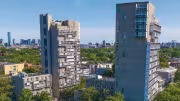
Debate ensues after the demolition of the pseudo-Colonial, blue-and-white Quincy Square Gulf gas station at the intersection of Massachusetts Avenue and Harvard Street. While some protest the building’s destruction, others praise the tentative plans for a new hotel (for guests of the University) scheduled to be erected in its place. (That hotel, in turn, is now being converted into swing-space accommodations for those undergraduates displaced by the rolling renovation of the Harvard Houses.)