Poet Robyn Schiff and Cogan University Professor of the humanities Stephen Greenblatt will speak at the 266th Phi Beta Kappa literary exercises on May 24, during Commencement week. Undergraduates elected to PBK will also honor outstanding teachers.
Schiff, who earned her M.F.A. at the Iowa Writers’ Workshop in 1999, now teaches in the University of Iowa’s English department. Her first collection of verse, Worth, opens in the grand establishment of couturier Charles Frederick Worth and ends with a diamond thief named Adam Worth (with appearances from Marie Antoinette, Mary Pickford, and Marilyn Monroe in between); her second, Revolver, examines objects displayed at the Great Exhibition of 1851.
A Woman of Property, released last week, is characterized by that same capacious sense of curiosity. This time, though, her exploration of the boundaries of ownership and belonging strays onto anxious territory closer to home. Describing her as “a poet of family life” with the “comic, fastidious” precision of Marianne Moore, critic Dan Chiasson, Ph.D. ’01, notes in The New Yorker that Schiff’s poems, “with their Hitchcock-like distrust of appearances, their alertness to hidden binds and snares, offer something few poets ever discover: a vision of the whole world.”
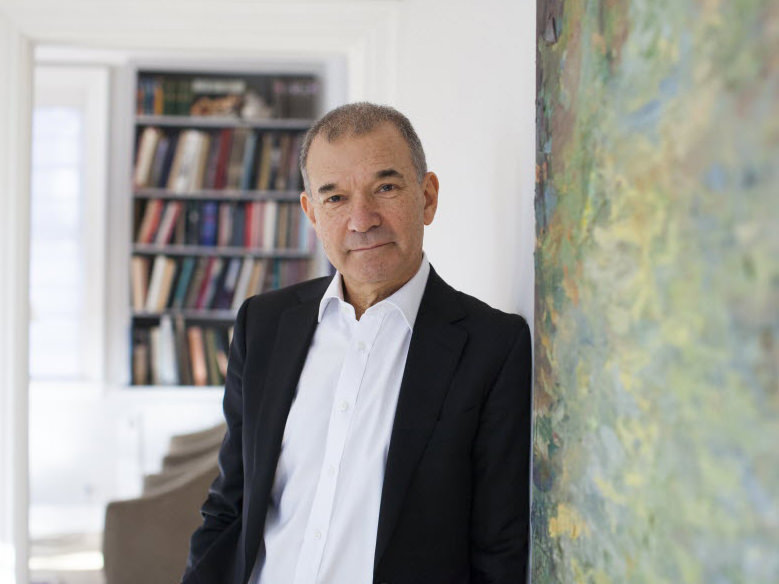
Greenblatt, a renowned scholar of Renaissance literature, has taught at Harvard since 1997. He is widely regarded as one of the founders of New Historicism, which is concerned with the political function of literature, and seeks to understand literary texts through the prevailing ideas of their time. Greenblatt has written more than a dozen books, including the 2004 biography Will in the World: How Shakespeare Became Shakespeare, a finalist for the Pulitzer Prize and National Book Award, and The Swerve: How the World Became Modern, which won both. (For more on these works, see “The Mysterious Mr. Shakespeare,” from the September-October 2004 issue, and “Swerves,” from the July-August 2011 issue.)
Earlier this month, the Norwegian government awarded Greenblatt its annual Holberg Prize, for outstanding contributions to research in the arts and humanities, social science, law, or theology. His latest book, The Rise and Fall of Adam and Eve, is due to be published next year. Greenblatt is also the general editor of The Norton Shakespeare and The Norton Anthology of English Literature.
In a 2006 lecture, Greenblatt advised students:
I do not at all think that everything one writes should have an immediate bearing on the present. On the contrary, one of the crucial achievements in a liberal education is the understanding of worlds far removed from our own. That understanding is never complete, any more than one can escape entirely from one’s own body or one’s own culture. But the ability to suspend the craving for immediate relevance and to project oneself at least part way into difference and otherness is an invaluable resource. But that projection depends not upon neutrality or indifference but rather upon carrying one’s passionate energies into an alien world. That is, you should write about the other as if your life depended on it…
I am not suggesting that you keep the television news on constantly when you are writing your papers. I am suggesting only that you should try to write well—and that means bringing to the table all of your alertness, your fears, and your desires. And every once in a while—say, every third paper—tell yourself that you will take a risk.
His full remarks appear in “Writing as Performance,” from the September-October 2007 issue.