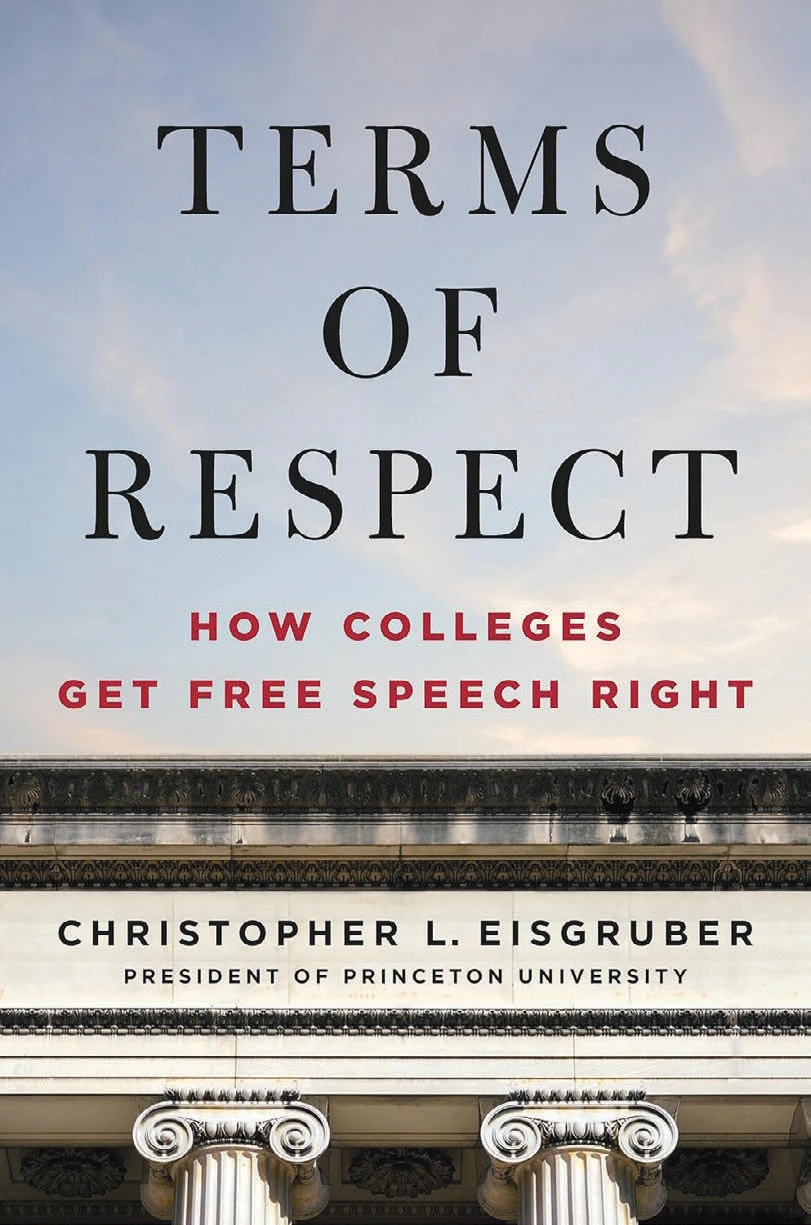
I opened Christopher Eisgruber’s Terms of Respect: How Colleges Get Free Speech Right on the morning of September 10, 2025. A few hours later, conservative activist Charlie Kirk would be murdered while speaking at Utah Valley University. Within hours, the internet’s influencers, bots, and algorithms had deconstructed and reconstructed the event to fit their audiences’ preferred framing of the news. Then came the misinformation to fan the flames of outrage. Videos were selectively edited, deepfakes surfaced, meanings were twisted and repeated until empirical facts no longer mattered. In a virtual public square that rewards the fastest, hottest takes, truth has little chance.
Against this backdrop, I could not read Terms of Respect, a clear-eyed, humane new book about free speech and higher education, as just another entry in the campus culture debate. It reads as a diagnosis of a civic crisis and a call to sustain institutions that, despite their flaws, remain among our best hopes for educating citizens to prepare them for a pluralistic and interconnected world.
Eisgruber, the 20th president of Princeton University and a constitutional scholar, writes with a combination of academic expertise and hard-earned leadership experience. Having served as dean of Harvard College at the height of campus protests in 2024, I know firsthand how abstract ideals can collide with the messy realities of campus life, and it’s from that vantage point that Eisgruber advances the thesis that a university’s approach to free speech cannot be reduced to First Amendment slogans.
The modern university demands something more: speech that is reasoned, evidence-based, and oriented toward truth.
As Eisgruber observes, a university is not a public street corner. On the street corner, one can proclaim that the Earth is flat, but that claim does not require validation from a professor of planetary sciences. The modern university demands something more: speech that is reasoned, evidence-based, and oriented toward truth. Difficulties arise, however, when a tenured professor asserts that the world is flat or that a terrorist act is justifiable. In such cases, Eisgruber argues, universities must rely on professional norms and the professor’s concern for his or her reputation to guide responsible expression. While institutions may occasionally discipline faculty who abuse their academic freedom, it is ultimately the culture and shared norms that sustain the academic enterprise. These include the practices of evidence-based arguments, charitable interpretation, the capacity to distinguish individuals from their political commitments, and the cultivation of spaces where disagreement reinforces rather than fractures the community.
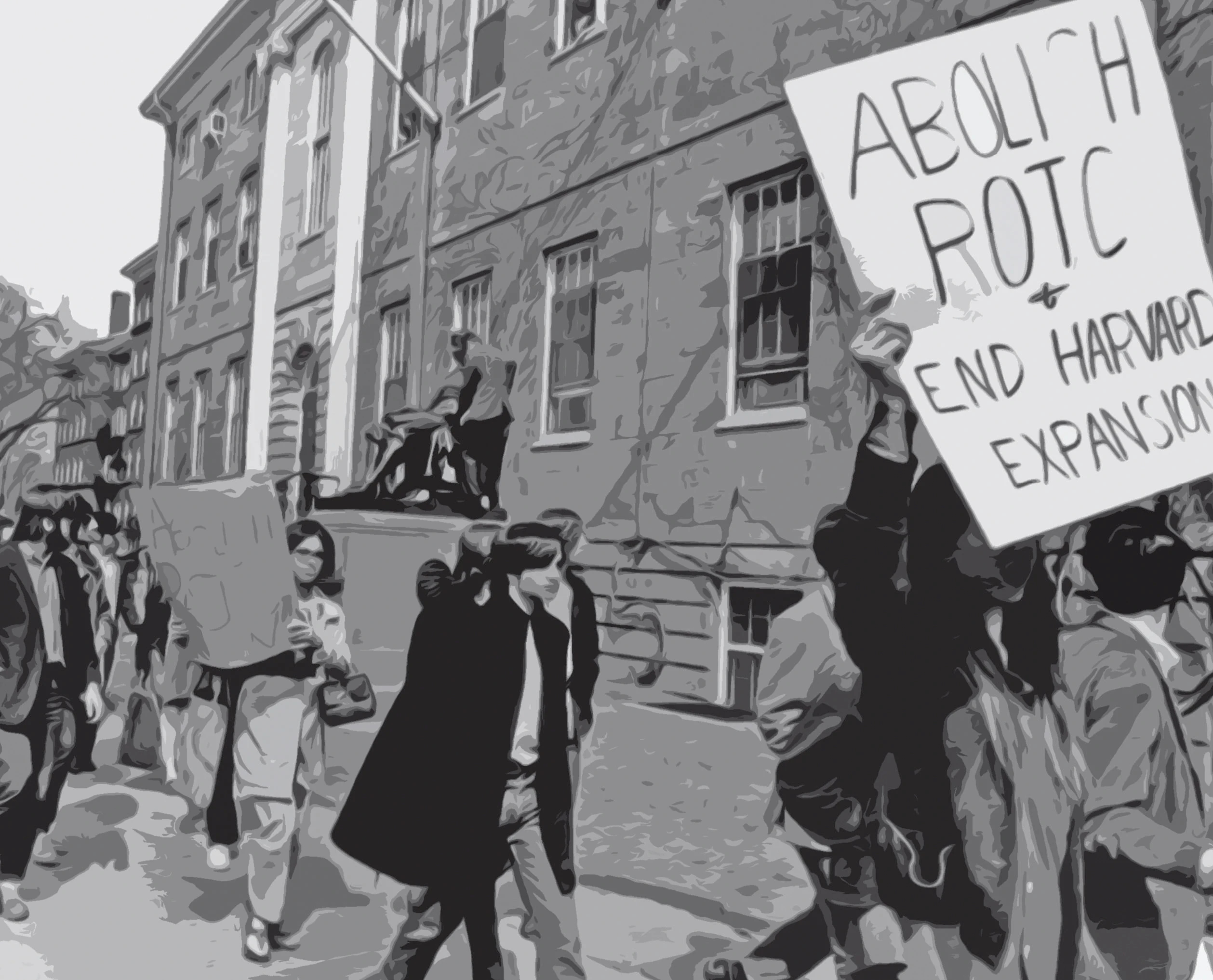
American higher education is experiencing a free speech crisis, but not because, as some in politics are claiming, universities have uniquely failed. The campus is simply one of the main stages on which the country’s quarrels perform themselves, in ways that too often reflect the epistemic free-for-all in a polarized society. Boundaries of time and space have collapsed. Disputes that once flickered briefly in campus newspapers go viral across national outlets and social feeds. Students are not only participants in free speech acts such as protests; they’re also de facto media producers and broadcasters, capturing video and drawing in outside allies, including parents, alumni, faculty, media outlets, activists, and, increasingly, legal advisers.
The challenge for administrators and faculty is to maintain a community in which disagreement is ordinary, but reasoned and civil—and in which the dignity of all community members is nonnegotiable. This involves, among other things, convincing students that real learning requires slow thinking and patient listening.
To understand how we have arrived at this moment, particularly amid growing concerns about the “silencing” of speech on college campuses, Eisgruber argues that recent debates have mistakenly cast free speech and equity as opposing values. In truth, he writes, they depend on one another.
Eisgruber recounts how the struggle for racial justice in the 1960s drew moral and strategic power from constitutional protections of speech and, in doing so, deepened the nation’s faith in those very rights. Though the First Amendment formally limits only government action, the Supreme Court’s reasoning during that period helped shape a broader civic understanding of free expression.
A decisive turning point came with the famed libel case New York Times Co. v. Sullivan. The unanimous majority opinion, written by Justice William J. Brennan Jr., LL.B. ’31, LL.D. ’68, established a high bar for restricting speech and affirmed open debate as essential to American self-governance. Eisgruber observes that Brennan grounded the nation’s modern understanding of free speech not in a defense of individual liberty championed by Justice Oliver Wendell Holmes Jr., A.B. 1861, LL.B. ’66, LL.D. ’95, but in a more expansive vision of democratic life—the ideals of Justice Louis Brandeis, LL.B. 1877.
The freedom to think, question, and speak, in Brandeis’s view, was not just an individual right but a civic responsibility. Free expression afforded citizens the space, as he put it, “to develop their faculties.” Speech acts are the means through which political truths are discovered, tested, and refined. Brandeis’s confidence lay in the power of reason and in the cultivation of civic virtues: habits of deliberation, courage, and duty to the common good. In this way, he appealed to what sociologist Robert Bellah ’48, Ph.D. ’55, later described as the nation’s “civil religion,” a shared moral commitment to democracy as an ongoing practice of collective reasoning and renewal.
One of Eisgruber’s most important insights is his contrast between Holmes’s famed “marketplace of ideas” and Brandeis’s vision of a “deliberative community.” The marketplace metaphor, though memorable, reduces discourse to competition and consumption. It also assumes that citizens, like rational consumers, can reliably distinguish between the manipulative and the meaningful, between “junk” ideas and those that nourish public life. Yet as the social critic Vance Packard warned decades ago, markets are rarely neutral; they are shaped by “hidden persuaders” that subtly manipulate desire and perception. Today’s digital marketplace magnifies those forces exponentially.
Civility, in this account, is not a polite accessory to democratic life or discovering the truth; it is one of its prerequisites.
A deliberative community, by contrast, must be nurtured. Reason, empathy, and judgment rest on a framework of civility and shared norms. Rules can create structure, but they cannot alone sustain the habits that make dialogue possible. Civility, in this account, is not a polite accessory to democratic life or discovering the truth; it is one of its prerequisites. To Eisgruber, civility and the respect it carries for one’s fellow community members is a prerequisite for a functioning academic community.
Today, the habits of deliberation Brandeis envisioned—and that universities are meant to cultivate—have become both more difficult and more necessary. Universities, at their best, model the countercultural work of reasoning together: creating spaces where persuasion gives way to understanding and where free inquiry is sustained not by algorithms, but by a shared commitment to truth-seeking and mutual respect.
They are also places where individual controversies bubble up to challenge Brandeis’s values. Eisgruber vividly revisits episodes ranging from protests at Stanford against controversial speakers to Yale’s 2015 Halloween costume controversy, when a non-ladder faculty member in charge of one of its residential colleges questioned the need to police costumes’ cultural sensitivity—and was hounded out of her job by students who said they no longer felt that their residential community was a welcoming and supportive environment.
Eisgruber also examines the Harvard administration’s response to events on campus following Hamas’s terrorist attacks in Israel in October 2023. In particular, he voices concern about Harvard’s 2024 Institutional Voice Working Group report (as well as the University of Chicago’s 1967 Kalven report, on which many similar reports draw for inspiration) for flattening the purpose of a university by muting the voice of university leadership.
Eisgruber argues that an inherent part of leadership is the exercise of voice to help a community make sense of events, including those happening in the world. Embedded in this duty is the exercise of judgment. He raises questions about whether institutional neutrality policies mean that universities cannot make statements, as many did after 9/11, or defend demographic diversity as critical to the university’s teaching mission.
And he argues that hiding behind mechanistic rules to protect the university or its leadership from criticism will not defend it from those forces who wish to damage it, as current events demonstrate. The irony, he notes, is that the stance of bureaucratic neutrality—meant to shield the institution from accusation—ends up amplifying the charge that a once morally grounded institution tasked with educating society’s young has become hollow, procedural, afraid, and morally bankrupt.
He is also forthright about situations he himself has faced, including the one resulting in Princeton’s decision to remove Woodrow Wilson’s name from its School of Public and International Affairs. People of good conscience can differ about issues such as renamings, Eisgruber contends, but he thoughtfully frames the move not as an erasure of history but a correction of a multi-decade, cultivated amnesia that celebrated Wilson’s achievements while minimizing his deep racism.
That controversy, like many others he examines, sits within the broader struggle over the Overton window—the shifting boundary between mainstream and extreme—that activists on the left and right seek to move. Brandeis wrote that liberty requires courage and the power of reason in public discussion. That may sound old-fashioned in an age of all caps and exclamation points, but the aspiration endures.
Eisgruber applies this careful reasoning when he considers the anecdotes and data used around self-censoring and the charge that students are avoiding “scary ideas.” His critique of the FIRE rankings, a commonly cited measure of campus free speech from the advocacy group Foundation for Individual Rights and Expression, is especially persuasive when he shows that out-of-date events or viral anecdotes, stripped of context, make up part of the data set used in the rankings.
Eisgruber does not deny the existence of self-censorship on campus, but rather resists the distortion of events and the acceptance of those distortions as truth. Citing one of the more careful studies of the topic, he argues that self-censorship is more often the result of peer pressure rather than faculty pressure. Because campus culture at many selective schools tilts liberal, that peer pressure to fit in and belong can fall asymmetrically on students whose beliefs fall beyond the progressive consensus. The reverse then may occur for progressive students where a school tilts conservative.
I wish Eisgruber had gone deeper in connecting the role of peer pressure and the impact on campus dynamics of forces outside the academy: shifts in parenting, changes in high schools, stratification along racial, social class, and political lines, the commodification of education in return-on-investment terms, and the reemergence of parental expectations around in loco parentis and the active management of student life beyond the classroom.
But Eisgruber is thoughtful about cancel culture, arguing that the remedy for acts of incivility should have less to do with punishing students and more to do with skill building. Universities can play a role in helping students to consider the consequences of their actions—and to unlearn the behaviors, almost intrinsic to the internet and social media, that are incompatible with the purposes of education.
Real learning requires slow thinking and patient listening.
Universities cannot cure America’s civic polarization, but they can model counterweights: deliberation, inquiry, and the courage to give voice to values. The work, Eisgruber says, begins with clarity. Institutions should adopt and communicate their principles in advance, including transparent rules about the time, place, and manner for protest. They should teach students the purposes of free speech, civility, and truth-seeking; promote belonging and mutual respect; remain open to intellectually serious conservative viewpoints; encourage responsible use of social media; and resist being swept along by the news cycle. Slow thinking and due process are not luxuries. They are civic disciplines.
Eisgruber understandably focuses on the undergraduate college. Yet we need to recognize that at universities, culture change requires knitting together the loose coalition of interests. Power in a large university is fragmented; presidents arbitrate among factions more than they preside as omnipresent figures. Norms must therefore travel across diverse settings and populations: the laboratory, the professional schools, the seminar room, the online forum; graduate students, post-docs, non-ladder faculty. The hard work of leadership and governance is to honor that diversity without losing coherence. This is going to be critical for university leaders, most of whom have little experience in the intentional creation of organizational and institutional culture.
Universities cannot cure America’s civic polarization, but they can model counterweights: deliberation, inquiry, and the courage to give voice to values.
Terms of Respect ultimately reaffirms free speech as a cultural practice rather than a legal abstraction. The path forward, as Eisgruber presents it, is the difficult, necessary work of cultivating an environment where people listen with the same intensity with which they wish to be heard—and learn to argue without severing the civic and affective bonds that make argument possible.
He is realistic about limits: America’s colleges cannot heal our fractured polity on their own. Yet he is insistent about what they can do to cultivate courage, civility, and truth-seeking as habits of democratic life among our students. If universities cannot model the norms that make shared life possible, we risk losing some of the last places in America where the hard work of living together is even attempted. Instead, we will continue our slide toward Hobbes’s state of nature where distrust reigns, where discourse corrodes, and where we let both Veritas and one another slip from our collective grasp.