Harvard’s spring of 1969, covered at length in this magazine then and recently, was marked by some of the most momentous, divisive political upheaval in the University’s history. That April, student activists protesting the Vietnam War and other crises in American society occupied University Hall, and then-president Nathan M. Pusey called in local police and state troopers—resulting in a violent confrontation in Harvard Yard. The incident prompted outrage, wider protests, and an eight-day strike.
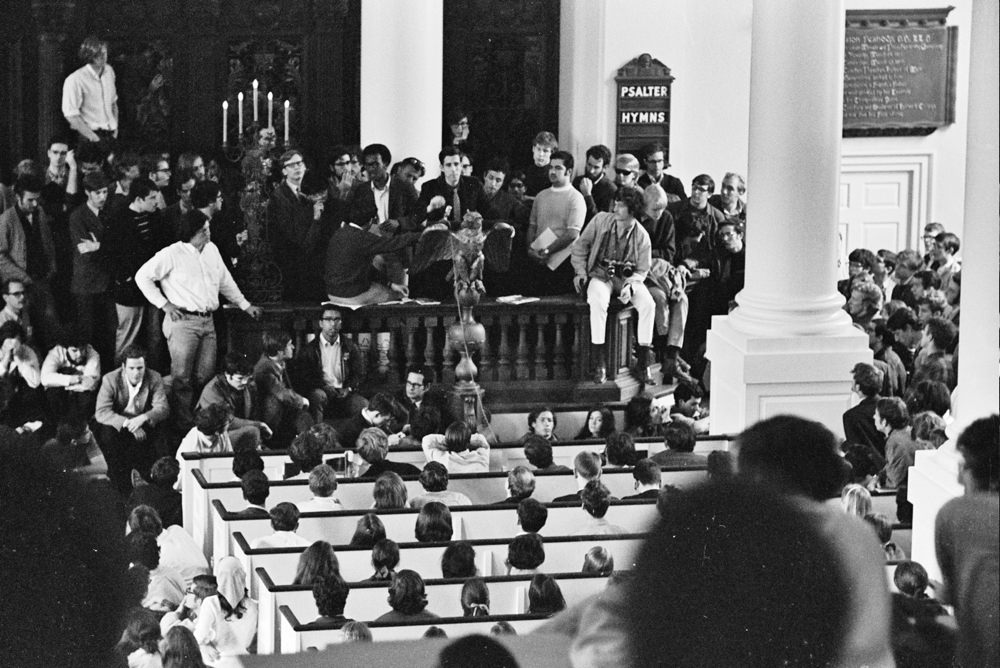
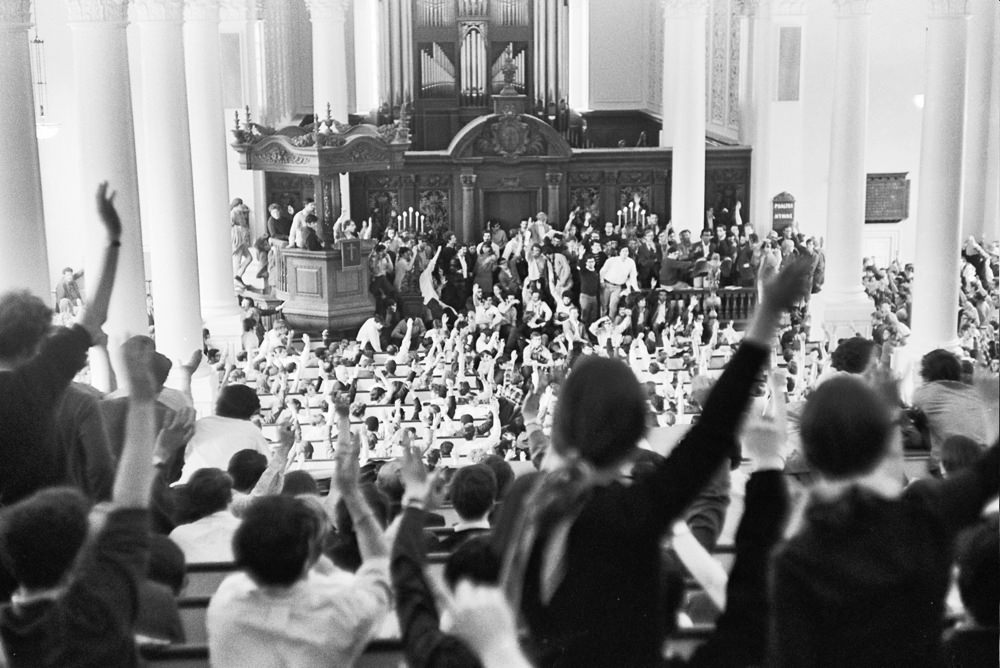
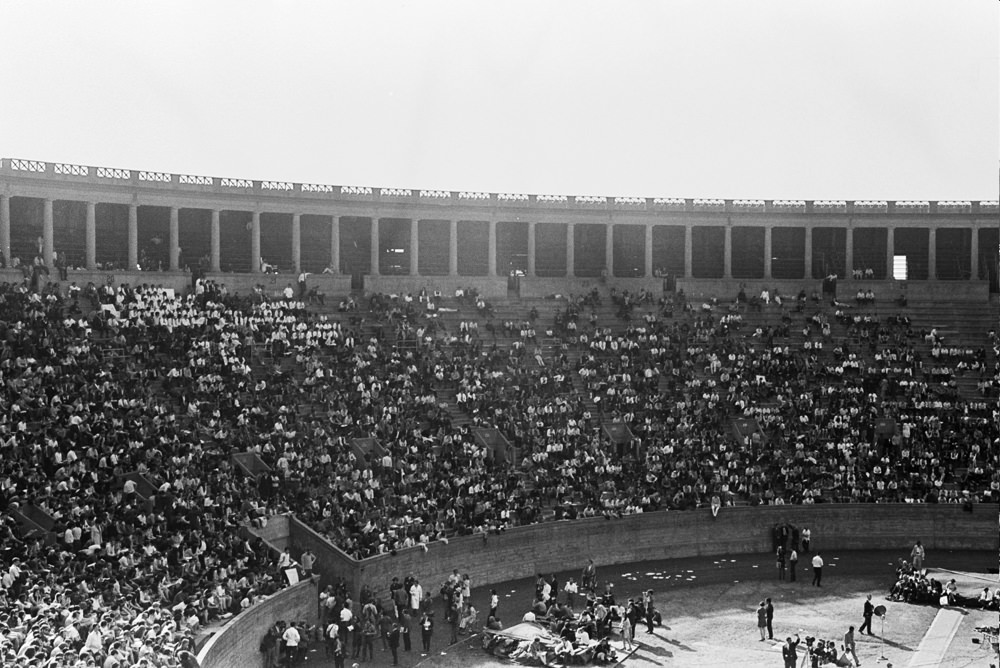
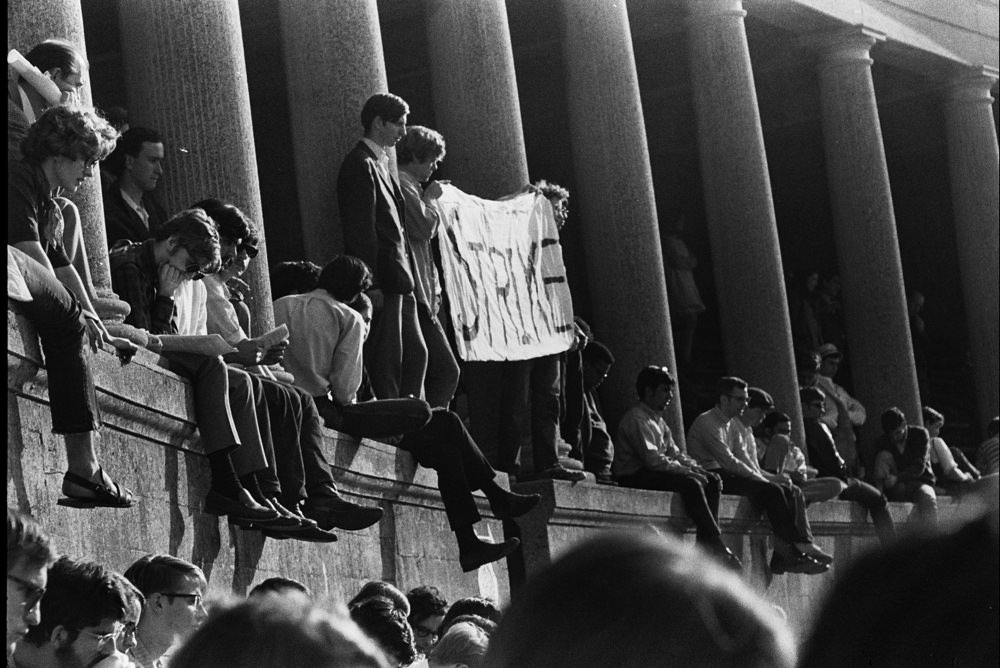
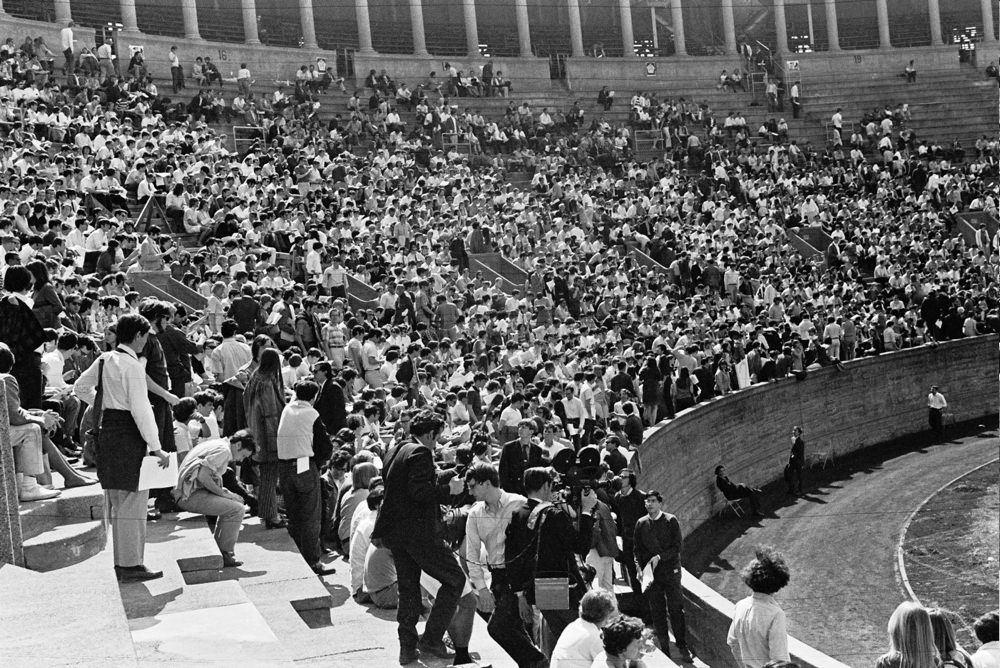
A selection of photos taken by Daniel Pipes ’71 (who personally opposed the activists), presented here, captures the events of that spring with uncommon intimacy—the occupation, the packed Memorial Church meeting held in the wake of the police action, and the subsequent meetings in Harvard Stadium. The photos remained undeveloped negatives for the last 50 years, until Pipes decided to process them to illustrate his own commentary on that spring. The collection brings back iconic images of the students crowded inside University Hall, among its portraits and busts in the Faculty Room, squeezing onto window sills, and addressing one another. The photographs bring to mind the reflections of Suzanne Lynn ’71 on the uncertain, impromptu nature of these students’ experiment in direct democracy: “We didn’t have access to the same information about what was going on in our own country, let alone what was going on in the rest of the world….We thought we were the first people to ever think of some of these things. And so we made up a lot of this.”
The full photo collection can be viewed here. ~Marina Bolotnikova
On Wednesday, April 9, 1969, SDS members and supporters took over University Hall:
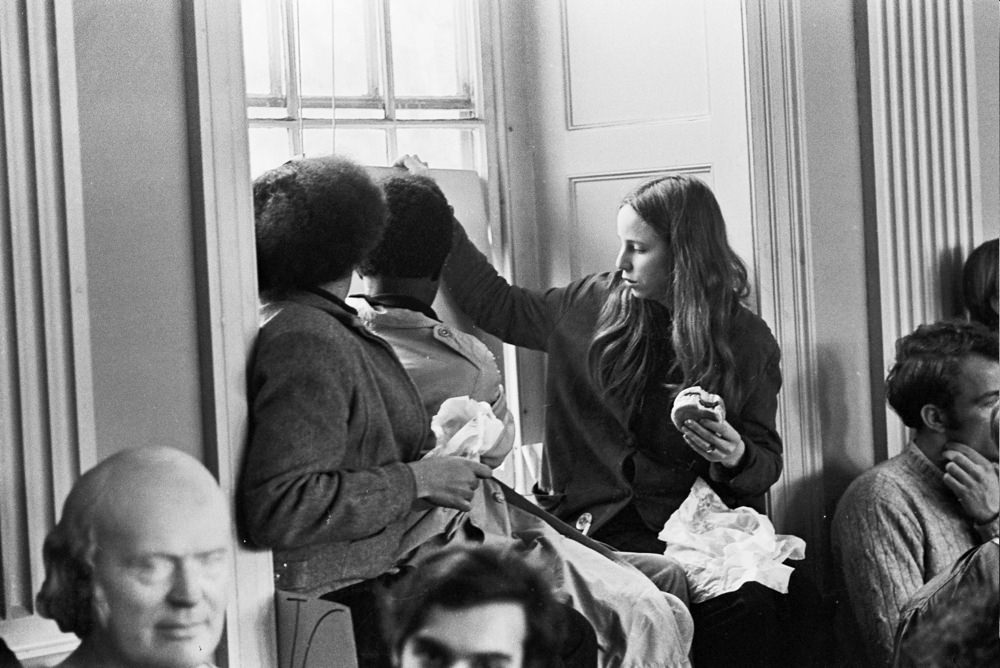
Photograph by Daniel Pipes
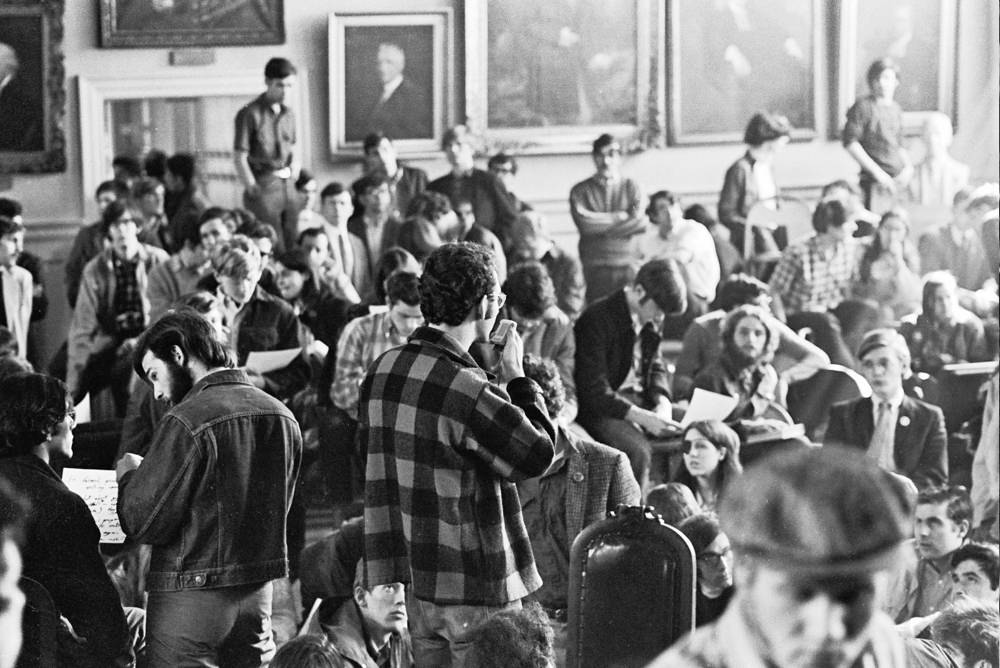
Photograph by Daniel Pipes
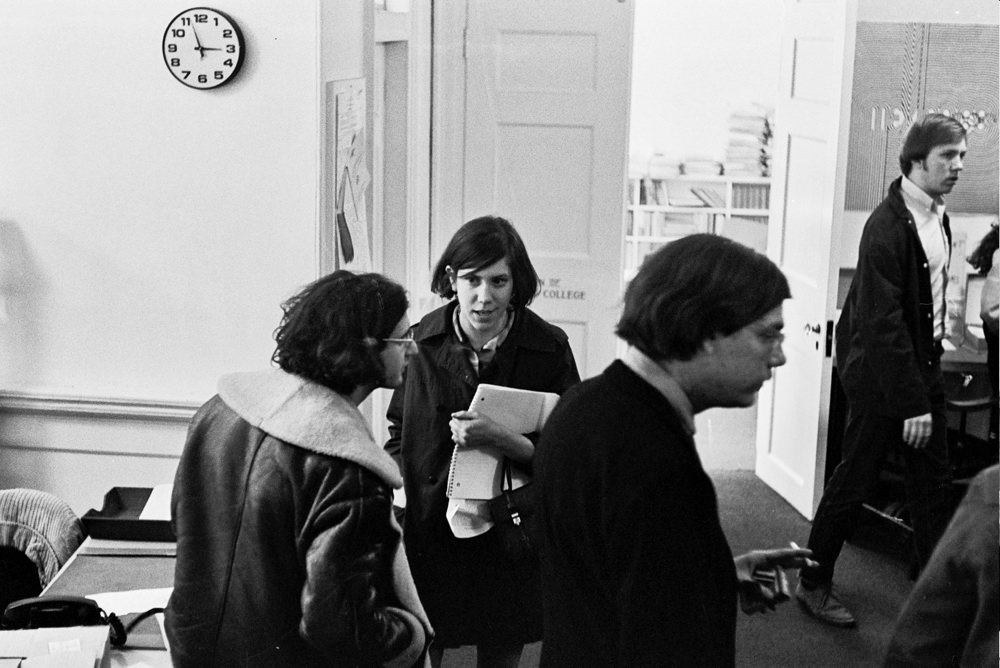
Photograph by Daniel Pipes
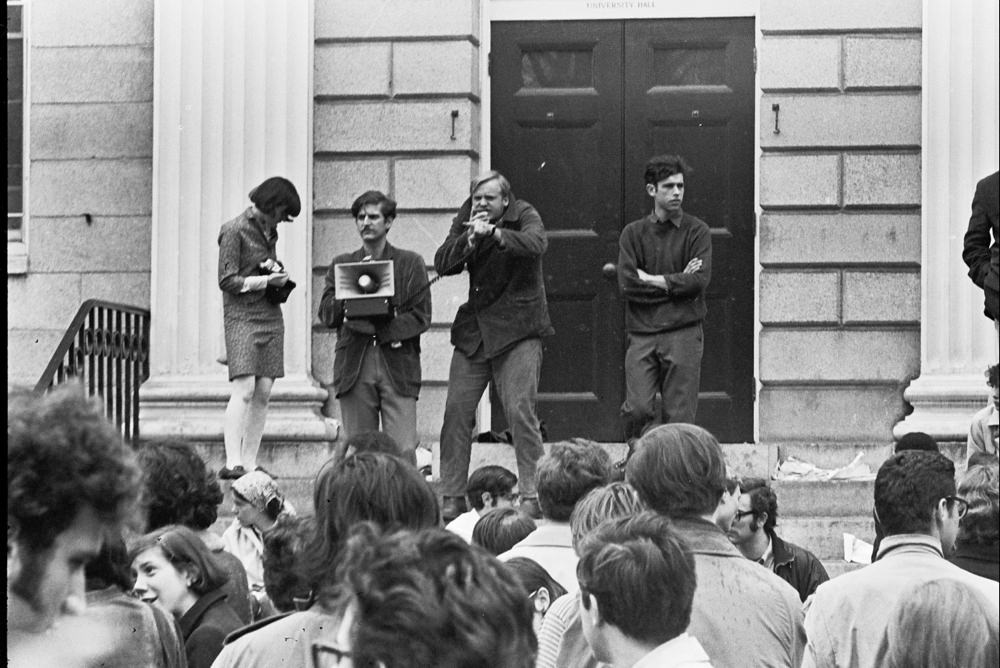
Photograph by Daniel Pipes
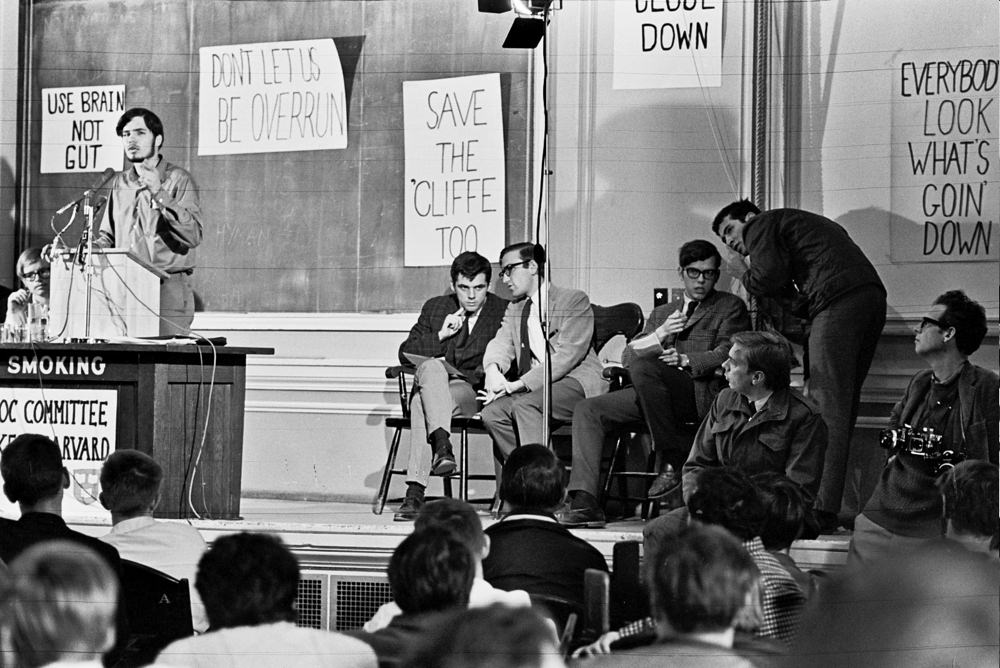
At the Memorial Church meeting on Thursday, in the wake of the police action, students voted for a three-day University shutdown. A few days later, students from the Ad Hoc Committee to Keep Harvard Open held their own gathering in Lowell Lecture Hall.
Photograph by Daniel Pipes
Photograph by Daniel Pipes
Photograph by Daniel Pipes
Below are scenes from the two mass meetings in Harvard Stadium, in the week after the occupation. Thousands gathered to vote on opening or closing the University, and debated the University’s role in the Vietnam War and injustices around the world:
Photograph by Daniel Pipes
Photograph by Daniel Pipes
Photograph by Daniel Pipes