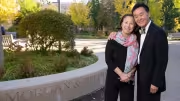
Sarah Ganz Blythe, deputy director, exhibitions, education, and programs at the Rhode Island School of Design Museum (RISD), has been appointed Cabot director of the Harvard Art Museums effective August 12, interim provost John Manning announced today. Ganz Blythe succeeds Martha Tedeschi, who became director in 2016 and retires at the end of this month—a term that included scaling up programming at the the renovated, expanded museums’ complex after it opened in 2014; weathering the pandemic; and effecting the transition to free general admission.
In a statement in the announcement, Manning said, “Sarah brings to her role not only great knowledge, creativity, judgment, and leadership experience, but also a deep commitment to teaching, learning, collaboration, and engagement with our museums’ extraordinary communities.”
Ganz Blythe joined the RISD Museum as director of education in 2009 and was interim director from 2020 through 2023, according to the announcement. She also held curatorial and educational positions at the Metropolitan Museum of Art and Museum of Modern Art (where she was director of interpretation and research). During her undergraduate studies at Wellesley College, where she earned her B.A. in art history, she was a conservation intern at the Harvard museums. She earned her doctorate in modern art from the Institute of Fine Arts at New York University and has twice been a member of the Harvard museums’ visiting committee.
“As a student, my experiences with the Harvard Art Museums revealed the profound rewards of engaging deeply with and thinking expansively about art,” she said in a statement in the news announcement. “I am thrilled to return and have the opportunity to guide this dynamic institution as it collaborates with students, faculty, staff, artists, and community partners.”
Interim president Alan M. Garber cited her “creativity in engaging students and her passion for teaching” in the announcement, underscoring the Harvard museums’ academic and cultural roles. Ganz Blythe has taught at Brown, Wellesley, and RISD and, according to the announcement, “has published widely throughout her career on the complicated histories of museums, art pedagogy, and underrepresented women artists.”