|
| A nudibranch. |
| Photographs courtesy of the Harvard Museum of Comparative Zoology |

Some 29 sea creatures from Harvard’s Blaschka Collection, exquisitely rendered in glass in the nineteenth century, are now on display in a special exhibit at the Underwater Adventures Aquarium near Minneapolis/St. Paul. Glass Sea Treasures from Harvard: The Age of Darwin is the largest group of Blaschka invertebrate models that the Museum of Comparative Zoology has ever allowed to travel; most of them have not been seen publicly in more than a century. (Their Czech-born creators, father and son Leopold and Rudolf Blaschka, also produced exclusively for Harvard the renowned glass flowers now on display at the University’s Museum of Natural History.) Darwin’s work in the mid 1800s sparked interest in the “variations of species,” notes aquarium president Todd D. Peterson ’84, M.B.A. ’87. “The Blaschkas were not making ‘artistic’ pieces; they were using their talents to make exact scientific replicas, translating drawings coming back from this bold new age of expeditions. People wanted a way to see these exotic sea creatures in three dimensions.”
 |
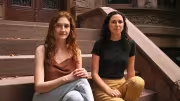
| Todd D. Peterson |
| Underwater Adventures Aquarium / Courtney Conk |
Glass, Leopold Blaschka once wrote, “is such a changeless thing that we do not dare in its construction to make a mistake; it becomes eternal.” In their Dresden studio, the two men produced hundreds of the glass invertebrates (and many other objects, such as glass eyes) and sold them to museums and private clients throughout the world. (One of the largest collections of their work was destroyed during the bombings of Dresden in World War II.) When Rudolf died in 1939, so did the Blaschkas’ singular art; he had no apprentice.
The exhibit is on display until Labor Day. For details, visit www.minnesotaaquarium.com.