Five alumni—two of them former faculty members—and the recipient of an honorary doctorate were among those to whom Nobel Prizes were awarded during the annual rite, which took place this year between October 8 and October 15. In addition, four faculty members were leaders in the scientific work cited in the awarding of the Nobel Peace Prize (see below).

Mario R. Capecchi*
Medicine. Mario R. Capecchi, Ph.D. ’67, who studied biophysics and was a member of the Society of Fellows, shared the prize with two other researchers for their work on developing genetic “knockout” technology that has enabled scientists to model diseases in mice—a technique that has broad applications for modifying DNA and working with embryonic stem cells. Capecchi, now a Howard Hughes Medical Institute investigator and Distinguished Professor of biology and human genetics at the University of Utah, was on the Harvard faculty until 1973.

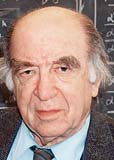
Economics. Eric S. Maskin ’72, Ph.D. ’76, and Roger B. Myerson ’73, Ph.D. ’76, shared the prize with Leonid Hurwicz, G ’41, for “mechanism design theory”—essentially, studies of when markets work and when they do not, and ways of modeling the conduct of auctions and other allocation systems given differences in the information available to individual participants, their differing incentives, and other issues. The work has applications to problems ranging from auctioning rights to emit carbon dioxide to matching organ donors with recipients. Maskin studied mathematics as an undergraduate, and Myerson applied mathematics. Both did their graduate work in applied mathematics. Maskin was a professor of economics at Harvard from 1985 to 2000, before moving to the Institute for Advanced Study. Myerson was at Northwestern University from 1976 to 2001, when he moved to the University of Chicago. Hurwicz, now Regents Professor emeritus of economics at the University of Minnesota, studied at Harvard briefly after immigrating to this country following the outbreak of World War II.


Peace. Al Gore Jr. ’69, LL.D. ’94, former vice president of the United States, was named co-recipient of the prize, with the Intergovernmental Panel on Climate Change—recognition for his work in publicizing and prompting action on global warming. Among the scholars who played leading roles in the panel’s work are Daniel J. Jacob, Vasco McCoy Family professor of atmospheric chemistry and environmental engineering; James J. McCarthy, professor of biological oceanography; Steven C. Wofsy, Rotch professor of atmospheric and environmental science; and Robert Stavins, Pratt professor of business and government at the Kennedy School of Government. The four were recognized by Dean Michael Smith at the first Faculty of Arts and Sciences meeting of the year, on October 16. (For previous coverage of their work, see “The Great Global Experiment,” November-December 2002, page 34, and Harvard Portraits of McCarthy [September-October 1992, page 71] and Jacob [May-June 1995, page 63].)
Literature. Doris Lessing, Litt.D. ’95, the English novelist best known for The Golden Notebook, was recognized as the laureate, “that epicist of the female experience, who with skepticism, fire, and visionary power has subjected a divided civilization to scrutiny.”
Detailed descriptions of the laureates’ work are available at https://nobelprize.org.
Photo credits in order of appearance: Sean Graff/University of Utah; Cliff Moore/Institute for Advanced Study; University of Minnesota; Rose Lincoln/Harvard News Office; Jon Chase/Harvard News Office.