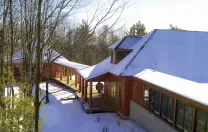
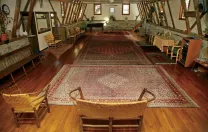
The Isabella Freedman Jewish Retreat Center in Falls Village, Connecticut

Organic farming and spiritual retreats in a camp-like atmosphere

The Isabella Freedman Jewish Retreat Center

The Isabella Freedman Jewish Retreat Center | Photograph courtesy of the Isabella Freedman Jewish Retreat Center

The Isabella Freedman Jewish Retreat Center

The Isabella Freedman Jewish Retreat Center | Photograph courtesy of the Isabella Freedman Jewish Retreat Center

The Isabella Freedman Jewish Retreat Center

The Isabella Freedman Jewish Retreat Center | Photograph courtesy of the Isabella Freedman Jewish Retreat Center

The Isabella Freedman Jewish Retreat Center

The Isabella Freedman Jewish Retreat Center | Photograph courtesy of the Isabella Freedman Jewish Retreat Center

The Isabella Freedman Jewish Retreat Center

The Isabella Freedman Jewish Retreat Center | Photograph courtesy of the Isabella Freedman Jewish Retreat Center

The Isabella Freedman Jewish Retreat Center

The Isabella Freedman Jewish Retreat Center | Photograph courtesy of the Isabella Freedman Jewish Retreat Center

The Isabella Freedman Jewish Retreat Center

The Isabella Freedman Jewish Retreat Center | Photograph courtesy of the Isabella Freedman Jewish Retreat Center

The Isabella Freedman Jewish Retreat Center

The Isabella Freedman Jewish Retreat Center | Photograph courtesy of the Isabella Freedman Jewish Retreat Center

The Isabella Freedman Jewish Retreat Center in Falls Village, Connecticut, offers year-round programs, is home to a six-acre organic farm, and promotes “community and pluralism and ecological consciousness,” according to program manager Adam “Segulah” Sher.

A popular annual meditative retreat, “The Gift of Silence,” runs from Christmas Day to New Year’s Day, and another one is planned for the summer. Other kinds of group religious retreats, as well as educational classes and workshops, are offered throughout the year. There is a glass-walled synagogue overlooking a lake and the Berkshire foothills. Shabbat and prayer services are offered at specific retreats. The kitchen and dining room are glatt kosher, but the retreat is flexible about Shabbat and other religious practices. “If you want to use your cell phone on a Saturday,” Sher notes, “nobody will question that.”

There is also plenty of opportunity to rest and relax in this camp-like environment. Most of the visitors live in cities and enjoy coming to learn about organic farming practices—the center grows its own vegetables, raises animals, and produces dairy products—and experience the natural beauty. The campus has numerous walking and hiking trails, and people swim and boat on the lake. “It’s so dark at night you can see the stars,” Sher says. “We build a fire in winter and people sit quietly. People feel they can create their own retreat experience.”

Most popular

The University will compensate families of those whose remains were sold and establish a scholarship to honor anatomical donors.

Harvard art historian Jennifer Roberts teaches the value of immersive attention

Teaching students the value of deceleration and immersive attention

Explore More From Current Issue

A vase of yellow flowers on a table next to an orange and a glass.

Harvard Art Museums restores a rare glimpse of an American master.

University Hall with steps and the John Harvard statue, surrounded by trees and a grassy lawn.

Long-discussed reorganization includes layoffs and the end of the Dudley Community.

Colorful word cloud with various emotions and ideas related to learning and reflection.

But it can’t replace human connection.