When the Peabody Museum of Archaeology & Ethnology unveils “All the World Is Here” on April 22, it celebrates both the institution’s sesquicentennial and (part of the exhibition’s subtitle) “the invention of American anthropology.”
Castle McLaughlin, curator of North American ethnography and a principal in creating the exhibition, explains that under Frederic W. Putnam, the museum’s director from 1875 to 1909, it became respectable to extend the study of man from Greece and Rome, the ancient pinnacles of Western civ, to the contemporary species. That prompted organizing donated treasures from the China trade, or vacuuming up Native American ceremonial wares—the precursors to and fledgling work of scientific anthropology. It also became academically sound to treat the Mesoamerican past, at sites like the Maya capital at Copán, with the same respect accorded Athens—a simultaneous broadening of archaeology. This era coincided with Harvard president Charles W. Eliot’s 40-year transformation of a classically oriented New England college into an ambitious research university, curious about everything.
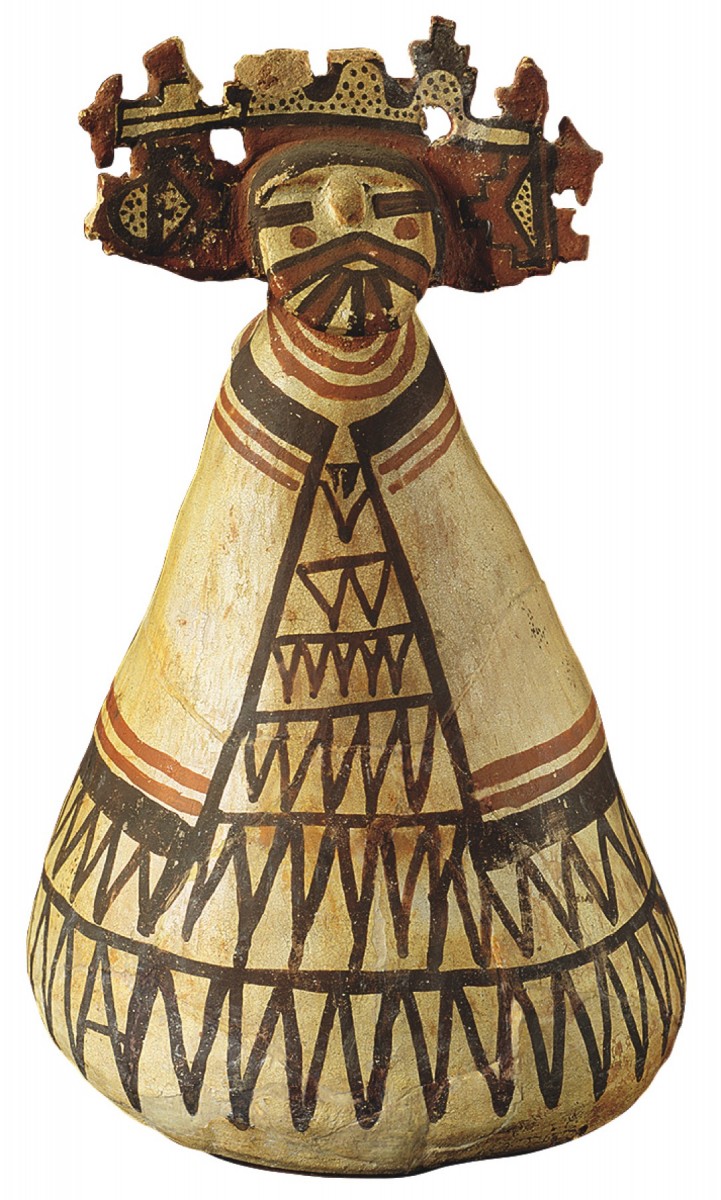
Image courtesy of the Peabody Museum of Archaeology & Ethnology/ © President and Fellows of Harvard College
Not quite everything can be displayed on the splendidly refurbished fourth floor: the Peabody holds 2.75 million objects, plus more than 500,000 historic images. But the more than 600 items exhibited are a rewarding plenitude.
The front two-thirds of “All the World” is keynoted by a dog sledge used in Greenland, from Admiral Robert Peary’s Arctic expeditions: a potent symbol of exploration. Surrounding areas highlight Putnam’s directorship, teaching, and research (like the mica Hopewell face excavated from Ohio’s Turner Mound Group, below); some of the ceramic pots collected in the 1880s during expeditions privately underwritten by Mary Hemenway (here, a Hopi water pitcher shaped like a female spirit being); and items gathered by Alice Fletcher, whom Putnam mentored and trained: an outstanding ethnographer active among Native American peoples (see Vita, March-April 1980, page 35).
McLaughlin notes that visitors will perceive anthropology’s changing methods—and values. Where once collections assessed items in physical terms (typologies of Hopi ceramics by size and decoration, for example), contemporary research emphasizes objects’ uses and meanings in their makers’ lives. The Copán section incorporates information on 3-D technology now being employed to reconstruct a stairway and its corroded hieroglyphs. In video recordings in the physical anthropology display, scholars including Henry Ford II professor of human evolution David Pilbeam address subjects like the changing conception of “race.”
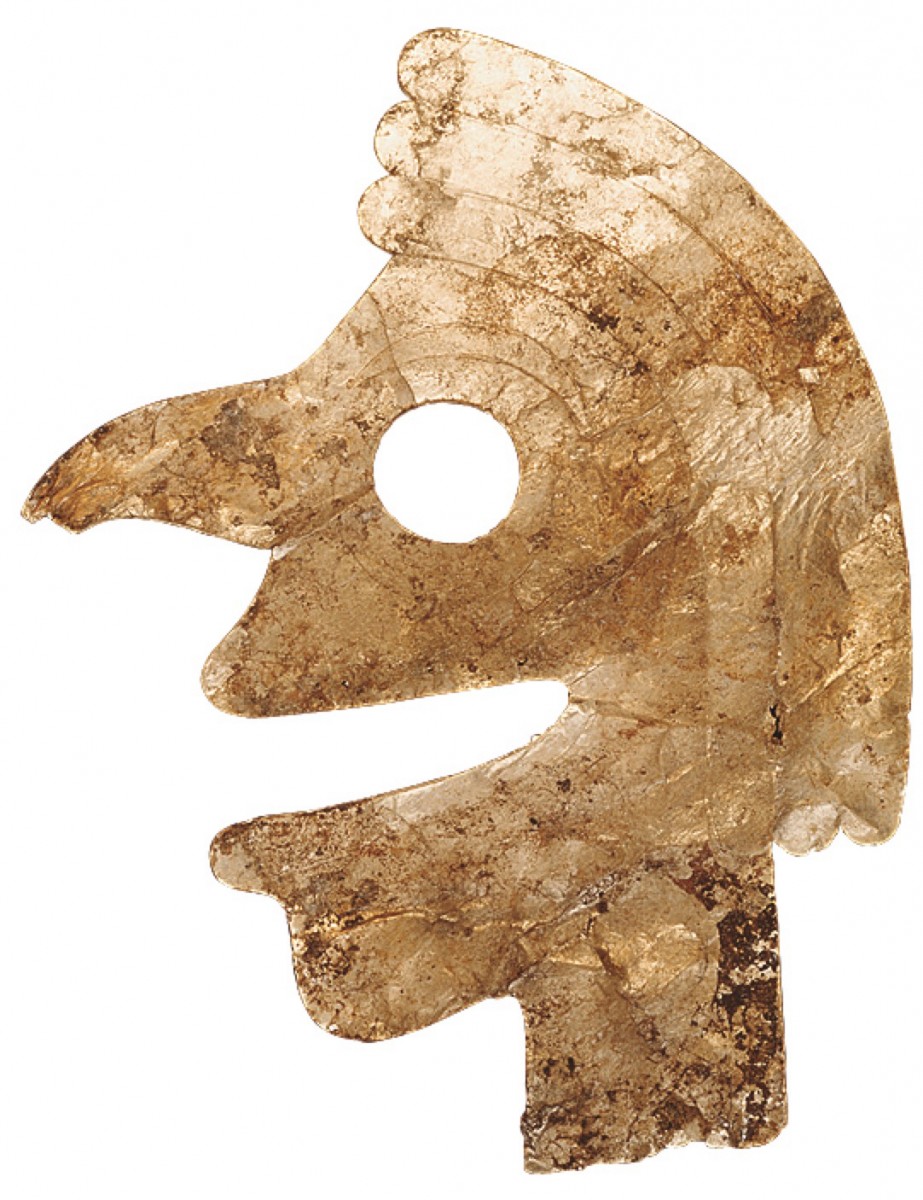
Image courtesy of the Peabody Museum of Archaeology & Ethnology/ © President and Fellows of Harvard College
One archetype of race introduces the rear part of the exhibition, drawn from the World’s Columbian Exposition, the great “all the world is here” Chicago fair of 1893, where Putnam organized the exhibits introducing fairgoers to anthropology. (The Javanese village shown then is echoed in the shadow puppet topping this article.) Peabody curators Diana Loren and Ilisa Barbash have opened this section with the 1893 figures of the “average” male and female: archetypes derived from Harvard and Radcliffe students measured at Hemenway Gymnasium.
Recreating Victorian anthropology in a museum dating in part to that era, reinterpreted for twenty-first-century viewers, provides a kaleidoscopic overview of human cultures, anthropology’s origins, and, the evolution, in real time, of both. In sensitively interpreting what McLaughlin justly calls these “incredible” artifacts, one also senses gains in understanding the rich diversity of the human enterprise.