Why not carve out time for a writing retreat through The Muse & The Marketplace? Organized by Boston’s nonprofit creative-writing center Grub Street, the annual conference is held online this year during two April sessions.
During week one, April 21-25, more than 65 speakers and workshops will offer lessons and insights to writers of all styles, genres, and experience levels. Literary agents will also be on hand at small-group “Shop Talk Happy Hours” to discuss manuscripts they’d like to see. Week two, April 28-May 2, is reserved for the popular Manuscript Mart. Writers meet one-on-one to discuss a 20-page excerpt of their work with an acquiring editor at a publishing house or literary journal. And this year, Grub Street has added a new event: Premium Workshops. Guest authors will lead in-depth sessions focusing on elements of writers’ specific manuscripts, and offer consultations and feedback. “All sessions, discussions, agent meetings are very rigorous, of a high quality, and supportive of writers, no matter what stage you are with your writing or career,” says conference director Sonya Larson. “We believe that all writers, if they are doing their jobs right, should always be seeking new things to learn.”
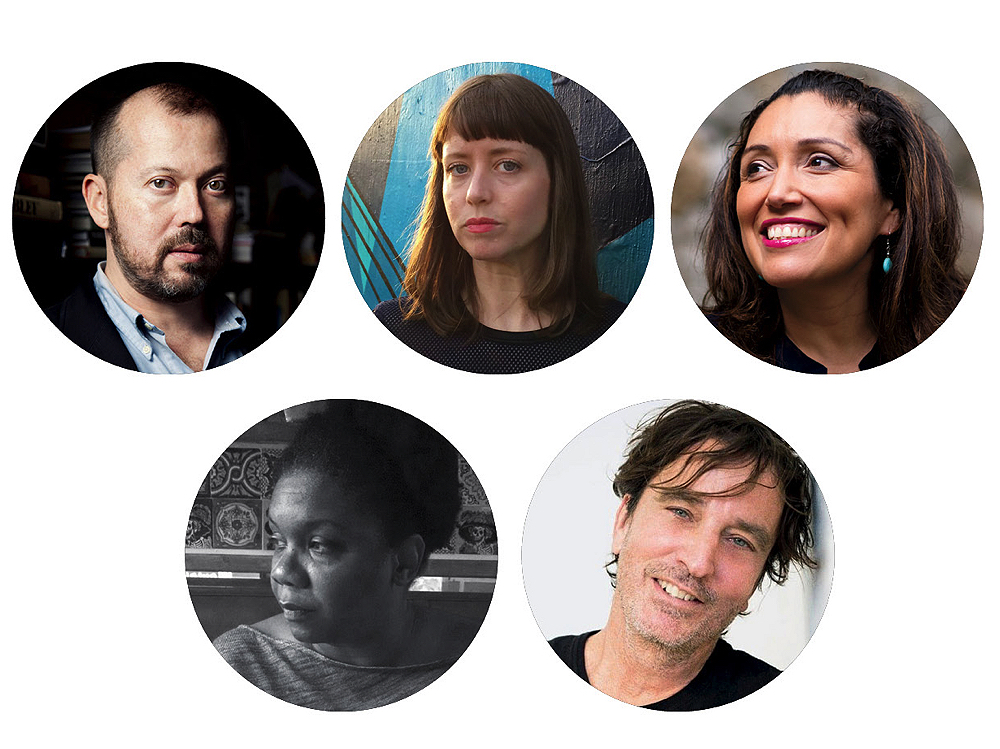
This year's panelists include (from top left): Alexander Chee, Laura Van den Berg, Jennifer De Leon, Vievee Francis, and Nick Flynn.
Photographs courtesy of the authors
The new online-format, through the Attendify platform, will enable larger and wider geographic attendance at this Muse conference. It also precludes the problem of workshop sessions constrained by room-capacity limits, Larson notes. Attendify even enables writers to exit and enter sessions running in tandem, or to watch any recorded sessions they might have missed. “There’s no signing up for particular sessions,” she adds. “You can just decide based on your mood that day what workshop is of interest.”
Grub Street itself offers hundreds of opportunities for writers year-round, from classes and workshops to readings and intensive incubators. “We’ve done a lot to make our classes as accessible as possible during this time: more scholarship funding, wide variety of classes at different price points,” Larson explains. “My understanding is that people are wanting to write during this time—and there is a lot to write about—and, for better or worse, people are finding increased time and energy to put toward creative projects.”