The Radcliffe Institute for Advanced Study’s 2018-2019 cohort includes 53 fellows from 11 different countries. The group includes National Book Award finalists and a documentary photographer alongside researchers from multiple academic disciplines.
“The range of proposed projects is truly remarkable,” says Radcliffe Institute dean Lizabeth Cohen, herself a former fellow. “We’re delighted with this new group of exceptionally talented fellows and we are excited to see what the coming year holds, as they each embrace the unique intellectual and creative freedom that a Radcliffe fellowship offers.”
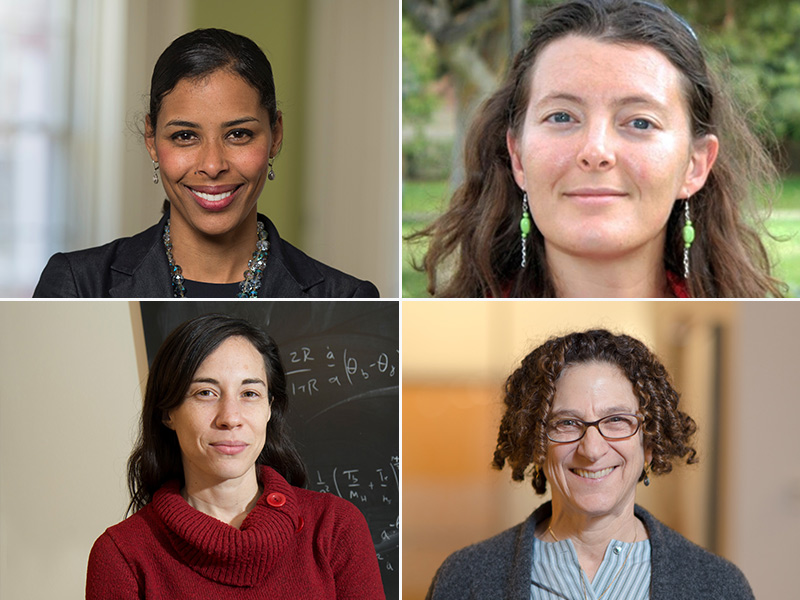
Clockwise from top left: Sara Bleich, Marine Denolle, Cynthia Dwork, and Cora Dvorkin
Photographs courtesy of the Radcliffe Institute
Nine of this year's fellows are faculty members from different corners of the Harvard community. Their names and the titles of their projects appear below:
- Robin Bernstein, Dillon professor of African and African American studies and of studies of women, gender, and sexuality, and Joy Foundation Fellow at the Radcliffe Institute: The Tragedy of William Freeman: A Story of Mass Murder, Slavery, and Convict Labor in the North
- Sara Bleich, professor of public health policy, and Pforzheimer professor at the Radcliffe Institute: Health Policies for Obesity Prevention
- Marine Denolle, assistant professor of earth and planetary sciences, and assistant professor at the Radcliffe Institute: Effects of the Earth Surface on the Dynamics of Earthquakes
- Lisa R. Diller, professor of biology and medical sciences, and Knafel Fellow at the Radcliffe Institute: Oncology Care in the Genomic Era
- Cora Dvorkin, assistant professor of physics, and Shutzer assistant professor at the Radcliffe Institute: Probing Fundamental Physics with Cosmological Data Sets
- Cynthia Dwork, Gordon McKay professor of computer science, and Radcliffe Alumnae professor at the Radcliffe Institute : Finding Fairness
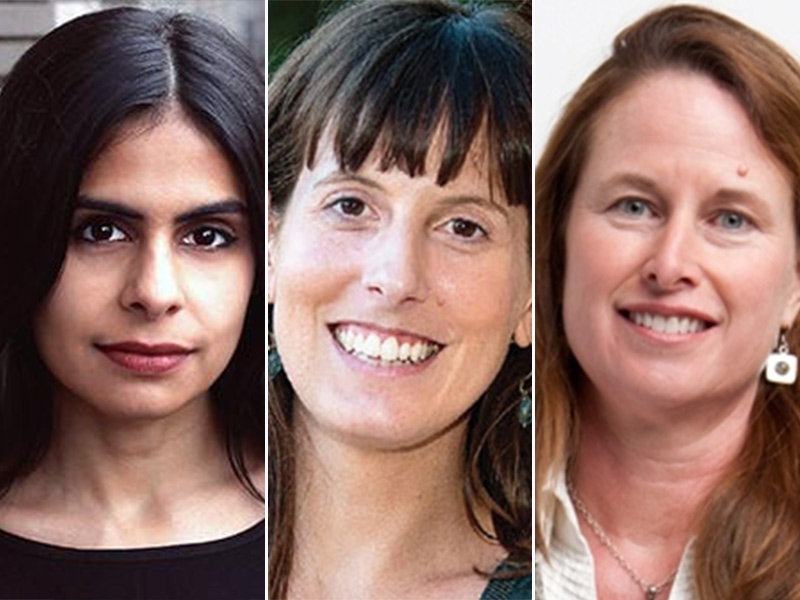
From left: Durba Mitra, Myrto Kalouptsidi, and Janet Rich Edwards
Photograph courtesy of the Radcliffe Institute
- Myrto Kalouptsidi, assistant professor of economics, and Marks assistant professor at the Radcliffe Institute: Global Transport Markets: Efficiency and Impact on World Trade
- Durba Mitra, assistant professor of women, gender, and sexuality, and Pforzheimer assistant professor at the Radcliffe Institute: Sexuality and the New Science of Society
- Janet Rich-Edwards, associate professor of medicine and associate professor of epidemiology, and co-director of the science program at the Radcliffe Institute: How Childhood Trauma Leads to Obesity: Identifying Mechanisms Linking Child Abuse to “Food Addiction”
The 2018-2019 cohort also includes the first Mellon-Schlesinger Fellow, Corrine Field, an assistant professor of women, gender, and sexuality at the University of Virgina. Field’s work will draw on the Schlesinger Library’s collections on the history of women in America by exploring the closely intertwined roots of race and age segregation in American feminism.