Harvard Magazine puzzle master retires

A longtime contributor hangs up his pencil.


John de Cuevas

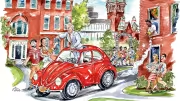
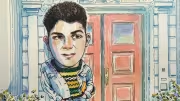
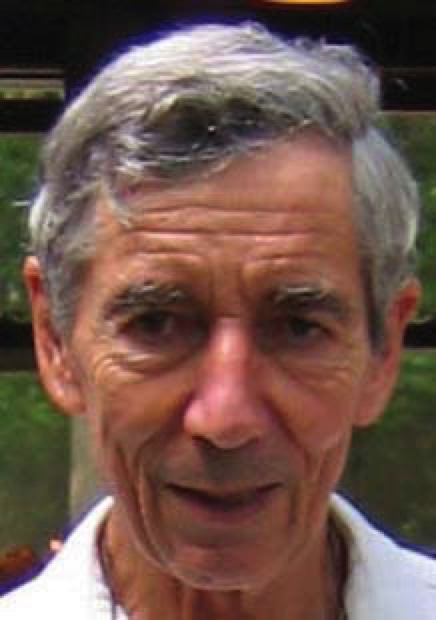
Long-time Harvard Magazine crossword-puzzle master John de Cuevas ’52 has hung up his pencil, explaining, “I turned 86 last October and in the last few years have experienced a slackening of mental and physical powers.” He continues to create puzzles for his website, “but the extra ones I was doing for Harvard are more than I can manage now.” We thank him for bringing pleasure to puzzle-doers for decades. His full notice appears at harvardmag.com/decuevas-17—complete with a reproduction of his devilish creation for the University’s 350th anniversary, from the September-October 1986 issue.

~ The Editors
Related topics

You might also like

What a Key EPA Repeal Means for America’s Climate Future

A Harvard alumni panel examines the impact of the “Endangerment Finding.”

NASA Astronaut Jonny Kim to Speak at Harvard in June

The American Navy SEAL, born to immigrants, is a doctor and a space traveler.

Conan O’Brien Named Harvard’s 2026 Commencement Speaker

The comedian, host, and 1985 graduate will deliver remarks at the May 28 ceremony. 

Most popular

Martin Nowak Placed on Leave a Second Time

Further links to Jeffrey Epstein surface in newly released files.

Nepotism’s Impact in the Job Market

How connections in blue-collar work disadvantage women and blacks

The Artemis II Mission Included a Harvard Space Medicine Experiment

Wyss Institute researchers are observing how human bone marrow responds to radiation and microgravity.

Explore More From Current Issue

A person climbs a curved ladder against a colorful background and four vertical ladders.

Harvard’s Productivity Trap

What happened to doing things for the sake of enjoyment?

A close-up of a beetle on the textured surface of a cycad cone and cycad cones seen in infrared silhouette.

Research in Brief

Cutting-edge discoveries, distilled

Four Labrador puppies—two black and two yellow—sitting in green grass.

What Do Puppies Know?

Canine capabilities emerge early and continue into adulthood.