
In this issue, atypically, there are two Forum essays written by faculty members, drawing on their research and addressing public issues of the day: American energy policy (see "Time to Electrify"), and the pressures facing the U.S. higher-education system (see "Colleges in Crisis"). Both seem timely, when the future of the nation—and of many other countries—depends not only on near-term economic issues and longer-term fiscal threats but also on suitable schooling and a sustainable environment. Illuminating the latter priority is the photographic essay by David Arnold ’71 that shows the decline of the world’s corals as the climate changes (see "Reefs at Risk"), complementing his “A Melting World,” on the shrinkage of glaciers (May-June 2006, page 36); Jonathan Shaw wrote the texts for both articles. We welcome your comments. The Editors
A Note to Readers
You might also like

I Used to Think AI Could Make Me a Better Writer
A former Harvard College writing tutor changes her mind on LLMs.
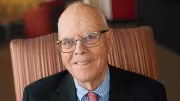
Jack Reardon and Walter Cabot, Remembered
Plus, veteran higher education leader Thomas Ehrlich reflects on university curricula for his 70th reunion

Harvard Magazine Questionnaire: Animal Love Stories
Tell us a story about the unique relationships between the animals in your life.
Most popular


Explore More From Current Issue

The professor and former Harvard College dean is the next president of Harvard Magazine’s Board of Directors

Establishing legal responsibility for autonomous agents

Take this quiz on six healthy habits that Harvard doctors recommend