Remembering a distinctive Harvard Magazine voice

A distinctive Harvard Magazine voice remembered

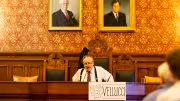
Kit Reed at work, April 1977 | Photograph by Christopher S. Johnson

When Christopher (“Kit”) Reed retired as executive editor in 2007, concluding 39 years of service to this magazine’s readers, we observed, “Had he not written with such humor and grace, and with such wry appreciation for the University’s traditions and foibles, his colleagues would have resented bitterly his calm confidence at the keyboard, no matter how pressing the deadlines.” Fortunately, he was not really gone after that leave-taking: he continued crafting Treasure into early 2015, with a final column last spring, and he manned The College Pump through this past May-June.

Outside the office, Kit was an extraordinary plantsman (colleagues cherish specimens from his garden), and although ill, he took an immediate shine to the July-August article on botanizing expeditions by the Arnold Arboretum—a place he loved and had written about beautifully. His death, on July 21, reminds us of the high standards he set and maintained so well for so long, and of the dear friend we have lost.

~The Editors
Related topics

You might also like

Until the 1950s, professionals cleaned up after students in the dorms.

In a sea of red brick, the Science Center and Peabody Terrace make their mark.

Harvard Releases Database of 1,613 People Enslaved by University Affiliates

Research continues to track down living descendants.

Most popular

Harvard's budget balances, benefits cuts divisive

A University financial surplus, but tensions over reductions in employee health benefits

An animal’s journey from grief to love shows how much humans need each other, too.

There’s a growing movement to curb light pollution. It starts on your front porch.

Explore More From Current Issue

A blue refrigerator covered with animal pictures, notes, and drawings, surrounded by greenery.

An animal’s journey from grief to love shows how much humans need each other, too.

A chaotic scene in a messy room with people engaging in various activities, some cleaning.

Until the 1950s, professionals cleaned up after students in the dorms.

Singer performing on stage with a guitar, wearing a hat, and surrounded by band instruments.

Singer Elisa Smith’s whiskey-soaked voice and subversive feminism is part of the genre’s urban shift.