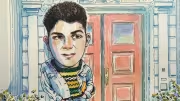
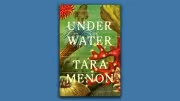
New Directions has reissued The Doctor Stories, which collects medical writings by William Carlos Williams—short fiction, poems, and an autobiographical excerpt—to get at the heart of his dual career in letters and in medicine. When the prolific writer and child psychiatrist Robert Coles ’50 met Williams as an undergraduate, the encounter changed his life. It set him on the path to training as a physician—and long-time professor at Harvard. (Among the sharp wisdom his mentor gave him: “Look, you’re not out on a four-year picnic at that medical school, so stop talking like a disappointed lover.”) Coles wrote in the introduction to the 1984 edition:
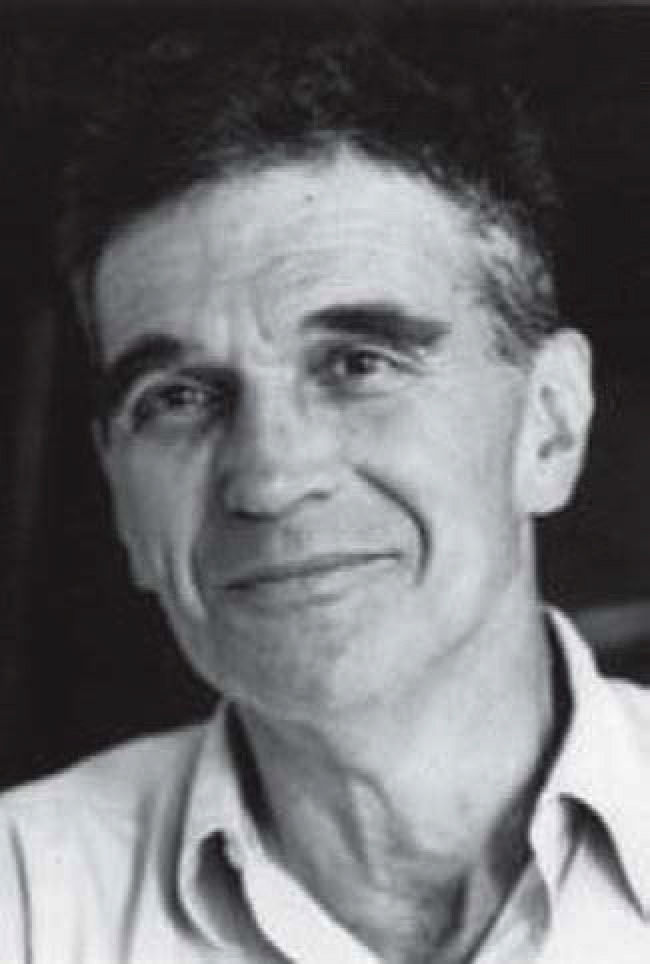
Robert Coles
For years I have been teaching these doctor stories to medical students, and during each class we all seem newly awakened—encouraged to ask the important whys, consider the perplexing ifs. The stories offer medical students and their teachers an opportunity to discuss the big things, so to speak, of the physician’s life—the great unmentionables that are, yet, everyday aspects of doctoring: the prejudices we feel (and feel ashamed of), the moments of spite or malice we try to overlook, the ever loaded question of money, a matter few of us like to discuss, yet one constantly stirring us to pleasure, to bedeviling disappointment in others, in ourselves. What, in fact, that is really important has Williams left out? Nothing, it seems…
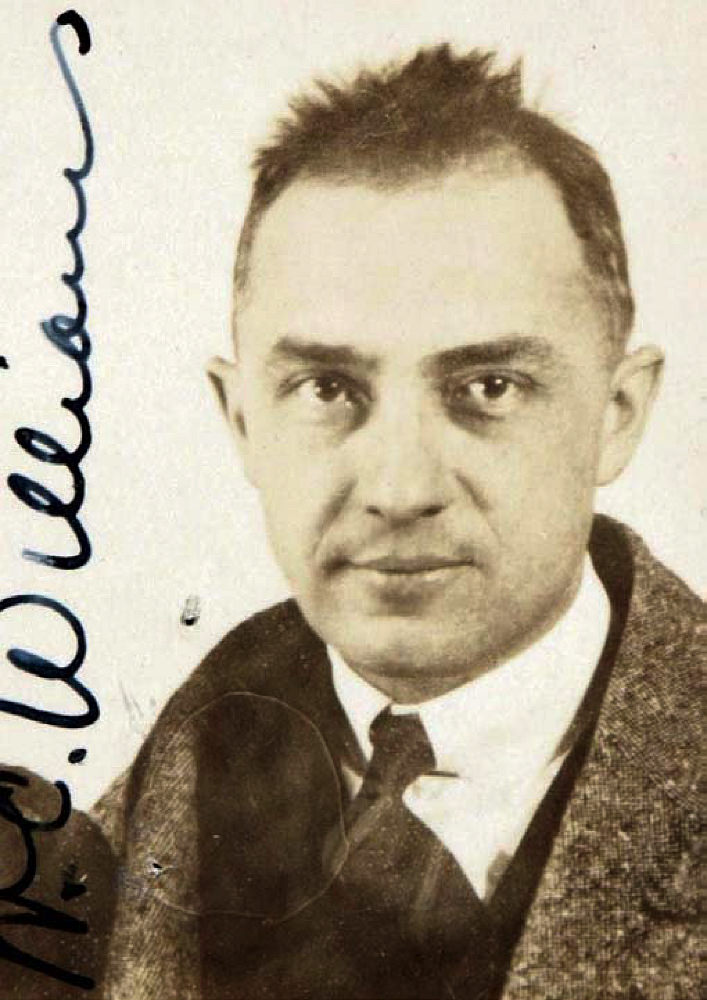
William Carlos Williams
He extends to us, really, moments of a doctor’s self-recognition—rendered in such a way that the particular becomes the universal, and the instantly recognizable: the function, the great advantage, of all first-rate art. And not to be forgotten in this age of glib, overwrought formulations, of theories and more theories, of conceptualizations meant to explain (and explain away) anything and everything, he brings to us ironies, paradoxes, inconsistences, contradictions—the small vignette which opens up a world of pleasurable, startling, or forbidden mystery.
The 2018 edition also includes a new preface by one of today’s preeminent doctor-writers, Atul Gawande, M.D. ’94, M.P.H. ’99, of Brigham and Women’s Hospital and The New Yorker. (Gawande, also a professor of surgery and of health policy and management, holds another role the poet couldn’t have imagined: CEO of a new healthcare company formed by Amazon, JPMorgan Chase, and Berkshire Hathaway.) He recalls encountering this work for the first time:
Medicine is at its heart about a relationship between people. One person is forced by a need, a physical vulnerability, to turn to the other. And that other person has—what? Ostensibly knowledge, experience, skill, compassion. This is where William Carlos Williams gets interesting.
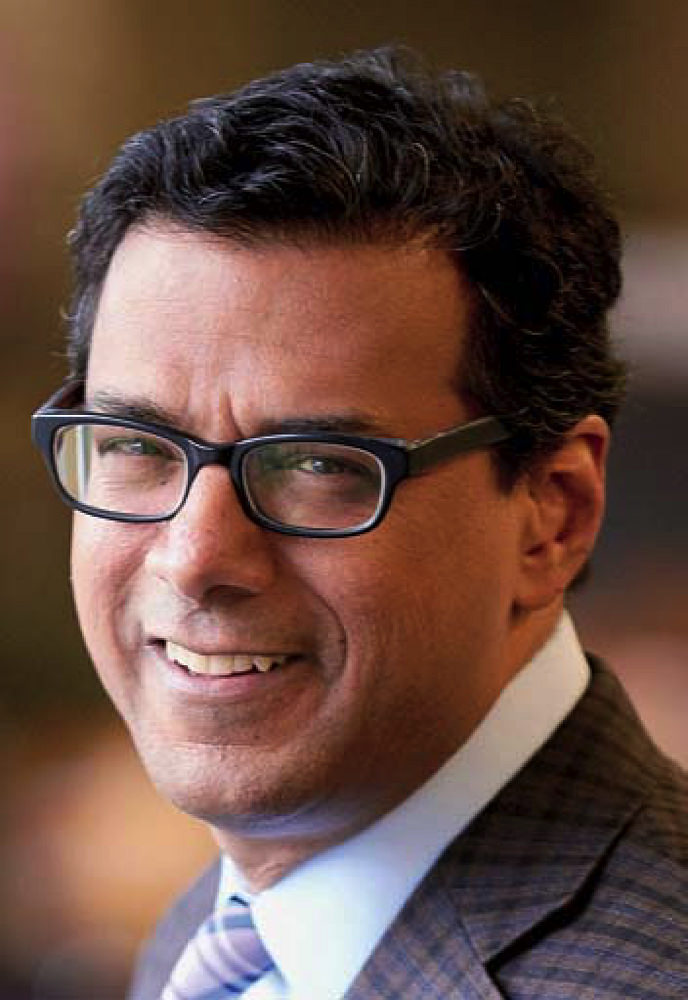
Atul Gawande
Doctors are mainly portrayed in literature as saints or idiots. But Williams saw in his relationships as a local doctor for the town of Rutherford, New Jersey, in the early half of the twentieth century, something more complicated and, often, disturbing. That is what drew me in when I first came across this collection of stories and poems at my medical school bookstore when I was a student. The doctors Williams depicted in these fictions could be so badly, so appallingly human—capable of tenderness and love, yes, but also cruelty, fury, violence, ugliness—I read them as if between my fingers. He stripped away medicine’s pretense and mythmaking. The doctor Williams felt himself to be was no better or worse than his patients—as prone to prejudice and pride and idiocy, yet in a position of responsibility, and expected, one way or another, to live up to it.
Some succeed here. Some fail. None are heroes. For me, still green and uncertain, that was an unexpected comfort.