Harvard will guarantee pay and benefits to staff members whose work has been idled due to the COVID-19 pandemic, such as dining and custodial workers, beyond its previously set date of June 28, executive vice president Katie Lapp announced in an email today.
In previous communications, the University has said that it may need to consider layoffs and furloughs to make up for revenue shortfalls caused by the financial crisis. In today’s message, though, Lapp wrote: “Given the uncertainty around the University’s plans for the fall semester, the need to assess the impact of those plans on our staffing needs, and our commitment to minimize negative economic impacts on employees, we will not be pursuing any furloughs or layoffs of our employees at this time.” Harvard has already implemented hiring and salary freezes for faculty and exempt (non-union) employees, and canceled or deferred discretionary spending.
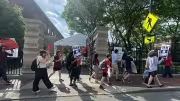
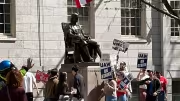
The announcement came shortly before a planned Emergency Action Against Harvard Layoffs rally at the Science Center Plaza to urge the University not to lay off workers.
In her email, Lapp also announced three voluntary staff programs to help reduce costs. An early-retirement incentive program will allow certain eligible staff members to retire earlier than they otherwise might have, and to receive an additional year of pay in exchange. A voluntary vacation-balance reduction program encourages staff members to use up their vacation balances during the summer and fall while still receiving their regular pay and benefits, and a voluntary time-reduction program will allow staff to reduce their work hours and pay by 10 to 50 percent for at least two months. The latter “offers an option for employees, under terms they propose and as approved by their manager, to take time away from work, providing flexibility for personal/caregiving responsibilities, personal renewal, stress reduction and well-being, a transition to early retirement, or simply enjoying more of the summer.”
“Aligning with Governor Baker’s plan for the phased re-opening of the state,” Lapp noted, “the University, as well as individual Schools and Units, are developing plans to safely bring students, faculty, other academic personnel, and staff back to campus as conditions allow.” Additional University personnel have returned to campus this week as part of the state’s Phase 2 reopening, including those who working in scientific labs. “[M]ost of us will continue to work remotely, through at least the end of the summer, unless directed otherwise by your local leadership and managers,” she added.