At 88, Dick Bolles ’50 could be forgiven for slowing down. But the author of What Color Is Your Parachute?—the perennially best-selling how-to guide for job-hunters that’s been updated annually since 1975—still maintains a healthy schedule of lunchtime appointments and speaks, consults, and attends conferences around the country.
Meanwhile, the production of What Color Is Your Parachute? remains a largely Bollesian enterprise. Eschewing secretaries, he spends two to three hours every day poring over newspapers and scouring the Internet, doing research. In the evenings, he says, he and his wife watch foreign detective mysteries, but after she goes to bed around 11, Bolles stays up for another three to four hours. “That’s when I love to write,” he explains. “Everything’s so quiet, and I never have any appointments.”
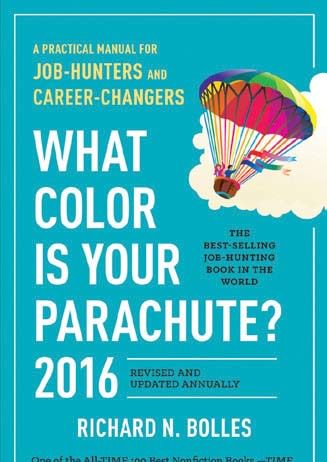
After Harvard, Bolles moved to New York to study at General Theological Seminary. As an ordained Episcopal minister, he first served in New Jersey, but eventually took a job in San Francisco. When he was laid off because of a budget crisis, he was offered another job, as “a kind of roving ambassador” to the campus ministries and chaplains of 10 Christian denominations in the nine western states. “And it turned out, they were all being let go,” also because of budget cuts, “and they knew my history, and they said, ‘Why don’t you figure out what you can do to help us,’” he recalls. “So I said, I’ll travel around, I’ll see what I can find out, and I’ll summarize my findings for you—and that was the first edition of What Color Is Your Parachute?”
The book, originally self-published, was quickly picked up by the fledgling Ten Speed Press, and began to sell steadily. Some of its continuing popularity may derive from the sense of empathy permeating the text. Bolles has not only been jobless, he’s faced other tragedies, including the assassination of his brother, investigative journalist Don Bolles, and the death of a son in surgery. “I’m a man of prayer,” he says, “and I delight in reading. When you fill your memory with hymns,…with poetry,…with stories, you get a sensitivity to your soul that doesn’t vanish, that doesn’t get beaten down over the years.”
What Color Is Your Parachute? has also faced challenges over the years, including the rise of the Internet—which Bolles has countered by updating the book more frequently and creating the website jobhuntersbible.com, an online hub for the book where he writes frequent blog posts. He maintains that only the outward form of the job hunt has changed: perusing classifieds in the daily paper has given way to browsing websites like monster.com and careerbuilder.com.
“I just keep chugging away,” he reports, giving matters of legacy and longevity short shrift. Writing and refining a book for 40 years amasses many things—money, followers, a reputation—but none so important, to Bolles, as responsibility. As he puts it, “I’m trying not to betray the faith that people put in me.”