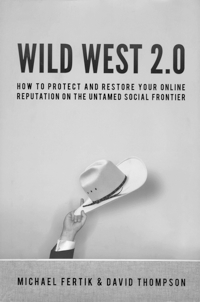
With a new companyand new book, Michael Fertik ’00, J.D. ’05, is out to protect Internet users from having their reputations destroyed. The founder of ReputationDefender, and author, with David Thompson, of Wild West 2.0: How to Protect and Restore Your Online Reputation on the Untamed Social Frontier (amacom), Fertik believes this an area that requires, if not regulation, then the use of caution and awareness. While clerking for Chief Judge Danny J. Boggs ’65 of the Sixth Circuit Court of Appeals, in Louisville, Kentucky, he says, he started “hearing in the press about what we now call ‘cyberbullying.’ I saw that it was a growing trend, and I didn’t like the idea that a momentary mistake in judgment could ruin a young person’s future or at least stay like a lifelong tattoo…Then I realized that adults face the same problems in their lives,” he explains. Although the term “cyberbullying” may be unfamiliar to readers—and Fertik’s book may exaggerate the dangers of this new frontier—even a brief perusal of the table of contents can be unsettling.
The opening sentences of chapter one, “Welcome to the New Digital Frontier,” vividly depict a landscape of lawlessness and malice: “Imagine a place where anonymous vandals can spray repugnant graffiti about you or your business without any consequence. They may call you a criminal, accuse your business of fraud, or reveal your most personal secrets. And this graffiti…is spread worldwide…You don’t have to imagine this scenario. It happens every day on the Internet.” With chapters such as “The Internet Is the New Wild West” and “Anonymous Cowards,” the book is filled with often titillating, often disturbing anecdotes, all illustrating Fertik’s warnings. “Right now,” he points out, “the law gives websites absolute immunity even when clear defamation is posted there by third parties.”
ReputationDefender doesn’t attempt to change these laws; instead, its model is similar to that of antivirus companies—it seeks to “give individuals real control over their digital lives.” The company works on a case-by-case basis, assigning each client a “personal search agent.” The basic package, MyReputation, aims to review everything on the Web about a given individual, and then to remove objectionable material to the extent possible. (There are no guarantees—newspaper articles and court records, for example, are nearly impossible to remove.) Other programs include MyEdge (a promotion service for businesses), MyPrivacy (which helps remove personal information from search databases), and MyChild (which focuses on safeguarding children).
“The law has not caught up with the realities of digital trafficking in deeply personal and invasive information,” Fertik notes—but this does not mean we cannot use these realities to our advantage. The second half of his book is filled with various strategies for protecting one’s online reputation that, if successful, would obviate the need for his firm’s services. (Most of them involve creating positive or neutral pages that serve to displace negative content at the top of Google results.) “The Internet presents you with the opportunity to control and shape your own reputation,” Fertik argues. “It is a permanent presence in our lives, so we might as well embrace its power.”