Yesterday’s News

Headlines from Harvard’s history

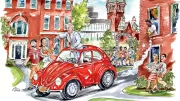
A humorous illustration of women trying to buy football tickets in 1921

Illustration by Mark Steele

1921

Thirteen women, students at the School of Education, apply for tickets to the Yale Game. The Bulletin reports that three ticket clerks “whose temperaments are especially nervous have followed the advice of their physicians by resigning.”

1936

Historian Samuel Eliot Morison reports that the package sealed by President Josiah Quincy in 1836 and opened by President Conant during the Tercentenary hoopla contains 440 manuscripts, mostly replies from graduates invited to the bicentennial dinner (at $1.50 a head).

1941

Two freshmen enliven hour-exam period with a Crimson classified: “Wanted—Information where one may obtain a human corpse in reasonable condition.” The 42 phone calls in response range from students wishing to be embalmed after hourlies to funeral directors, the police department, and the morgue. The Yardlings plead simple curiosity as their impetus.

1961

A faculty committee explores what action, if any, the University should take (in light of local, state, and federal policies) to deal with possible danger from fire or fallout in the event of a nuclear attack.

1986

The Faculty of Arts and Sciences votes to establish an honors concentration in the field of women’s studies. The lone dissenter, professor of government Harvey Mansfield, calls the new program a “foolish and almost pitiful surrender to feminism.”

1991

Over 15 percent of the 1,608 seniors intend to pursue careers in teaching, research, or administration at the college or university level.

2001

The Crimson’s digital archive goes live online and gives readers access to articles as far back as the 1950s.

Related topics

You might also like

The Woman Who Penned the Case for War

Mercy Otis Warren’s poetry and plays incited the Patriot movement.

The Harvard-Trained Doctor Who Urged a Revolution

Before his heroic death, General Joseph Warren was dubbed “the greatest incendiary in all of America.”

The Framer Who Refused to Sign the Constitution

Harvard’s Elbridge Gerry helped draft the U.S. Constitution, but worried it might create a new monarch.

Most popular

Martin Nowak Placed on Leave a Second Time

Further links to Jeffrey Epstein surface in newly released files.

Harvard Graduate Student Workers Strike

Union demands higher pay, protections for non-citizen members, and changes to the harassment complaint process.

Understanding big data leads to insights, efficiencies, and saved lives

Information science promises to change the world.

Explore More From Current Issue

A man holding a revolver and lantern, wearing a hat and coat, appears to be walking cautiously.

Scoundrels, Then and Now

On con men, Mark Twain, and the powers of the Harvard name

Portrait of a man with white hair, wearing a black coat, arms crossed, thoughtful expression.

The Framer Who Refused to Sign the Constitution

Harvard’s Elbridge Gerry helped draft the U.S. Constitution, but worried it might create a new monarch.

Brick archway with a sandy base, surrounded by wooden planks and boxes in a dim space.

How the American Revolution Freed a Future Abolitionist

Darby Vassall, an enslaved child freed after the Battle of Bunker Hill, dedicated his life to fighting for liberty.