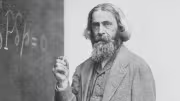
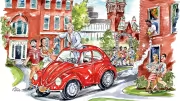
Prep schooled. The best training to become a Harvard dean? A Princeton undergraduate education. Or so this evidence, published in the November 7, 2018, issue of our peer magazine, Princeton Alumni Weekly, strongly suggests. Upstaging John Harvard (and, like all Tigers, stoic—or heedless—in face of sartorial criticism), are Michelle Williams, Princeton ’84, public health; Douglas Elmendorf ’83, government; Bridget Terry Long ’95, education; and Francis Doyle III ’85, engineering and applied sciences. Very recent members emeriti of this exclusive club, or clique, are Lizabeth Cohen ’73, Radcliffe Institute, and Michael D. Smith ’83, Arts and Sciences.

Adriana Varella and Nilton Maltz, Digital DNA, 2005, Printed circuit boards on fiberglass and styrofoam. Anonymous loan
Egg heads east. Not that Harvard casts an eye toward Stanford, but it is notable that a new member of the Business School’s roster of outdoor sculptures (“Artful Campus,” November-December 2016, page 17) is the renovated Digital DNA, a 2005 work by Adriana Varella and Nilton Maltz, commissioned by Palo Alto for that city’s Lytton Plaza. Now in private hands, and restored, the seven-foot egg, made of recycled circuit boards and Styrofoam, is on loan for five years—and stationed outside the iLab, on Western Avenue. Is a message intended for Silicon Valley?
Prophet, honored. The late Richard Edgar Pipes, Baird professor of history, “saw himself as a writer,” according to the memorial minute presented to the Faculty of Arts and Sciences on December 4. And how: 11 of his more than two dozen books, it noted, emerged after he retired.
He was best known, of course, as a fierce critic of the Soviet Union, the collapse of which, in 1991, he had “both long predicted and strongly desired.” As a scholar, “Pipes sought the origins of Soviet totalitarianism in Russia’s medieval and early modern past. In his opinion, elaborated in his 1974 bestseller, Russia under the Old Regime, the lack of individual liberties and rights of property ownership under the tsars had distinguished Russia from the West from the very beginning. His view of the Russian Revolution…was equally controversial, for he described the Bolsheviks as a conspiratorial clique hungry for power, rather than as well-intentioned idealists, and the October Revolution as a political coup.”
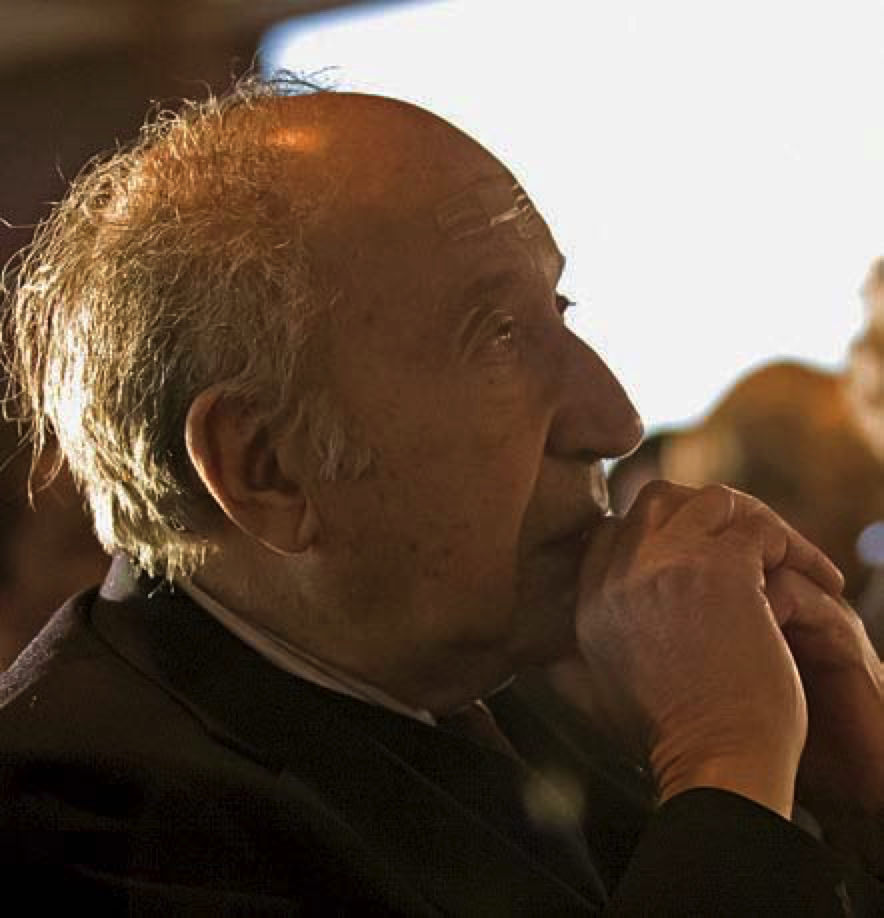
Richard Edgar Pipes
Photograph by Harvard Public Affairs and Communications
Accordingly, he was “hailed after the collapse of the Soviet Union as one of the few historians who had predicted its eventual demise, both as a cynical regime based on a failed ideology and as a multi-ethnic empire based on domination.”
Perfect position. And the memorial minute on Warner Bement Berthoff, the late Cabot professor of English and American literature (also presented December 4), observed that he portrayed himself in an essay “as a ‘New Republic liberal’ amid tense political situations. For example, after being ordered to draft a letter requesting the removal of Negro troops from Okinawa [where he served in 1945-46], he resolved ‘to avoid as much as possible…any situation in which [he] might have to take unpalatable orders from higher-ups who were not to be argued with. As it has turned out, university teaching and academic scholarship…answered very nicely that juvenile resolve.’”